
” The two faces of Tuzon,” Hon. Tom Kamara.
“Let’s we forget.” Hon. J. Emmanuel Z. Bowier.
Unity Over Tribalism: “Liberians must never allow reckless politicians to turn their diversity into division. A politician who feeds tribalism for political gain is not strengthening Liberia; they are weakening the nation.”
Think for yourself: “Do not surrender your mind to political noise. Listen to the national debate, examine the facts, understand public policy, and make your own informed judgment. Liberia needs critical thinking citizens, not political followers.”
Loud Voices, Good-for-Nothing Empty Arguments: “A loud political voice does not make an argument intelligent. Liberians should reject empty rhetoric, personal attacks, and divisive speeches that insult their intelligence and weaken their capacity to reason critically.”
Defending Liberian Women: “Those who truly respect Liberian women should never use womanhood as a political weapon. Women serving in public office deserve to be judged by their character, competence, and performance, not by the reckless rhetoric of political opportunists.”
Liberia Before Politics: “Liberia must be bigger than any politician, tribe, party, or personal ambition. Reject those who profit from division, question those who spread inflammatory rhetoric, and choose leaders and policies based on what advances the nation.”
On Citizens’ Critical Thinking: “Liberians must not allow political noise to become a substitute for knowledge. Do not let the theatrics, tribal rhetoric, or inflammatory speeches of politicians cloud your ability to reason. Listen to the national conversation, study public policy, examine the evidence, and make decisions that put Liberia above political personalities.”
On Women and Political Leadership: “The dignity of Liberian women should never become a weapon in political warfare. Women who serve in government deserve to be judged by their competence and integrity, not diminished by reckless political rhetoric. Those who undermine womanhood through their words should examine their own conduct before accusing others.”
On Tribalism: “Tribalism is not a substitute for national leadership. Any politician who seeks influence by turning Liberians against one another is weakening the very nation they claim to serve. Liberia needs informed citizens, responsible dialogue, and leaders who unite rather than divide.”
On Political Rhetoric: “A politician’s loud voice does not make his argument wise, and political theatrics should never replace critical reasoning.”
“Liberians must listen carefully, question boldly, and decide intelligently rather than allowing empty political rhetoric to cloud their judgment.”
On Political Disunity: “Liberians should not surrender their critical thinking to political voices whose greatest contribution is disunity and tribalism.”
“Listen to national debates, examine the facts, and make informed decisions based on what strengthens Liberia—not on rhetoric designed to divide its people.”
By: Austin S Fallah – A True Son of the Planet Earth Soil: [email protected]
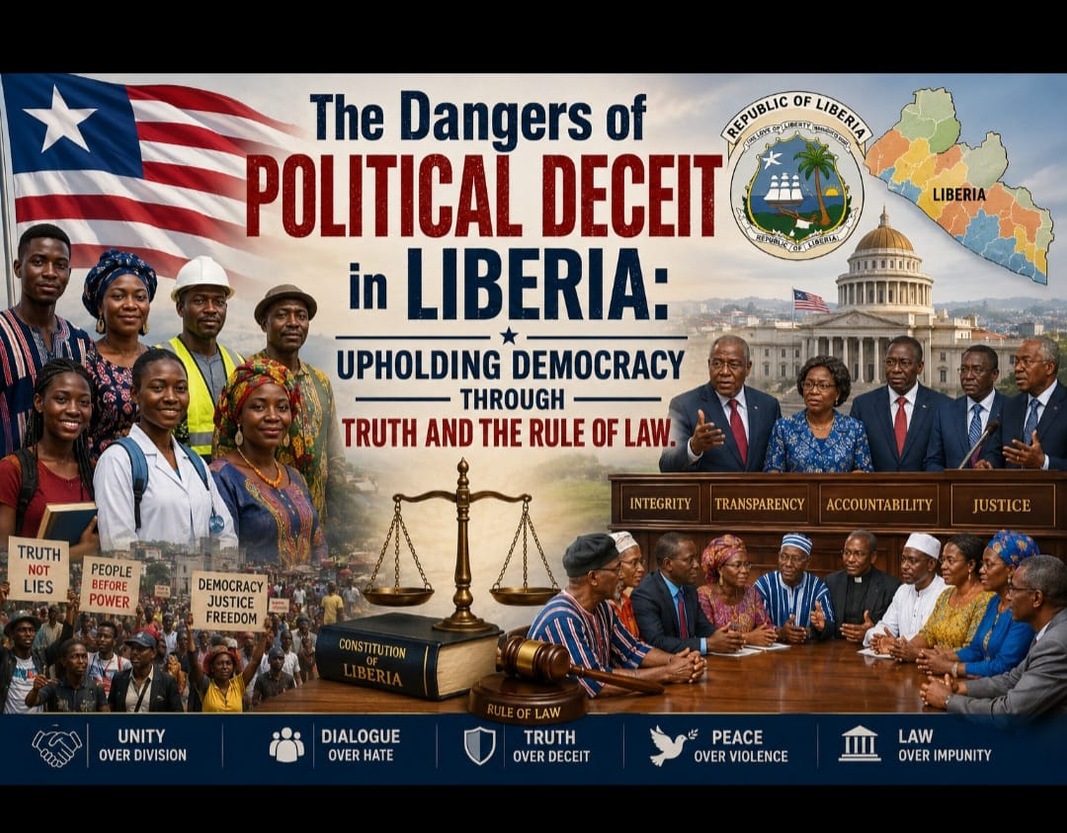
In Liberia’s turbulent political landscape, partisan figures have exploited misinformation and disinformation, eroding trust and respect among the citizenry.
Selling lies, particularly at the expense of political opponents, is not just a political strategy; it serves as a toxic balm for the wounds of division within the nation.
As individuals entrenched in their tribal affiliations opt to rally behind such deceitful narratives, the true essence of democracy, built upon principles of justice, integrity, and transparency, crumbles.
Liberians must distinguish between those who genuinely advocate for their welfare and those motivated solely by a desire for power and control.
Liberia’s historical context offers rich insights into the challenges that arise in such an environment.
In the wake of civil wars and political turmoil, the national fabric has been tested repeatedly.
Amidst these tumultuous times, the emergence of political stooges, individuals who prioritize their partisan loyalties over the welfare of their constituents, has exacerbated societal ills.
When these figures utilize the failure, missteps, or even the downfall of fellow partisans to aggrandize themselves or to manipulate public opinion, they sow the seeds of discord.
The narrative they peddle often appeals to the disempowered, preys on the populace’s fears, and seeks to fracture national unity.
The unfortunate reality is that tribalism can blind individuals to the truth.
By leveraging emotional rhetoric that taps into historical grievances, these political entities undermine the progress made toward true democracy.
The notion of justice lies at the heart of a functioning democracy: adherence to the rule of law, treating all individuals equally, and ensuring that no one is above the law.
Even within a fragile state like Liberia, the rule of law must be the backbone of national development and stability.
Ignoring this fundamental principle not only jeopardizes national security but also perpetuates a culture of impunity.
To understand the importance of the rule of law as a cornerstone in national development, one must first appreciate what it represents.
The rule of law is more than a legal framework; it embodies a commitment to fairness, accountability, and justice.
It implies that laws govern the nation, not men or women in positions of power.
While many societies have relied upon leaders to guide them, true leadership emerges when those in power respect the rule of law and lead with integrity.
In Liberia, the shadow of corruption looms large, as certain political leaders exploit their positions and manipulate the legal system for personal benefit.
This conduct perpetuates an atmosphere in which only the elite benefit from the political system, thereby exacerbating divides within society.
Moreover, this disregard for justice and truth encourages environments where fear takes root.
Citizens may hesitate to speak out against injustices they witness, especially when they see that those in certain tribal or political factions are shielded from accountability.
This climate cultivates division and suspicion, which can spill over into violent conflict.
Historical experiences in Liberia demonstrate how quickly societal fractures can grow into larger, catastrophic rifts.
In stark contrast, genuine politicians who seek the interests of all citizens present a more hopeful vision for the future.
They prioritize unity over division, working towards a shared understanding of what a thriving Liberia could embody.
The contrast between these leaders and their counterparts, who engage in fear-mongering and disinformation, could not be starker.
Rather than using others’ setbacks for political gain, these principled leaders focus on collaboration and collective advancement.
For Liberians, discerning between these two groups is not a task to be taken lightly.
It demands critical thinking and an unwavering commitment to seeking out the truth.
As the nation continues to navigate its fragile democracy, citizens must cultivate the courage to confront falsehoods, challenge misinformation, and question the motives behind the narratives being presented to them.
In doing so, they can not only safeguard their democracy but also uplift the status of women who often bear the brunt of social injustice during times of tribal and political strife.
The role of women in Liberia’s development should not be minimized.
Historically, women in various societies have been marginalized, and during Liberia’s tumultuous periods, many women suffered deeply.
Yet, we now see a growing movement among Liberian women seeking to assert their rights and claim their spaces in political discourse.
These brave women often stand against the tidal wave of disinformation and political maneuvering that seeks to undermine their contributions and voices.
They remind us that empowerment and equality must be non-negotiable elements of national development.
As we reflect on the road ahead, the imperative lies with Liberia’s citizens.
They must hold their leaders accountable, emphasizing that no one is above the law.
Equity in governance must be fostered, ensuring that citizens understand their rights and responsibilities.
Engaging in open dialogue about political disagreements and recognizing the dangers of tribalism and misinformation are integral to building a cohesive society.
Furthermore, education is a crucial tool for dispelling the fears and assumptions that often accompany divisive narratives.
By fostering critical thinking in educational institutions and promoting media literacy, Liberians can begin to question and challenge those who propagate misleading information.
This expansive and inclusive approach to education will embolden citizens and create a citizenry that is both knowledgeable and discerning.
With increased awareness, Liberians can create an environment where the truth flourishes and where democratic values become intertwined with national identity.
The alternative, a society rife with fear, manipulation, and division, would signal not just a retreat from progress but a regression into painful cycles of conflict.
Political discourse in Liberia must evolve beyond petty rivalries and tribal loyalties; mutual respect, understanding, and collaboration must take precedence.
Liberia’s political landscape is steeped in complexities that demand attention.
Using lies and disinformation as tools for political gain risks consigning the nation to repeat its turbulent past.
Citizens must discern the motivations behind their leaders’ words, recognizing the profound impact of truth and the rule of law in shaping their future.
By championing unity and empowering themselves and their communities, Liberians have an opportunity to construct a more just, equitable, and prosperous society.
Progress requires the collective efforts of all, and the fight for democracy, grounded in truth and the unwavering application of the law, remains essential.
The time for genuine leadership and accountability is now; for Liberia, the stakes could not be higher.
Support Independent Journalism
Your support helps FrontPage Africa continue delivering independent, credible, and impactful journalism. Every contribution strengthens our ability to investigate, inform, and hold power accountable while keeping quality journalism accessible to our readers.
Support our journalism or subscribe to receive the latest FrontPage Africa stories and updates.