
Summary
- A woman died in May after botched surgery at Stockton Creek Health Center in Caldwell, where a man posing as a doctor but with no medical qualifications operated on her.
- The Liberia Medical and Dental Council, the government agency tasked with overseeing medical practitioners in the country, said it had asked the man to provide a medical license in 2022 but did not stop him practicing when he did not supply it.
- Former solicitor general Tiawan Gongloe and Joseph Somwarbi, former chair of House committee on health, said the case shows that the government agency has been “derelict” in its duty, leaving all Liberians at risk.
By Tetee Gebro, health and gender correspondent with New Narratives
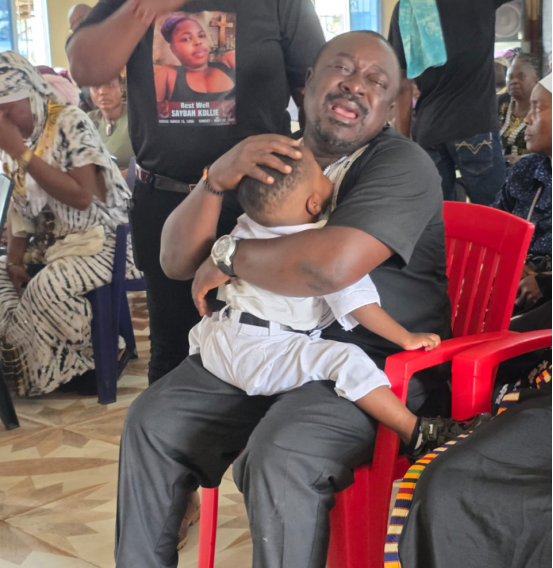
CALDWELL, Monrovia — Saybah Kollie collapsed on a Sunday morning in early April, two days after her son’s second birthday.
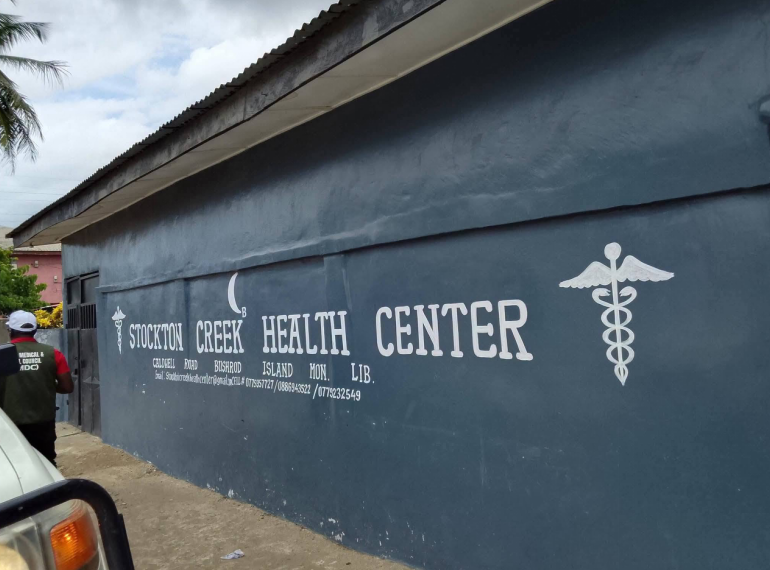
Her husband, Blama Kamara, and the community chairman rushed her to the closest clinic. Over the next few weeks, Saybah’s family said, she suffered at the hands of a fake doctor who claimed he was qualified to operate and heal her, but who was in fact, a fraud preying on desperate families like hers.
“The only thing I wanted was to see her survive,” says Kamara. The supposed doctor, Mohamed Ali Bah, warned him Saybah would die if he waited. “He said I should not take a risk with her life. So I trusted him.”
Forty-seven days later, Saybah was dead.
Saybah had become the latest in an unknown number of people to die in Liberia at the hands of fake medical personnel. The Liberian Medical and Dental Council, tasked with licensing health practitioners and facilities in the country, does not keep track of how many people die or suffer injuries as a result of medical treatments by unlicensed individuals, but regular posts on social media show Saybah’s case is not isolated.
With a barely functioning health care system with just one doctor for every 10,0000 people (the World Health Organization recommends one for every 1,000) and half the population living in poverty, Liberia has become an easy place for dishonest people to take advantage of their fellow citizens.
But experts say the problem is compounded by the complete failure of the Liberian Medical and Dental Council to check licenses and shut down those impersonating as doctors. That is leaving Liberians across the country vulnerable.
“This showed that the LMDC’s oversight and regulatory enforcement capacity is very weak, especially in this case where they are saying that the individual… has been practicing without a license for years while they [the Council] are being paid with taxpayers’ money,” said Joseph Somwarbi, former chair of the House of Representatives Committee on Health.
Surgery Ordered Based Only on “Pressing the Stomach”
When Saybah first arrived at Stockton Creek, the family was introduced to “Doctor Bah”. Her sister, Janga Kollie, who came later, was worried from the start.
“They didn’t run any tests,” Janga said. “If they do a test, at least they will tell us something. But the man only used his hand to press her stomach, and he said she had a fibroid.”
A fibroid is a non-cancerous growth in the womb that is more common in African women. To identify fibroids and rule out other causes, doctors would use an ultrasound machine or test her blood in a laboratory. Pressing someone’s stomach with your hand is a guess.
Before Saybah could even be examined, Kamara was asked to pay US$20. “Doctor” Bah said Saybah had lost so much blood she needed seven pints replaced at a cost of US$50 a pint. Within a week the bill for the accommodation and treatment reached US$330.
Saybah seemed to improve so Kamara took her home. But then she collapsed again.
This time Bah said she needed surgery. He claimed he was a surgeon at JFK Hospital and a professor at a major medical school in Monrovia. Kamara asked whether the clinic had an ultrasound machine — a device doctors use to see inside the body without surgery. “He said he had everything,” Kamara recalled. “He said this place is almost like a hospital.” He convinced Kamara. “Bah really got sweet mouth,” said Janga. Saybah’s brother was called to sign a form agreeing to the surgery. The operation happened quickly — Kamara only learned it was finished when he arrived that evening and found her in recovery.
The Bleeding That Would Not Stop
After the surgery, the bleeding got worse. Every day and night the clinic called saying she needed more blood — more than fifteen pints in total, US$750, paid straight to Bah in cash. “He said it will not stop right away. It will take time,” said Janga.
But Saybah grew weaker and afraid. She began begging to be moved to another hospital. Bah refused, telling her he could treat her. Finally Saybah’s ex-husband, calling from abroad, insisted the family take her to 14 Military Hospital. Bah refused to write a referral note. Instead, he handed the family a blank paper. “Since you people want to carry the girl, if you carry her, my hand is not inside. You people just make paper,” Janga recalled him saying. At 14 Military Hospital, doctors, clearly worried, asked where Saybah’s surgery had been done. They asked her directly — “Is he a licensed doctor?” They told the family they did not have the right kind of doctor for what had been done and referred her to JFK. At JFK, doctors called Bah and asked what tests he had run before operating. According to Janga, the call cut off. She tried calling back. Bah did not answer.
A Deadly Disease, Discovered Too Late
JFK doctors revealed a diagnosis the family had never heard: cervical cancer. Dr. Avee Kamah told the family Saybah came to them too late. “She said they tried their best,” Janga said. But it was up to God to save her.
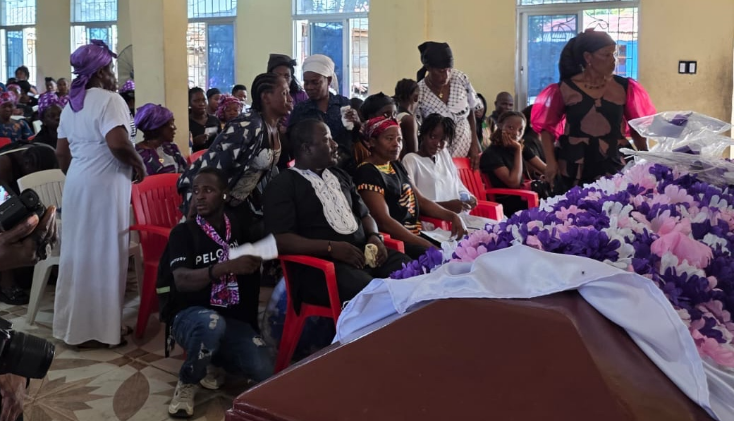
A day later, Saybah died. The death certificate said her cancer caused her kidneys to fail and her blood to become severely depleted. Fluid built up in her lungs and toxins built up in her brain — this combination killed her.
James-Emmanuel D. Cole Jr., JFK’s communications director, confirmed in a statement that Saybah was received as a serious medical emergency following a referral from 14 Military Hospital, and that she died despite the efforts of the clinical team.
The hospital declined to say whether its doctors believed the original surgery at Stockton Creek contributed to her death or whether JFK reported concerns about Stockton Creek to the Medical and Dental Council or any other authority.
But Cole wrote that the hospital would cooperate fully with any competent regulatory, investigative, or judicial authority that requested access to Saybah’s records. He also noted that cases involving severe complications “may be reviewed by the relevant authorities, including the Liberia Medical and Dental Council.”
“There Was A Foul Play Somewhere”
After Saybah’s funeral, Bah called Kamara to give his sympathies. Kamara hung up on him. But Bah called again, after a reporter working on this story visited his clinic, to ask Kamara why he was speaking to journalists. Kamara ended the call again.
After numerous requests Bah agreed to an interview with FrontPage Africa/New Narratives. He refused to allow his comments to go on the record. But he did deny that Saybah had been treated at his clinic.
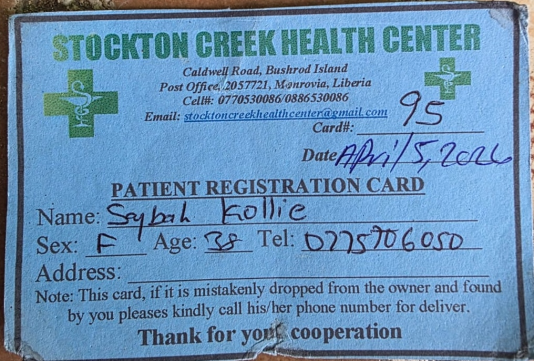
Kamara has Saybah’s patient card from Stockton Creek, dated April 5, 2026. He and Janga said they visited her there. They said more than ten people, including members of Saybah’s church, can confirm she was treated there.
“That statement alone makes me know there was a foul play,” Kamara said. “Why are you refusing that Saybah was at your hospital and you did the operation? For that I can’t keep silent. If I keep silent I will not be fair to Saybah.”
The Liberia Medical and Dental Council repeatedly misses opportunities to stop fake doctor
But experts say Bah is not the only one complicit in Saybah’s suffering. The Liberia Medical and Dental Council, tasked by government with regular medical practitioners in the country, repeatedly failed to do its job.
The Council’s credential committee first asked Bah to supply his license in 2022 according to Joseph Colmah, the LMDC’s Medical and Research Director. Bah never did and the Council did nothing to stop him practicing.
In 2024, Stockton Creek, having got away with not complying with the Council’s requests for two years, became bold. They asked the Council for permission to upgrade from a basic clinic to a full health center — a higher level of facility with stricter requirements for staff, equipment, and record-keeping. Even though Bah had never supplied a medical license, the Council began to process the application. It told the clinic to pause all patient care until inspectors could confirm it met the standard. But the inspectors never returned and the clinic kept seeing patients for another two years.
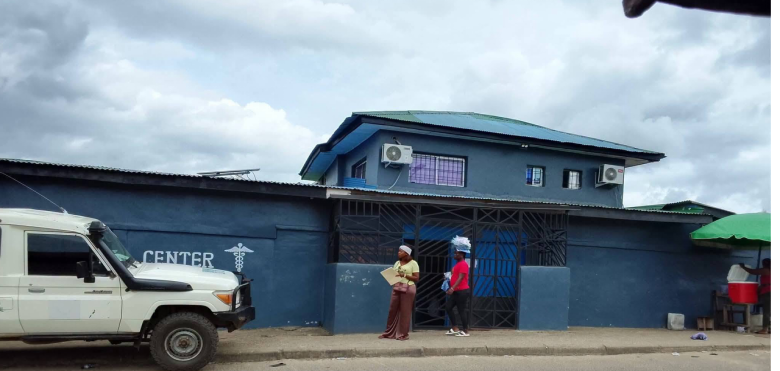
It was only this May— one week after Saybah died and the family began posting on Facebook – that the Council shut the clinic down, four years and an unknown number of deaths and injuries, after the Council was first alerted to Bah’s deception. In a press release the Council said it “remains committed to ensuring quality, safe, and professional healthcare delivery throughout the country and will continue its nationwide regulatory assessment across Liberia’s fifteen counties over the next one month.”
The Council did not report the case to the police.
But when a reporter visited the clinic three weeks later, in June, asking for medical help, the clinic was still operating. The reporter was given treatment and charged L$1000 and saw a man identified as “Dr. Bah” on the premises.
In July, after questions from this reporter, the Council published a list of 532 licensed doctors in Liberia, for the first time. (New Narratives has published the list at this link.) The registry includes an active license for “Dr. Bah Mohammed Aliou,” license number NL/636, valid from January 17, 2026 to January 16, 2027. A source familiar with the matter told New Narratives that the person listed is the same Mohammed Ali Bah at Stockton Creek. The Council did not respond to questions asking whether the two names refer to the same person.
Liberia Medical and Dental Council denies responsibility for policing fake doctors
In a surprising revelation, Colmah said it was not the Council’s role to check whether Bah had continued to practice without accreditation. He said the Council can only pursue charges against someone for falsely calling themselves a doctor with written proof — like a prescription or medical record signed using the title “doctor.” Patient testimony that they were treated by someone using that title is not enough.
Colmah said the Council has no power to physically lock a building — only a court can do that. The Council can only post a notice and ask the facility to stop. Colmah claimed the Council had posted a notice on the facility in 2024. “But as you might be aware, maybe renovation, someone may get to it.”
But experts said that Colmah’s statement was wrong.
Joseph Somwarbi, pharmacologist, former representative for Nimba county and chair of the House of Representatives Committee on Health, said it is the Council’s duty to ensure that all medical clinics, health centers, and hospitals are licensed and demand that all licensed practitioners and facilities place their licenses in visible locations. And they must work with the Liberia National Police to shut down illegal operations and refer unlicensed practitioners for criminal prosecution.
He said those at the Council found responsible for failure to act should be replaced.
Tiawan Gongloe, former solicitor general, agreed. He demanded the Liberian National Police explore criminal charges Bah. “What he did is almost like shooting somebody with a gun, because he is not authorized to practice medicine.”
Gongloe said the Council also bears responsibility and the family could bring a lawsuit.
“The LMDC takes some responsibility by not closing [the clinic]. They were derelict in their action.” Gongloe urged the Council to act now. “LMDC should stop him. He is a menace. Every second that that man is operating, Liberians are at risk.”
Kamara is now the sole carer for their two young children who cry for their mother. He strains to understand how authorities could have left his family so unprotected.
“If a man like that is not a doctor, and his place is still operating at a time like this,” Kamara said, “My mouth is full. I don’t know.”
Nemenlah Cyrus Harmon contributed reporting. This investigation was produced in collaboration with New Narratives as part of the Investigating Liberia project. Funding was provided by a private donor and the Swedish International Development Cooperation Agency. The donors had no say in the story’s content.
Support Independent Journalism
Your support helps FrontPage Africa continue delivering independent, credible, and impactful journalism. Every contribution strengthens our ability to investigate, inform, and hold power accountable while keeping quality journalism accessible to our readers.
Support our journalism or subscribe to receive the latest FrontPage Africa stories and updates.