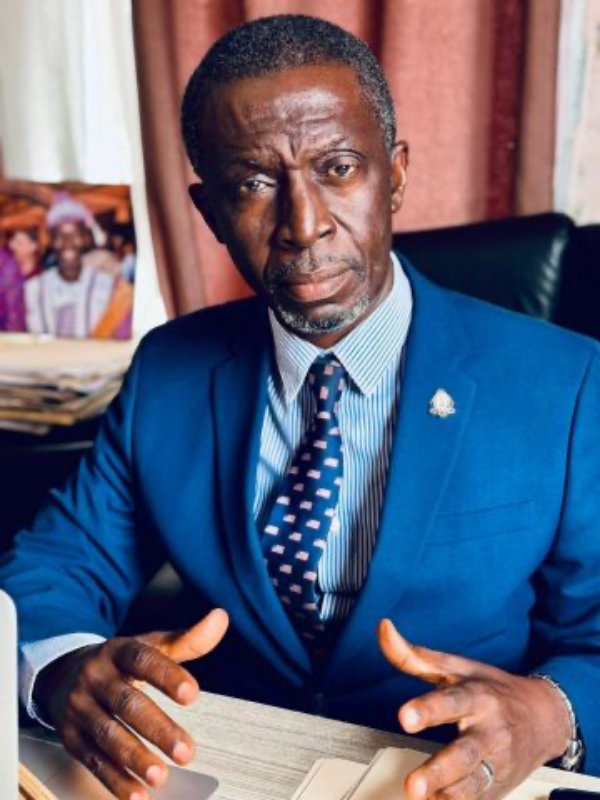
Monrovia — As Liberia grapples with the fallout from its largest-ever cocaine seizures, renowned Liberian lawyer and politician Cllr. Tiawan Saye Gongloe has issued one of his strongest warnings yet, describing the country’s escalating narcotics problem as a national security emergency and cautioning that Liberia must not follow the path of Haiti, where criminal networks have severely weakened state authority.
By Gerald C. Koinyeneh, [email protected]
In a lengthy commentary, Gongloe called on President Joseph Nyuma Boakai to establish an independent Commission of Inquiry to investigate the cocaine seizures, trace the money behind the alleged trafficking network and determine whether individuals within Liberia’s security and political establishment helped facilitate the operation.
“Liberia must not become Haiti,” Gongloe declared, warning that the country could face a gradual erosion of state authority if corruption, organized crime and compromised security institutions are not confronted decisively.
Gongloe, a former standard-bearer of the Liberian People’s Party who contested the 2023 presidential election, said the scale of the cocaine seizures demonstrates that Liberia is confronting more than a conventional law-enforcement problem.
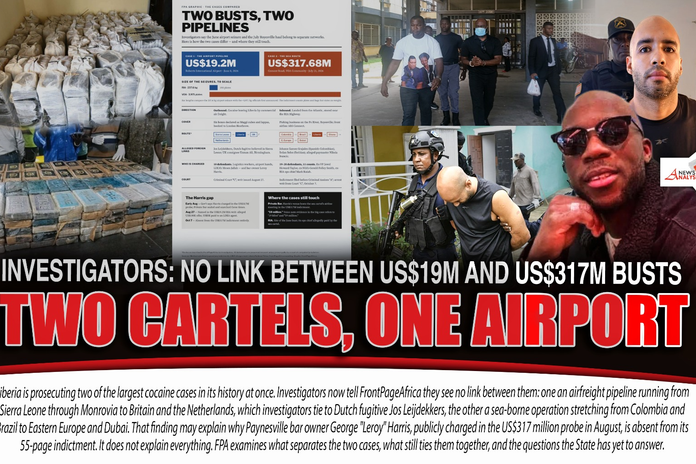
According to authorities, approximately 237.6 kilograms of cocaine, valued at more than US$19 million, were seized at Roberts International Airport in June. The country was subsequently rocked by the discovery of approximately 3,971 kilograms — nearly four metric tons — of cocaine, estimated to be worth about US$317 million, in the Duazon area.
Gongloe said the volume and value of the drugs point to an organized and well-financed international criminal enterprise.
“This is not the work of a few young people selling drugs on a street corner,” he said. “The sheer volume and value point to an organized and well-financed international criminal enterprise.”
He said investigators must determine who imported the drugs, who received and transported them, who provided protection, and whether anyone within the Liberian state facilitated the operation.
‘Follow the Money’
Central to Gongloe’s proposed response is a comprehensive financial investigation.
“The central principle must be simple: follow the money,” he said.
He argued that the investigation should extend beyond the cocaine itself to financial transactions, unexplained wealth, properties, businesses, bank accounts, communications, airport records, immigration records, shipping records and political relationships.
“Cocaine is the commodity. Money is the motive. Corruption is often the bridge between criminal money and legitimate institutions,” Gongloe said.
He stressed that allegations against individuals must not be treated as established facts and that anyone accused of wrongdoing must be afforded due process and presumed innocent until proven guilty.
But he said due process cannot become an excuse for government inaction.
“The rule of law does not mean that government should remain silent when credible allegations of criminal conduct reach into the highest levels of government,” he said. “The rule of law requires a fearless, impartial and professional investigation.”
Calls for Independent Commission
Gongloe acknowledged actions already taken by the Boakai administration, including reported suspensions, dismissals, arrests, charges and detentions involving individuals connected to the investigation.
He praised the administration for taking steps in the direction of accountability but said the measures remain insufficient given the magnitude of the crisis.
“Mr. President, this is not enough,” Gongloe said.
He urged President Boakai to establish a commission composed of experts in criminal investigation, narcotics trafficking, financial intelligence, forensic accounting, money laundering, organized crime, constitutional and criminal law, cybersecurity, border security and asset tracing.
The commission, he said, should have the authority to obtain documents and testimony, trace financial transactions and examine relevant communications and movements.
Its findings, he added, should be made public, subject only to legitimate national-security restrictions.
Warning About State Capture
Gongloe said Liberia should study Haiti’s experience as a warning of what could happen when criminal organizations become stronger than state institutions.
He argued that institutional collapse does not happen overnight, but through a gradual process in which corruption becomes normalized, criminal networks purchase protection, security institutions become compromised, and young people are recruited into criminal enterprises.
“A country does not wake up one morning and discover that gangs control its streets,” he said. “Institutional deterioration occurs gradually.”
He warned that Liberia must confront the warning signs before organized crime becomes entrenched.
“That is the road Liberia must refuse to travel,” he said.
Beyond Cocaine
Gongloe linked the cocaine crisis to what he described as deeper problems of governance, corruption, weak institutions, impunity and unexplained wealth.
He raised questions about several other national controversies, including the multimillion-dollar project in Foya, Lofa County, and allegations surrounding illegal mining activities along the Liberia-Guinea border.
Gongloe was careful to distinguish questions from accusations, emphasizing that he was not alleging that the Foya project was financed with drug money.
Instead, he argued that the government should provide complete transparency about the project’s financing, procurement and authorization.
“If the money is legitimate, transparency should establish that fact,” he said. “If the procurement was lawful, the records should establish it.”
He similarly called for investigations into allegations of illegal mining along the Makona River, saying illicit mineral extraction could become a corruption, revenue, border-security and national-security problem.
A Message to Boakai
Gongloe also invoked President Boakai’s 2023 campaign-era remark that he could “dance with the devil” if doing so would help him win the presidency.
He said he was not suggesting that Boakai had any agreement with drug traffickers or that the president’s statement was connected to the cocaine crisis. Instead, Gongloe used the remark as a broader warning about political compromises.
“Every compromise with corruption has a price. Every accommodation with criminality has a price,” he said.
He described the “devil” metaphorically as corruption, greed, impunity, political patronage and abuse of public office.
“The real devil in Liberia is not a supernatural being,” Gongloe said. “The real devil is corruption. The real devil is greed. The real devil is impunity.”
Youth at Risk
Gongloe said Liberia’s young population is particularly vulnerable to recruitment by international narcotics networks because of unemployment, poverty and limited economic opportunities.
He warned that drug traffickers have the financial resources to offer young people opportunities that legitimate employment cannot match.
“What happens when a young Liberian begins to believe that a drug dealer has more opportunities than a university graduate?” he asked.
He said Liberia’s response must therefore go beyond arrests and prosecutions to include education, employment, public health, youth development, criminal justice and border security.
“Arrests alone will not solve it,” he said. “We must destroy the economic ecosystem that makes narcotics profitable.”
‘No One Should Be Above the Law’
Gongloe urged the government to investigate anyone connected to the drug-trafficking network regardless of political affiliation, social status or proximity to power.
“If the evidence leads to a poor man, investigate him. If it leads to a police officer, investigate him. If it leads to a businessman, investigate him. If it leads to a minister, investigate him,” he said.
“If it leads to someone close to the President, investigate him.”
He emphasized that the objective should not be to target individuals but to establish the truth and protect the Republic.
“No one should be above the law,” he said. “Not because we want to destroy people, but because we want to save Liberia.”
‘The System Must Be Examined’
Gongloe said the eventual destruction of the seized cocaine should not mark the end of the investigation.
“The cocaine may be destroyed. The suspects may eventually be convicted or acquitted. But the system that allowed such an enormous criminal enterprise to operate in Liberia must be examined,” he said.
He called on the government to identify the facilitators, protectors and beneficiaries of the alleged trafficking network and ensure that prosecutions follow where evidence warrants.
He also urged Liberians to resist turning the crisis into another partisan political dispute.
“Do not ask first whether the matter involves the Unity Party, the CDC or the LPP,” he said. “Ask whether Liberia is safe.”
Gongloe said the crisis represents a test for the presidency, security institutions, courts, Legislature and political parties — but ultimately, a test for the Liberian nation.
“We survived civil war. We survived Ebola. We survived political instability. We must not now lose Liberia to organized crime,” he said.
His central demand to President Boakai was repeated throughout the commentary: establish an independent inquiry, follow the money, follow the evidence, and ensure that justice reaches everyone implicated.
“Liberia deserves the truth,” Gongloe said.
“The cocaine may be seized. The cocaine may be destroyed. But the lesson must not be destroyed with it.”
He concluded with a stark warning: “If we do not control the criminals, the criminals may eventually control us. If we do not defeat corruption, corruption may eventually defeat the Republic.”
“Liberia must answer those questions, and Liberia must answer them now.”
Support Independent Journalism
Your support helps FrontPage Africa continue delivering independent, credible, and impactful journalism. Every contribution strengthens our ability to investigate, inform, and hold power accountable while keeping quality journalism accessible to our readers.
Support our journalism or subscribe to receive the latest FrontPage Africa stories and updates.