MONROVIA — At a time when Liberia is confronting mounting environmental pressures from illegal mining, deforestation, river pollution and growing threats to its marine ecosystem, a high-level engagement between the Environmental Protection Agency (EPA) of Liberia and the United States Embassy has underscored a shift toward stronger international cooperation in environmental governance.
By Selma Lomax, [email protected]
The visit Wednesday by a senior delegation from the U.S. Embassy to the EPA headquarters on Wednesday was more than a diplomatic courtesy. It reflected increasing international attention to the country’s efforts to strengthen environmental oversight, improve the management of its natural resources and ensure that economic development does not come at the expense of environmental sustainability.
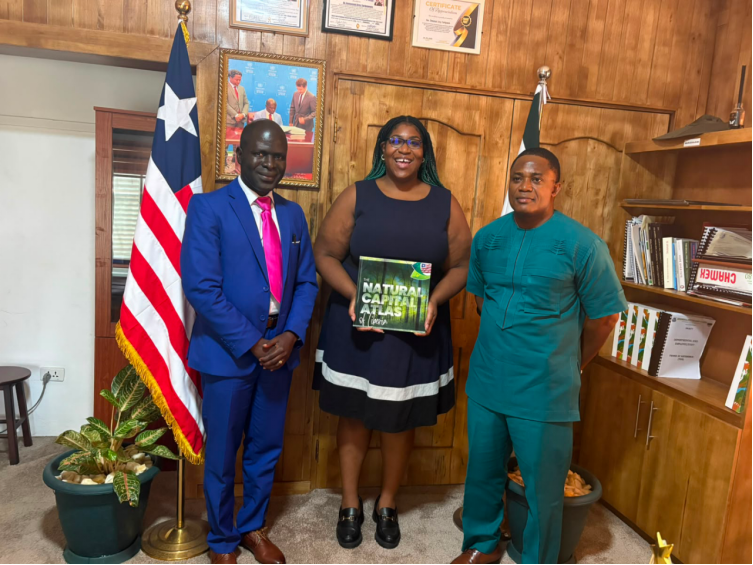
Leading the American delegation were Tiffany Miller, Senior Political Officer at the U.S. Embassy, and Thomas Quaye, Political and Human Rights Assistant. Their discussions with EPA Executive Director Dr. Emmanuel K. Urey Yarkpawolo covered virtually every major environmental challenge confronting Liberia — from illegal mining and concession monitoring to marine biodiversity protection, institutional reform and capacity building.
Throughout the meeting, Dr. Yarkpawolo presented an overview of the EPA’s expanding mandate, emphasizing that environmental protection is no longer viewed solely as a conservation issue but as an essential pillar of national development, public health and economic stability. He stressed that protecting country’s forests, rivers, wetlands and coastal ecosystems is fundamental to attracting responsible investment while preserving the country’s natural heritage for future generations.
One of the most significant issues discussed was the establishment of the Inter-Agency Mining Taskforce, created by President Joseph Nyuma Boakai, Sr. According to Dr. Yarkpawolo, the taskforce emerged after nationwide environmental compliance inspections conducted by the EPA earlier this year revealed extensive environmental destruction in several mining communities.
The inspections uncovered widespread illegal mining operations, severe land degradation, contamination of rivers and streams, destruction of forest ecosystems and multiple violations of Liberia’s environmental and mining laws. Those findings, combined with separate assessments by the Ministry of Mines and Energy, demonstrated the urgent need for a coordinated government response involving multiple state institutions.
Dr. Yarkpawolo explained that the EPA serves as one of the principal institutions within the taskforce and is providing the technical environmental expertise needed to ensure that enforcement operations comply with national environmental regulations.
He noted that specialized training sessions are being organized to equip taskforce members with a comprehensive understanding of environmental legislation, Environmental and Social Impact Assessment (ESIA) procedures, regulatory standards and sustainable natural resource management practices.
Beyond enforcement, discussions also examined how concession agreements are monitored throughout Liberia. Dr. Yarkpawolo explained that while several government institutions oversee different components of concession operations, the EPA remains responsible for ensuring that every project complies with environmental permitting requirements before implementation.
He emphasized that environmental authorization is not automatic. Whenever communities raise credible concerns regarding environmental damage or the fulfillment of corporate social responsibilities, the EPA works alongside relevant government agencies and affected communities to resolve those concerns before environmental permits are granted.
The Executive Director said this approach seeks to strike a delicate balance between environmental protection and investor confidence, ensuring that Liberia remains both environmentally responsible and economically competitive.
The meeting further addressed recent enforcement operations targeting companies operating without environmental permits. Dr. Yarkpawolo informed the American delegation that several foreign nationals, including Chinese citizens, were arrested after investigations established that their mining activities had caused significant environmental degradation while operating outside Liberia’s environmental regulatory framework.
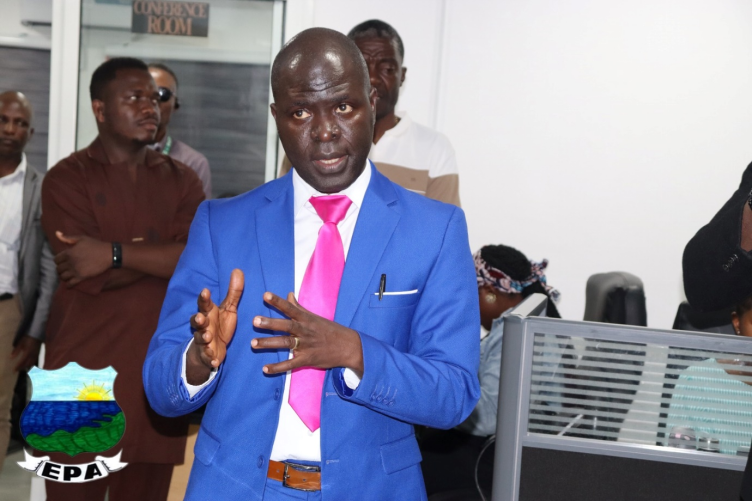
According to him, those arrests were conducted by the Liberia National Police following formal requests from the EPA, highlighting the growing collaboration between environmental regulators and national law enforcement agencies. He noted that because the EPA has limited enforcement personnel, cooperation with the police remains essential in combating environmental crimes.
He also disclosed that companies suspended for environmental violations are required to undertake comprehensive land restoration and environmental remediation before any consideration can be given to resuming operations. The EPA, he said, is committed not only to stopping environmental destruction but also to ensuring damaged ecosystems are rehabilitated.
Although Dr. Yarkpawolo acknowledged that compliance has improved among many large-scale mining operators, particularly Class A and Class B companies, he expressed concern that numerous Class C mining operators continue to engage in unsustainable practices that threaten forests, waterways and rural communities.
Marine conservation emerged as another major focus of the discussions. With Liberia possessing hundreds of kilometers of Atlantic coastline and rich marine biodiversity, both sides examined the growing threat posed by illegal, unreported and unregulated fishing by foreign industrial vessels operating within West African waters.
Dr. Yarkpawolo highlighted Liberia’s participation in several international environmental agreements, including the Agreement on Biodiversity Beyond National Jurisdiction (BBNJ), explaining that the EPA collaborates closely with the National Fisheries and Aquaculture Authority and the Liberia Maritime Authority on issues relating to marine environmental protection.
Recognizing the increasing sophistication of illegal fishing operations, he appealed for stronger U.S. support in developing Liberia’s fisheries monitoring systems, training environmental professionals and enhancing scientific surveillance of marine ecosystems.
He also called for greater investment in strengthening the operational capabilities of the Liberia Coast Guard, arguing that effective enforcement at sea requires modern equipment, improved surveillance technology and specialized technical expertise.
Institutional strengthening formed another important component of the dialogue. Dr. Yarkpawolo appealed for continued American support to enhance the EPA’s logistical capacity, establish specialized Environmental Courts to expedite environmental cases and deepen technical cooperation between the EPA of Liberia and the United States Environmental Protection Agency.
He acknowledged previous assistance from the United States Government, particularly the donation of two Toyota Land Cruiser vehicles, describing the support as instrumental in expanding the EPA’s nationwide environmental compliance inspections and enforcement activities.
Following the discussions, the American delegation toured the EPA’s recently acquired headquarters, visiting the Geographic Information Systems (GIS) Unit and the Agency’s modern Environmental Laboratory. Officials demonstrated how advanced mapping technologies, scientific testing and laboratory analysis are strengthening environmental monitoring and evidence-based decision-making throughout Liberia.
Tiffany Miller praised the EPA’s leadership for its commitment to environmental protection and institutional reform. She reaffirmed the United States Government’s commitment to supporting Liberia’s efforts to improve environmental governance, strengthen institutional capacity and promote sustainable development.
Support Independent Journalism
Your support helps FrontPage Africa continue delivering independent, credible, and impactful journalism. Every contribution strengthens our ability to investigate, inform, and hold power accountable while keeping quality journalism accessible to our readers.
Support our journalism or subscribe to receive the latest FrontPage Africa stories and updates.