Monrovia – The Minister of Labour, Cllr. Cooper W. Kruah Sr., has clarified that Liberia’s Labour Law and the Decent Work Act contain no provisions that prohibit workers in the informal economy from unionizing or organizing themselves.
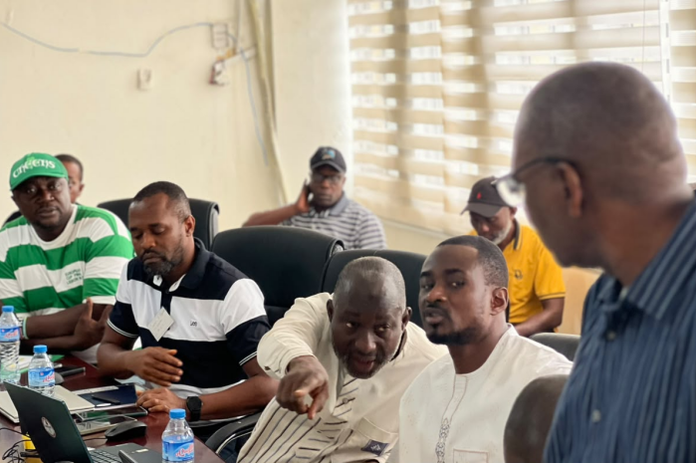
Minister Kruah made this statement on Wednesday, April 22 during a meeting with Ms. Marion Daniaud and Mr. Pradeep Wagle of the Office of the United Nations High Commissioner for Human Rights (OHCHR) at his office in Monrovia.
He explained that ECOWAS citizens engaged in business activities in Liberia are classified as informal workers and are required to pay an annual work permit fee of US$250—significantly lower than fees applied in the formal sector.
The Labour Minister urged the visiting delegation to support the development of additional programs targeting the informal sector.
He emphasized that many participants in this sector make limited contributions to formal economic structures, such as tax compliance, and therefore require more inclusive policy interventions.
Minister Kruah also highlighted ongoing government efforts to provide education and support to strengthen the informal sector and enhance its contribution to national economic development.
Addressing concerns raised by the International Labour Organization (ILO) regarding the harmonization of Liberia’s Labour Laws, the Minister requested expert collaboration to achieve this objective.
He further solicited support to revamp the Ministry’s statistical systems to improve the collection of employment data and other key labour indicators.
For his part, Pradeep Wagle stated that the purpose of their visit was to explore ways in which the Ministry of Labour and OHCHR can collaborate effectively to bridge existing gaps in the Decent Work Act of 2015.
He noted that ongoing research seeks to identify opportunities to support both the Ministry and stakeholders contributing to Liberia’s economy.
Meanwhile, Ms. Marion Daniaud indicated that their research focuses on access to justice for workers in the informal economy.
She underscored that the sector accounts for approximately 90 percent of the population and contributes about 40 percent of the national GDP, making it critical to strengthen human rights protections to inform policymaking and safeguard workers’ rights.
The delegation presented copies of their research titled “Workers in the Informal Economy in Liberia: A Legal Analysis” and “Advocacy Brief: Protecting the Rights of Workers in Liberia’s Informal Economy.”
Support Independent Journalism
Your support helps FrontPage Africa continue delivering independent, credible, and impactful journalism. Every contribution strengthens our ability to investigate, inform, and hold power accountable while keeping quality journalism accessible to our readers.
Support our journalism or subscribe to receive the latest FrontPage Africa stories and updates.