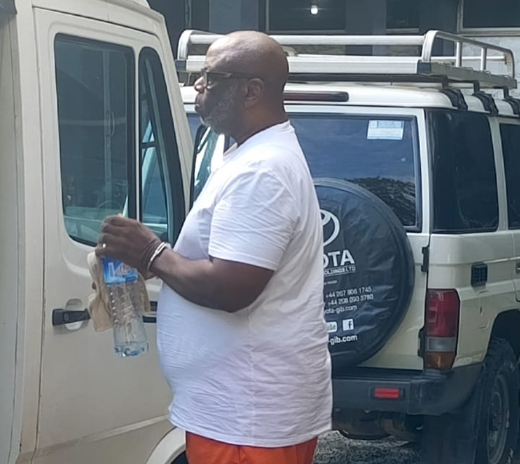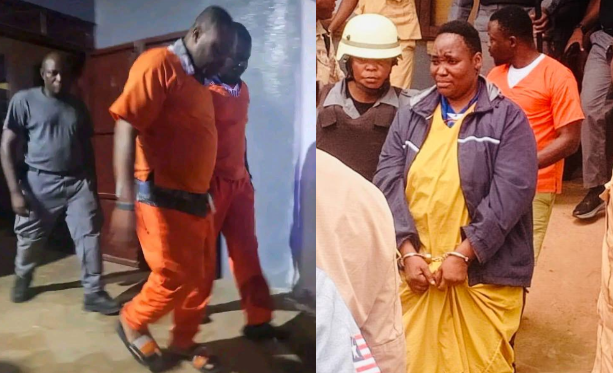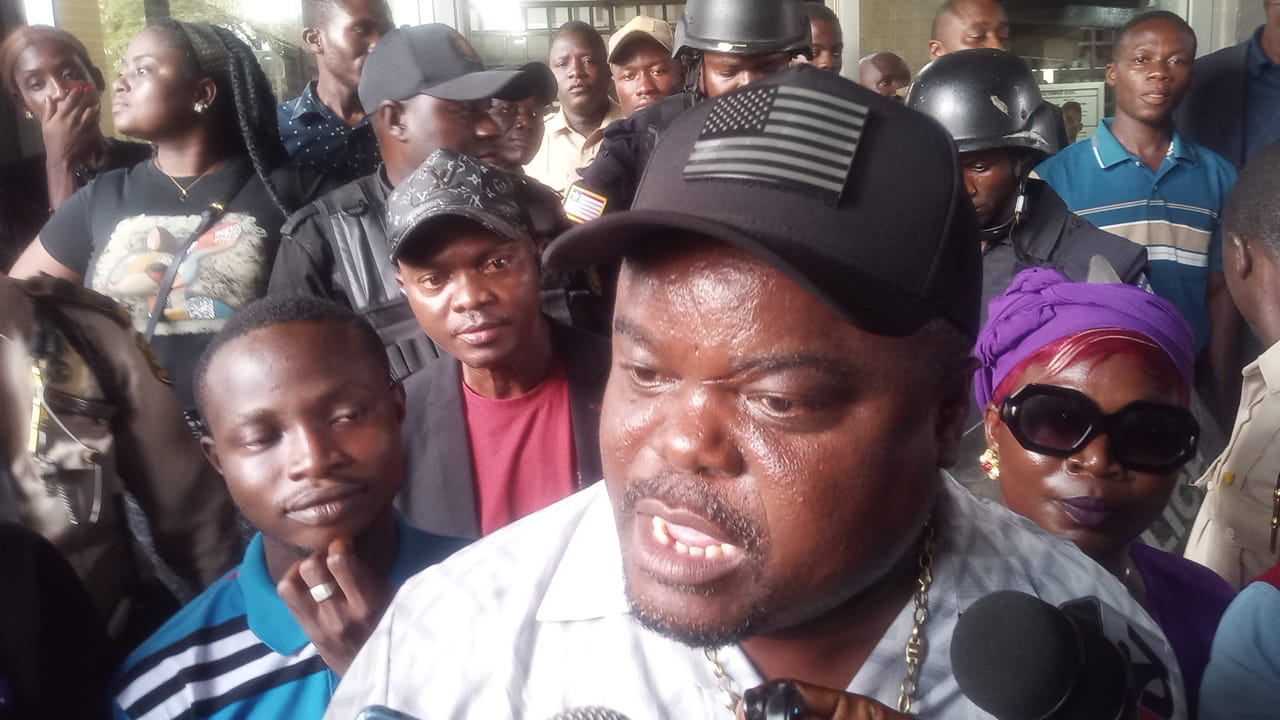
Monrovia — Justin Opa Yeazeahn, popularly known as “Prophet Key,” on Thursday, February 12, admitted before the Full Bench of the Supreme Court of Liberia that his recent social media attacks against Chief Justice Yarmie Quiqui Gbeisay were contemptuous, and pleaded with the Court to temper justice with mercy.
By Willie N. Tokpah
“I promise you that I will not cuss or abuse again,” Prophet Key told the Justices, vowing to reform his conduct not only toward the Chief Justice but also toward women and other public officials.
The contempt proceedings stem from a series of Facebook broadcasts in which Prophet Key allegedly accused Chief Justice Gbeisay of corruption, claimed the Chief Justice received money from litigants to complete construction of a hotel, asserted that the entire Supreme Court Bench was corrupt, referenced the Chief Justice’s Nimba County origin, and made disparaging remarks about the Chief Justice’s mother.
‘My Actions Were Out of Frustration’
Addressing the Court, Mr. Yeazeahn said his comments were made out of frustration over concerns repeatedly raised to him by citizens, particularly regarding the Saye Town land dispute and reported evictions of occupants.
He insisted he harbors no personal animosity toward Chief Justice Gbeisay but conceded that his language crossed the line. While referencing an African cultural notion that strong language is sometimes used to confront perceived wrongdoing—remarking that “cuss or abuse can make witchcraft afraid”—he acknowledged that his approach was wrong and pledged to change.
Defense counsel Cllrs. Bestman Juah and Joseph Debleh told the Court that their client fully accepts responsibility for his actions.
“In a conference with our client, he informed us to tell you, Your Honors, that his action is contemptuous,” Cllr. Juah stated. “He is remorseful and asks that you temper justice with mercy.”
The defense further disclosed that Prophet Key reduced his apology to writing and formally expressed regret over the incident.
Amici Curiae: Abuse Not Protected by the Constitution
Court-appointed amici curiae, Cllr. M. Wilkins Wright Jr. and Cllr. Richard Scott Jr., urged the Court to find that Prophet Key’s conduct constitutes contempt and is not shielded by constitutional guarantees of free speech.
Cllr. Wright framed two issues for the Court’s determination: whether a person who engages in abusive and indecent language can claim protection under the Constitution’s guarantees of freedom of speech and expression; and whether contempt is committed when such attacks are directed at the Chief Justice or other government officials.
While acknowledging constitutional protections for freedom of thought, opinion, religion, and expression, Wright argued that those rights are not absolute. He emphasized that they are subject to limitations in the interest of public safety, national security, and the protection of the rights and reputations of others.
“Every citizen has the right to freedom of speech and opinion,” Wright argued. “But when that expression invades the rights of others, the law must take its course.”
Quoting Article 5(b) of the 1986 Constitution, which mandates the Republic to preserve, protect, and promote positive Liberian culture and values, Wright contended that unprovoked insults, indecent language, and attacks on women do not reflect positive Liberian values and cannot be justified as protected speech.
He described Prophet Key’s remarks against the Chief Justice and his mother as an “unprovoked assault on human decency,” asserting that no reasonable person would engage in such attacks.
The amici curiae maintained that the Supreme Court possesses inherent authority to determine what constitutes contempt and argued that Prophet Key’s conduct squarely meets that standard. Wright urged the Court to impose appropriate punishment, including imprisonment, to send a clear message that Liberia will not tolerate abusive attacks on its institutions.
“Abuse cannot be ignored,” Wright told the Bench. “It must not go unpunished.”
Chief Justice Cites Pattern of Public Abuse
During the proceedings, Chief Justice Gbeisay observed that the attack against him and his mother was not an isolated incident in Liberia’s public space.
He referenced prior insults directed at the mothers of former President George Manneh Weah, former Vice President Jewel Howard Taylor, National Elections Commission Chairperson Davidetta Brown Lansanah, and former Cultural Ambassador Juli Endee, describing what he termed a troubling pattern of public discourse targeting women and prominent figures.
Following arguments from the defense and the amici curiae, the Supreme Court reserved ruling in the matter.
The decision is scheduled to be delivered on Friday, February 13, at 11:00 a.m.
The anticipated ruling is expected to clarify the limits of free expression under Liberia’s Constitution and define the scope of the Supreme Court’s contempt powers, particularly in the era of social media activism and digital commentary. The outcome could set a significant precedent on how far public criticism of judicial officers may go before crossing into punishable contempt.
Support Independent Journalism
Your support helps FrontPage Africa continue delivering independent, credible, and impactful journalism. Every contribution strengthens our ability to investigate, inform, and hold power accountable while keeping quality journalism accessible to our readers.
Support our journalism or subscribe to receive the latest FrontPage Africa stories and updates.