When President Donald J. Trump directs the United States to withdraw from dozens of United Nations and non-UN institutions—spanning climate science, peacebuilding, trade, development, gender equity, and regional cooperation—the decision is framed as a defense of national interest and sovereignty. Yet history repeatedly shows a different dynamic: when America steps back from the tables where global rules are written, it does not stop the game. It simply relinquishes the pen.
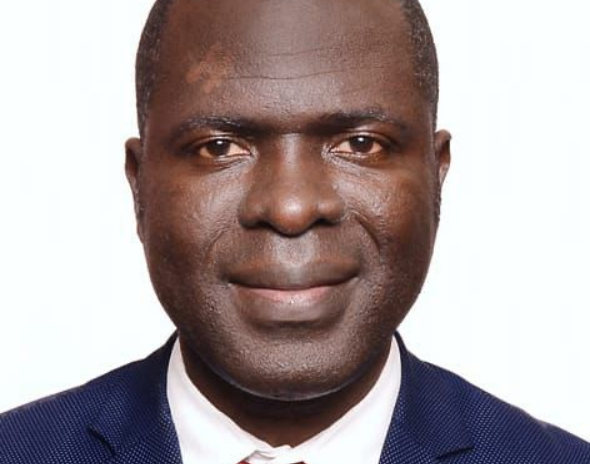
Dr. Clarence R. Pearson, Sr., contributed writer
The scope of these withdrawals is unprecedented in the modern era, and their significance is immediate. They reach beyond symbolic resistance to multilateralism and cut into the operational core of global governance. Climate science bodies, development and trade platforms, peacebuilding mechanisms, and regional economic commissions—many central to the Global South—now move forward without consistent U.S. participation. The signal to partners is clear: American engagement in multilateral systems is conditional, reversible, and subject to unilateral executive recalibration.
Across the Global South, the consequences are not theoretical. They are structural and ongoing. Multilateral institutions—flawed but indispensable—will remain the primary venues for coordinating responses to climate shocks, conflict, migration, and economic volatility. However, when a major power exits, it creates a vacuum. That vacuum does not remain empty. Influence flows to those who stay, shaping standards, financing priorities, and narratives in ways that increasingly bypass U.S. preferences.
Africa feels these shifts most acutely. Several of the institutions affected function as policy engines for African development planning, climate adaptation, peacebuilding coordination, and regional integration. As U.S. participation recedes, these platforms may weaken—or recalibrate—often with reduced resources and altered leadership dynamics. Yet Africa’s response determines whether this moment becomes a liability or a strategic inflection point.
Should African states respond individually, fragmentation will undermine continental leverage. Bilateral bargaining will intensify asymmetries, encourage uneven conditionalities, and fuel competition among neighbors for security partnerships and investment. If, however, Africa responds collectively through the African Union, a different trajectory emerges. Unified institutional positioning—anchored in shared priorities and reinforced by the African Continental Free Trade Area—transforms vulnerability into leverage. Collective negotiation, common minimum standards for external partnerships, and Africa-led substitutes for weakened multilateral functions strengthen autonomy rather than diminish it.
This unfolding moment also raises a broader question: what does a non-consensus, withdrawal-driven U.S. approach to multilateralism signal for future engagement with the Global South? In diplomacy, trust functions as currency. When commitments appear unstable, partners discount assurances, demand higher upfront concessions, and hedge toward alternative forums. Cooperation becomes transactional rather than strategic, episodic rather than durable. Even on issues central to U.S. foreign policy—counterterrorism, migration management, supply-chain security, and geopolitical competition—credibility gaps complicate coalition-building in real time.
The domestic implications are equally present. Economically, disengagement from standard-setting bodies allows rules to form elsewhere, forcing American firms to adapt rather than lead. Socially, withdrawals from institutions focused on development, health, women, and children reverberate among Global South diasporas, reinforcing perceptions that the United States is stepping away from shared human concerns. Politically, soft power erodes as leadership in global public goods gives way to absence.
Paradoxically, the sovereignty these withdrawals seek to protect grows more fragile. Influence today is exercised less through dominance than through participation—by funding, staffing, and shaping institutions that persist beyond any single administration. As crises intensify, the United States still turns to these forums. Re-entry, however, proves slower, costlier, and more politically constrained than sustained engagement.
The world now navigates an era defined by climate disruption, demographic pressure, technological acceleration, and shifting power balances. These challenges ignore borders and resist unilateral solutions. As the United States steps back from multilateral arenas, it does not escape global consequences; it encounters them later, under less favorable conditions.
For Africa, the path forward is immediate and clear: unity, institutional consolidation, and strategic autonomy. For the United States, the choice remains stark and ongoing. Leadership in the twenty-first century is not measured by how many institutions a nation exits, but by how effectively it shapes the ones that continue to define the global order.
About the author
Dr. Pearson works as a social researcher, educator, and author, bringing more than twenty-nine years of professional experience in post-conflict peacebuilding, recovery, and development. His work spans both public and private sector institutions, with a particular focus on governance, social healing, and institutional reform in fragile and transitioning societies.
Support Independent Journalism
Your support helps FrontPage Africa continue delivering independent, credible, and impactful journalism. Every contribution strengthens our ability to investigate, inform, and hold power accountable while keeping quality journalism accessible to our readers.
Support our journalism or subscribe to receive the latest FrontPage Africa stories and updates.