GBARNGA, Bong County – On the muddy banks of the Jor River in Civil Compound, Gbarnga, barefoot children chase one another along the path where a bridge was supposed to rise — a bridge many here believed would change their lives forever. Today, the place is silent except for the murmuring of the current and the anxious questions of residents who still can’t understand why the project was stopped.
By Selma Lomax [email protected]
The 38-meter bridge, planned to connect Civil Compound, Brooklyn, Gboveh Hill, and Jorkpenmue, was an ambitious community-driven initiative led by the Citizens Movement for Change (CMC) in partnership with Bong County District 3 Representative J. Marvin Cole. Backed by CMC Political Leader Musa Hassan Bility, the bridge was meant to end years of isolation for thousands who depend on the dangerous Jor River crossing for school, trade, and daily survival.
But early this month, the Ministry of Public Works ordered a halt to the construction, claiming the project had already been “included in the national budget.” The announcement stunned residents and angered community leaders, who say they have waited decades for a bridge that never came — until now.
“Two Children Drowned Right There”
For Mary Meanto, a mother of four, the Jor River is not just a body of water — it is a place of tragedy. She remembers the day two children drowned while trying to cross the river on a slippery log.
“There used to be one big tree log here,” she says, pointing to the water. “When you slip, that’s the end. My auntie’s children — two of them — drowned right there. We cried and cried, but nobody from government came. Nobody.”

Mary says the community rejoiced when CMC and Rep. Cole brought in construction materials earlier this last month. “We thought our suffering was ending. We danced that day,” she recalls. “Now they say stop the work because it’s in some budget. Which budget? We don’t see any bridge here.”
She shakes her head. “We are not fighting the government. We are begging. Let anybody build it — whether it’s Musa Bility or the president himself. We just want a bridge.”
A Generation Waiting
For Oldma Saye, a gray-haired elder who has lived in the area for more than 25 years, the halt feels like history repeating itself.
“I have seen promises come and go,” she says, leaning on her walking stick. “When Musa Bility brought cement and iron rods, that was the first real thing we saw. Not just talk. Now the materials are wasting, and we are back to the same old story.”
She worries that another generation of children will grow up stranded on opposite sides of the river. “When the water comes up, children stay home from school. They fail, they lose hope. Is that how a country grows?”
Her voice rises: “Let the government open its heart. Let them not stop help because of politics. This is not about red or blue party. This is about people.”
“We Have Waited Too Long”
Benjamin V. Brown, a youth leader of Civil Compound, points to the fenced-off area where cement and iron rods lie idle under the rain. “All the materials are here,” he says. “The trucks came, the workers were ready. Then suddenly Public Works said the bridge is already in the budget. But no one has ever seen that budget line. No visit, no plan, no survey — nothing.”
To Benjamin, the halt is more than bureaucratic delay — it’s a betrayal. “We don’t want fight,” he says. “But government should not fight us either. When people take initiative, it’s not politics. It’s partnership. When you stop it, you stop progress.”
He pauses and adds quietly, “A bridge is not about politics — it’s about life. Even those in power will one day use this same bridge.”
“The River Doesn’t Know Party Colors”
At the quiet construction site, Joe Davis, a teacher at the local public school, surveys the rusting rods and empty trenches. “Look at these materials wasting,” he says. “Even if the government says the bridge is in the budget, when will they build it? Next year? After elections? By then, another child could die here.”
He sighs. “This bridge became a problem because it was an opposition-led initiative. But the river doesn’t know party colors. When it floods, it floods everyone — CDC, CMC, or UP.”
Davis sees the project’s suspension as symbolic of Liberia’s deeper governance problem. “This is how politics kills progress,” he says. “You stop a project not because it’s bad, but because of who started it. Meanwhile, the people suffer.”
A Community on Its Knees
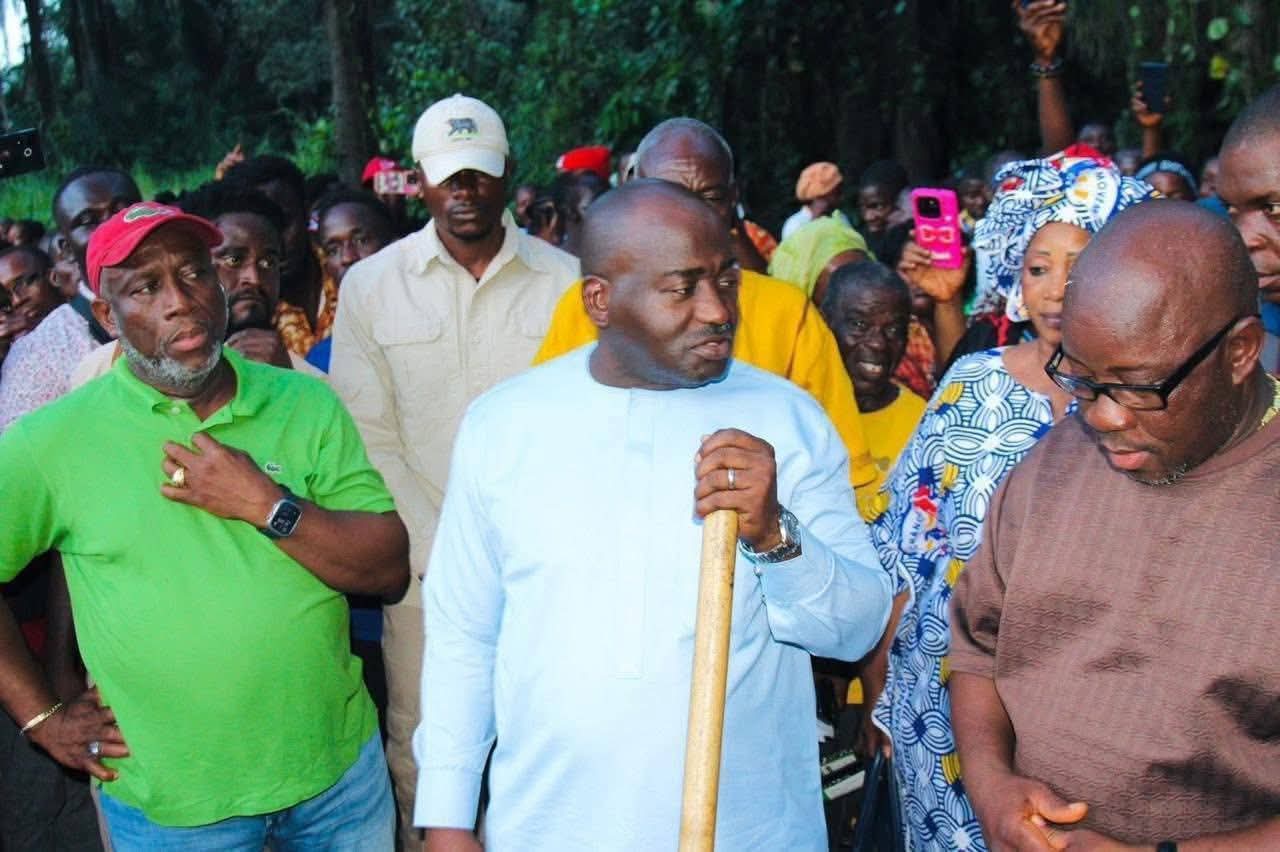
As evening falls, dozens of residents gather by the water. Some hold placards reading “Let the Bridge Go On” and “Development Has No Party.” They speak in unison, calling on the government to reverse its decision.
“Our leaders say the bridge is already in the national plan,” one man says. “If that’s true, then where is it? Why have we waited so long?”
To the people here, the bridge represents more than a structure — it’s hope. A link to markets, schools, hospitals, and opportunity. A lifeline that politics has put on hold.
CMC Condemns Government “Resistance”
Meanwhile, the Citizens Movement for Change (CMC) Wednesday condemned the government’s action, calling the halt a “deliberate attempt to stifle community-led development” and a “discouraging display of political obstruction and bureaucratic insensitivity.”
CMC Chairman James M. V. Yougie said the Ministry’s claim that the project was already funded under the national budget is “misleading and politically motivated.”
“The government’s sudden claim that this bridge is part of a national budget plan is not only surprising but suspicious,” Yougie told reporters. “There are barely two months left in the fiscal year. There’s no record of this bridge in the budget or any announcement by Public Works about it.”

According to Yougie, the only major road project for Bong County in the 2025 budget is the Totota–Sanoyea road rehabilitation, “which has nothing to do with this bridge.”
“The Ministry asked us for technical documents, which we provided. We followed every procedure,” he said. “Then suddenly, they claimed ownership of a project that never existed in their plan. That’s politics — not policy.”
CMC accused the Ministry of turning development into a partisan contest. “Instead of embracing citizen partnership, the government has chosen to block progress,” the group said in a statement. “If every community initiative is seen as opposition propaganda, how can the country develop?”
The movement insists the bridge project was never meant to compete with government programs but to complement them. “Our goal was to connect people, not divide them,” Yougie said. “Rejecting a community-based project under false claims only hurts the people who depend on it for survival.”

Public Works Minister Roland Layfette Giddings, in response, reiterated that his ministry retains sole authority to approve all public infrastructure projects, stressing the need for safety and compliance with national standards.

But the CMC has accused the government of using that argument as a political shield. “When ordinary citizens mobilize to fix what the state has ignored, government should applaud them, not punish them,” Yougie said. “This decision discourages civic participation and tells communities that their efforts don’t matter.”
“Just Let It Happen”
As night falls, the sound of rushing water grows louder. Standing once more by the riverbank, Mary Meanto grips her daughter’s hand and prepares to cross the same slippery log her relatives once used.
“We have begged enough,” she says softly. “Let the government build it if they will. Let Mr. Bility build it if he can. We don’t care who gets the credit. We just want a bridge.”
She takes a careful step onto the log — one foot, then another — and begins the slow, perilous walk across, as the dark water below whispers the same plea: let the bridge go on.
As of publication, the Ministry of Public Works has not announced when — or if — work on the Jor Bridge will resume under the national budget. Materials delivered by CMC remain in Siwa Compound under community watch, awaiting a decision that could determine whether hope, once again, must wait.
Support Independent Journalism
Your support helps FrontPage Africa continue delivering independent, credible, and impactful journalism. Every contribution strengthens our ability to investigate, inform, and hold power accountable while keeping quality journalism accessible to our readers.
Support our journalism or subscribe to receive the latest FrontPage Africa stories and updates.