Liberia’s government has renewed its call for deeper transparency, predictable financing, and genuine partnership with development partners, as official data show that aid disbursements have outpaced commitments over the past two fiscal years, a rare but complex trend in international development cooperation.
By: Julius Konton
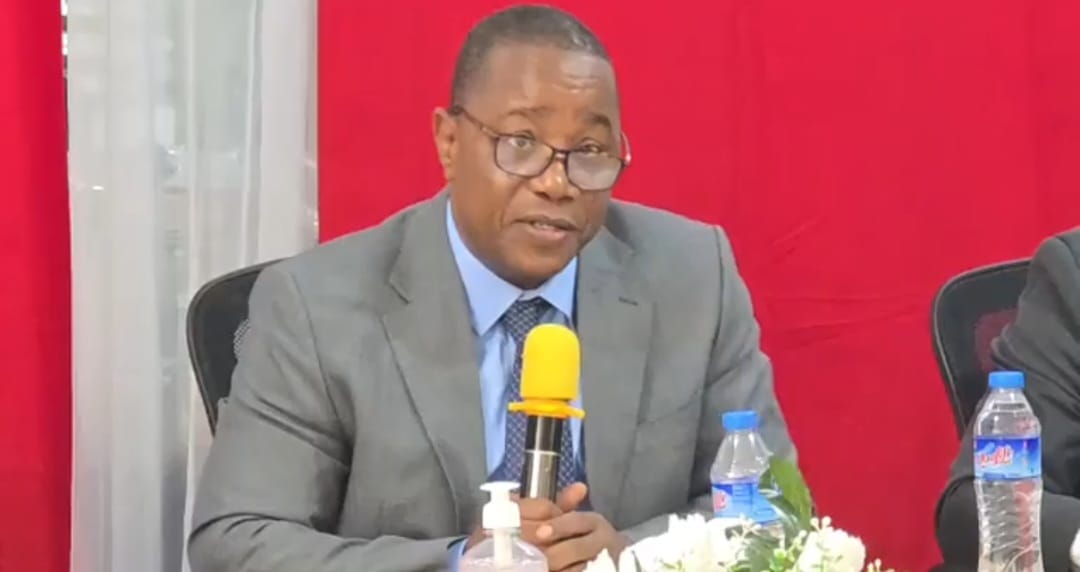
The renewed push was underscored during a one-day Aid Coordination Conference convened by the Ministry of Finance and Development Planning, bringing together senior government officials, donors, and development partners to assess aid effectiveness and recalibrate cooperation frameworks.
Three Pillars of the New Aid Compact
Opening the conference, Deputy Minister for Fiscal Affairs Andrew G. Myers outlined three core objectives guiding the government’s aid coordination agenda:
Accountability; mutual responsibility for how resources are committed, disbursed, spent, and reported;
Predictability; clarity and advance notice on government plans and partner financing; and
Partnership: shared ownership of development priorities, implementation, and results.
“These principles must apply equally on both sides of the development equation, government and partners,” Myers said, stressing that aid effectiveness depends not only on volume, but on trust, transparency, and alignment with national priorities.
Aid Flows: Disbursements Surpass Commitments
Providing a fiscal overview covering the past two years, the Deputy Minister disclosed that total aid commitments stood at approximately US$641.4 million, while actual disbursements reached US$708.5 million, resulting in an 82 percent disbursement-to-commitment ratio in 2025.
According to the Ministry, the unusual gap reflects:
Partners who disbursed funds without formal prior commitments, and
Others who committed resources without specifying exact financial figures.
“This is a positive anomaly,” Myers noted, “but it also underscores the need for better predictability and documentation.”
Among the major contributors cited were the Abu Dhabi Fund for Development, the Arab Bank for Economic Development in Africa, Ireland, and Japan, alongside several other long-standing partners.
The Costly Challenge of Ineligible Expenditure
A significant portion of the conference focused on what Myers described as “ineligible expenditure”, funds that were spent but later deemed non-compliant with donor rules.
In some cases, these arise from:
Weak documentation or accounting gaps, or
Differences between government and donor accounting standards.
Once an expenditure is declared ineligible, development partners typically demand reimbursement, forcing the government to repay from its national budget even when the original project was executed off-budget.
“This creates fiscal distortion,” Myers explained. “The project is off-budget, but the debt repayment is on-budget.”
He emphasized that projects implemented through the national budget framework are easier to audit, justify, and integrate into Liberia’s debt management strategy, and called for clear, forward-looking criteria on what constitutes ineligible expenditure, cautioning against retrospective reclassification.
Audit and Integrity Reforms Gain Momentum
The Deputy Minister highlighted major governance reforms supported by development partners over the past two decades, particularly the strengthening of the General Auditing Commission (GAC).
Since its establishment in 2005, the GAC has benefited from sustained donor support in staffing and capacity-building, emerging as one of the region’s leading supreme audit institutions.
He also pointed to progress at the Liberia Anti-Corruption Commission (LACC), which now enjoys greater prosecutorial independence, a milestone reform in Liberia’s accountability architecture.
“These institutions will never improve unless we test them,” Myers said. “Accountability must be practiced, not just proclaimed.”
From Aid Dependency to Structured Partnership
Placing Liberia’s reforms in a global context, Myers recalled the country’s participation in landmark aid effectiveness frameworks such as the Paris Declaration on Aid
Effectiveness and the Accra Agenda for Action, which emphasize aid on plan, aid on budget, and aid on report.
Liberia, he said, is now transitioning from aid dependency to structured partnership, where:
National, sectoral, and local development plans are locally designed, and
Partners are invited to co-finance and co-implement, ensuring shared ownership.
Expanding Transparency Across Government
The Ministry also reported significant progress in public financial management reforms:
Internal audit units now operate across all ministries and agencies, forming the foundation for external audits by the GAC;
Local governments are adopting standardized financial management regulations as part of decentralization; and
Treasury and financial systems are being standardized across government.
The European Union, Myers noted, can attest to the inclusive process that shaped Liberia’s current national development plan, involving donors, civil society, and technical experts at both national and sub-national levels.
Faster Impact, Shared Responsibility
While acknowledging that aid volume remains important, the government stressed that speed and impact matter just as much.
“We want to see how quickly aid translates into real development outcomes,” Myers said, adding that mutual accountability, faster results, and forward-looking reform will define Liberia’s future engagement with partners.
Minister Myers concluded his opening remarks with a reaffirmation of Liberia’s commitment to full disclosure, open dialogue, and non-compromising transparency on both the government and partner sides.
Support Independent Journalism
Your support helps FrontPage Africa continue delivering independent, credible, and impactful journalism. Every contribution strengthens our ability to investigate, inform, and hold power accountable while keeping quality journalism accessible to our readers.
Support our journalism or subscribe to receive the latest FrontPage Africa stories and updates.