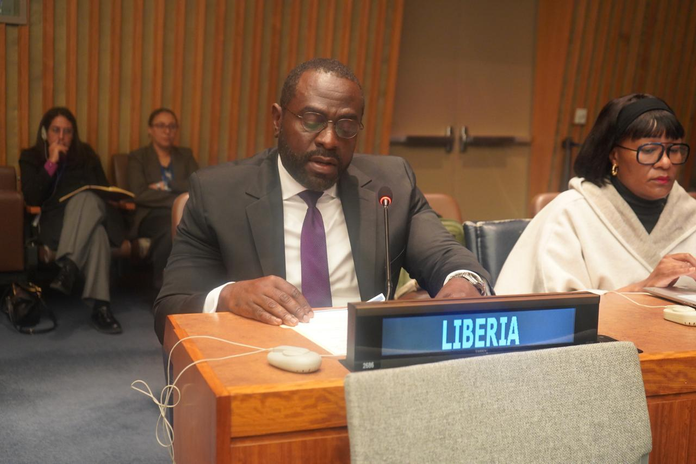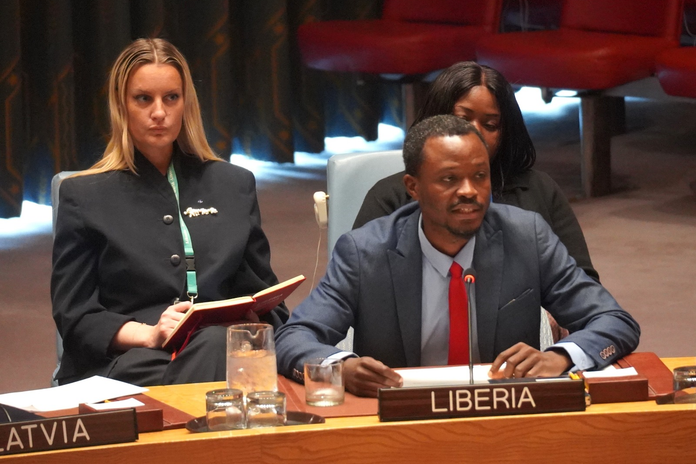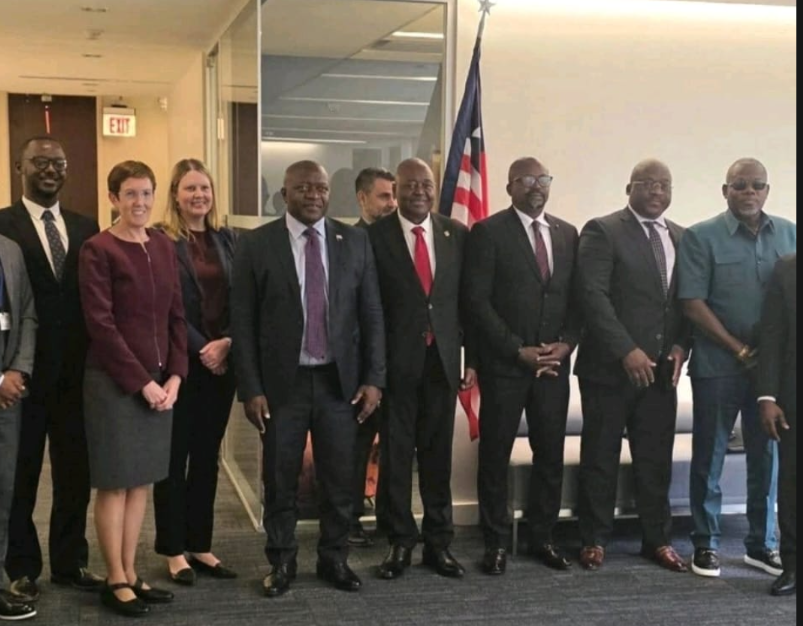
Washington D.C. – Liberia has intensified its bid for a transformative second compact with the Millennium Challenge Corporation (MCC), as Finance and Development Planning Minister Augustine Kpehe Ngafuan led a high-level delegation to MCC headquarters during the ongoing IMF–World Bank Spring Meetings.
Minister Ngafuan underscored that the proposed Second Compact goes beyond financial assistance, describing it as a cornerstone of the government’s broader economic transformation agenda aimed at boosting private-sector growth, expanding energy access, and strengthening governance.
According to the U.S. Embassy in
Washington D. C., Liberia’s Ambassador to the United States, Al-Hassan Conteh, characterized the engagement as both productive and strategically significant for Liberia’s economic future. He noted that discussions focused on accelerating the development of the prospective compact, which is expected to address key constraints to growth—particularly in the energy sector.
The Liberian delegation included Information Minister Jerolinmek M. Piah, Public Works Minister Roland L. Giddings, MCC Liberia National Coordinator Alieu F. Nyei, and Managing Director of the Liberia Electricity Corporation, Mohammed M. Sherif, among others.
Officials highlighted the government’s prioritization of energy infrastructure as a key driver of job creation, industrial expansion, and improved service delivery. MCC technical teams are currently conducting sector diagnostics to identify underlying challenges, including high electricity tariffs, limited generation capacity, and operational inefficiencies.
For its part, the MCC reaffirmed its commitment to a data-driven, evidence-based approach, ensuring that any future compact aligns with Liberia’s development priorities and the corporation’s mission of reducing poverty through sustainable economic growth.
Liberia’s eligibility for compact development remains tied to its performance on the MCC scorecard, which assesses indicators such as rule of law, control of corruption, fiscal policy, and investment in people.
The engagement comes on the sidelines of the IMF–World Bank Spring Meetings, where global leaders convene to discuss economic trends, development financing, and policy reforms. For Liberia, the timing is critical as it seeks to deepen economic ties with the United States and position itself for increased investment flows.
While the final scope and size of the compact remain under discussion, the emphasis on energy, governance, and institutional reform signals a targeted strategy to tackle Liberia’s most pressing development challenges.
For now, the government’s message is unmistakable: Liberia is positioning itself as ready to partner, reform, and deliver.
Support Independent Journalism
Your support helps FrontPage Africa continue delivering independent, credible, and impactful journalism. Every contribution strengthens our ability to investigate, inform, and hold power accountable while keeping quality journalism accessible to our readers.
Support our journalism or subscribe to receive the latest FrontPage Africa stories and updates.