Summary
- Some accused Liberian warlords are among the biggest proponents of Liberia’s War and Economic Crimes Court, saying they want their day in court and that only a trial can bring justice, closure, or clear their names.
- Seventeen years after the Truth and Reconciliation Commission recommended a war crimes court, some accused war criminals have joined advocates urging lawmakers to quickly pass laws that will establish the court and meet international standards.
- Experts say former combatants continue to bear psychological, social, and personal consequences of the conflict, and the delay in accountability has prolonged trauma for victims and accused perpetrators alike.
By Gloria Wleh, senior reporter with New Narratives
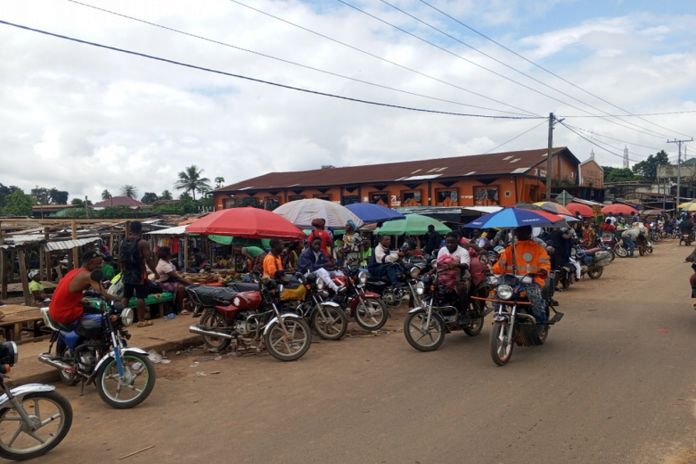
BUTT NAKED COMMUNITY, Montserrado County — On a recent afternoon, commercial motorcyclists wait for passengers at this bustling entrance into a community which bears a name that stirs painful memories in the minds of many Liberians.
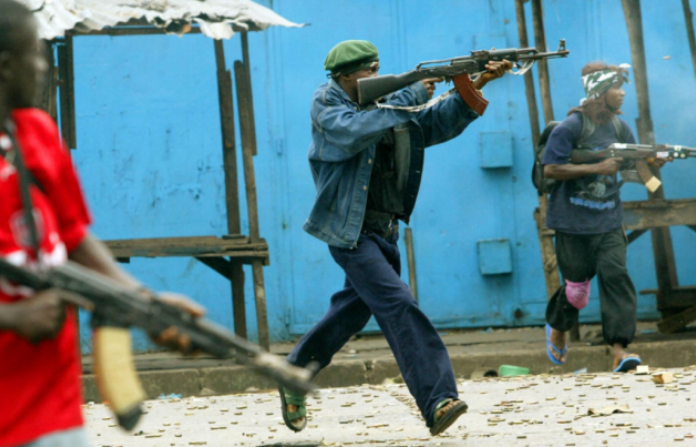
Joshua Blahyi, famously known as “General Butt Naked” during the civil war, told Liberia’s 2009 Truth and Reconciliation Commission that his fighters with various rebel factions killed 20,000 people. He earned his war name for charging into battle naked along with his fighters, a tactic meant to terrify the enemy. Blahyi told the TRC that before fighting, he would perform a human sacrifice to the devil by killing an innocent child.
After the war, the people of this community named it in his honor. But that decision has one big opponent: Blahyi himself.
“It’s a shame. It’s pointing to my wrong energy in life,” Blahyi says. “I’m no more “Naked”. I don’t want to be called that name.”
Blahyi has been the most prominent ex-combatant to express remorse for heinous atrocities committed during the war. He was one of only 30 perpetrators to confess to their crimes during the TRC hearings that heard more than 20,000 testimonies. Wracked by guilt and shame, he says it was an effort to seek healing.
Many of the accused perpetrators, including Thomas Nimely, a senator who led the rebel group the Movement for Democracy in Liberia (MODEL) and one of 116 recommended for prosecution by the Commission, have tried to block the court. But now, as a court looks to be slowly taking shape, Blayhi is one of a growing number of perpetrators who are welcoming it.
He is not alone. Victims groups say they are seeing an influx of ex-combatants who want to face justice.
“Persons who are not just colonels but ex-generals, who want to go and clear their side,” says Peterson Sonyah, director of the Liberia Massacre and Survivors Association, Liberia’s largest victims group.
Blahyi says holding the court is essential not just for him but for the whole country. “I think the future of this country depends on whether the war crimes court will come or not.”
Delay in accountability taking psychological toll on ex-combatants
Victoria Zeh was a 17-year-old virgin in 1990, when she says she was forced to join the rebel faction of the late Prince Johnson to fight for his Independent National Patriotic Front of Liberia, a breakaway faction from Taylor’s group which started the war on Christmas Day in 1989.
Being forced to fight has not saved her from retaliation from her community. Residents of Bonlay Town, Nimba County, where she lives, have labelled her as “Prince Johnson’s wife.” Known as “Burkinabe” during the war, Zeh says the war profited others but not her. No man wants to marry her. She has lived her life single and childless.
She says a court will help her clear her name and prevent similar harm from befalling others in the future.“We suffer. No benefit. Now, some of us suffering,” she says in Liberian English. She said she had no choice but to fight. “If to say I was not going to follow that man, then somebody behind [would marry] me.
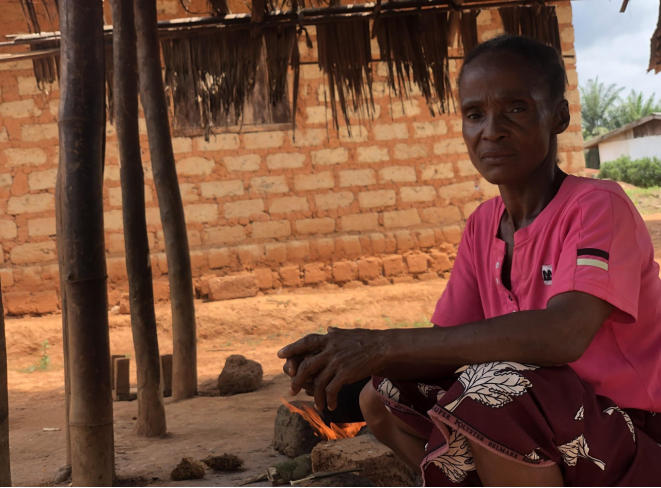
Stanley Clinton, whose war name was “General Sweet Candy,” says without a trial he lives in fear of arrest should he travel to visit his families and friends. Clinton, 54, who fought in Liberia and Ivory Coast for multiple factions, including Charles Taylor’s National Patriotic Front of Liberia, points to the convictions of former warlords Kunti Kamara, Alieu Kosiah and Mohammed Jabbateh, in the United States and Europe. All three are serving sentences of between 20 and 30 years after being captured there and convicted of war related crimes committed in Liberia. Many others such as Agnes Taylor and George Boley have been expelled from exile in Europe and America. Moses Wright of the Armed Forces of Liberia, Martina Johnson and Saturday Tuah of the National Patriotic Front will face trial in the coming year.
“For me I scared to travel,” Clinton says. “Because my other friend them that travel, I know they arrest some of them.”
Blahyi says only a sentence will free him and his family from the shame and fear
Joshua Blahyi has four children and he says the war has truly never ended for them either. He says his family is constantly attacked by relatives of those he killed. He says he has been stabbed, his rib broken, while he and his children have been poisoned more than once.
Blahyi tells FrontPage Africa/New Narratives that he is no longer willing to talk about his crimes. But in a 2010 CNN interview he earned international infamy by describing the horrific brutality he inflicted on children. (The interview led to him becoming the inspiration for a villain in the long running Broadway musical “The Book of Mormon”.)
In the years after the war Blayhi became a pastor and has tried to counsel former combatants and troubled youth. But he cannot escape the guilt over his crimes. He says he has told his children that they are collateral for his actions and believes only a prison sentence can truly free them.“You don’t cut off a life and remain normal. It’s not possible,” Blahyi says. Every conversation renews the trauma. “Like I’m going over it today again, I’m going to have some strong night [bad dreams] tonight.”
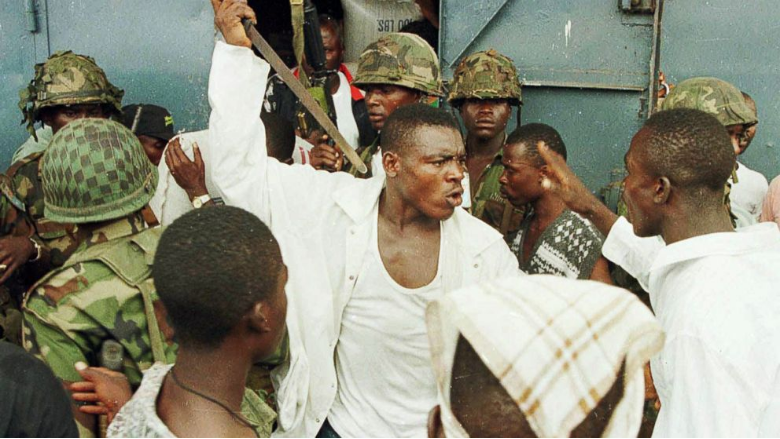
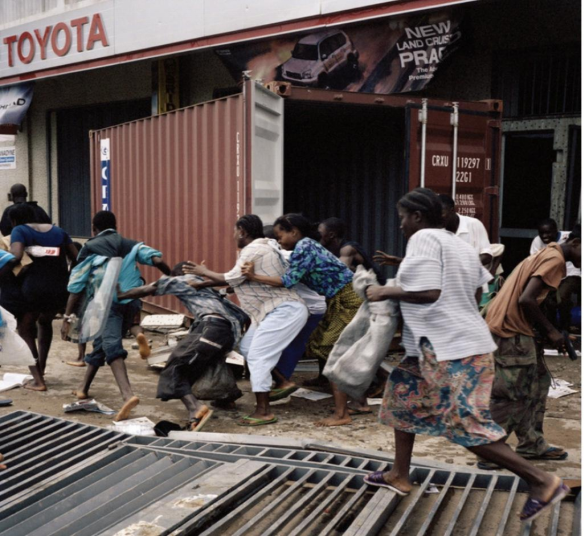
Credit:David Guttenfelder/AP Photo
Trauma psychologist Saidu Swaray says it is likely many, if not all of the former combatants, are living with trauma that has only gotten worse without accountability. He says testifying and being held to account can bring some healing.
“The more the time is delayed into giving them the opportunity to be heard the more burdensome it becomes for their psychological health,” says Swaray.
But many ex-combatants say they sleep just fine. Stanley Clinton, former “General Sweet Candy” is one of many former perpetrators who say they feel no psychological burden because of the war. “I have no regret. No guilt,” Clinton says. “Let who get crime against me, know that I did something against them, let them come and prove it.”
But Swaray says denial is a coping mechanism that is being used to suppress the burdens they feel psychologically. He says speaking up for justice is a sign of strength and not weakness.
“The war and economic crimes court that is coming is an opportunity for you as well,” Swaray says. “You need to do yourself a favor to make your spirit free.”
Blahyi says many former fighters numb themselves on drugs and alcohol because they are not answering to those things they did in the past.
“I know they are also suffering guilt. I know,” Blahyi says. “I think the jail in the four walls is better than the jail in your conscience.”
Only a handful of combatants are likely to face justice
The TRC recommended amnesty for Blahyi and 30 accused perpetrators who testified including Gertrude Pajebo and Mohammed Sheriff, but it did not have the final say. Investigators and prosecutors will decide who will be tried based on the evidence they gather and their responsibility.
But lower-level combatants like Blayhi are unlikely to face accountability. Experts have warned that Liberia’s tribunal will only be able to afford to try a few of the accused perpetrators who bear the greatest responsibility. The Special Court in Sierra Leone cost nearly $600 million in today’s dollars and tried just 12 people. The international community has said it will only provide limited funding. There are some crimes including murder, that can be tried by Liberia’s domestic courts but seeking justice in a court system that is crippled by corruption, would require a commitment that the government has not been willing to make.
Court’s fate lies with lawmakers
Under President Joseph Boakai, who broke with his two post-war predecessors by backing a war and economic crimes court after taking office in 2024, an office set up to steer the process sent bills to the Legislature. Those bills, along with four others submitted separately, are being debated behind closed doors. Boakai and the international community are now pressuring lawmakers to pass bills that will meet international standards before Liberia takes its turn at the head of the UN Security Council meeting in December.
The delay is making advocates nervous. They fear perpetrators are working to abort the courts.
“Some of them are in the Legislature,” says Hassan Bility of the Global Justice for Human Rights. “Some are doing business. Some are out of the country and some work with the president.”
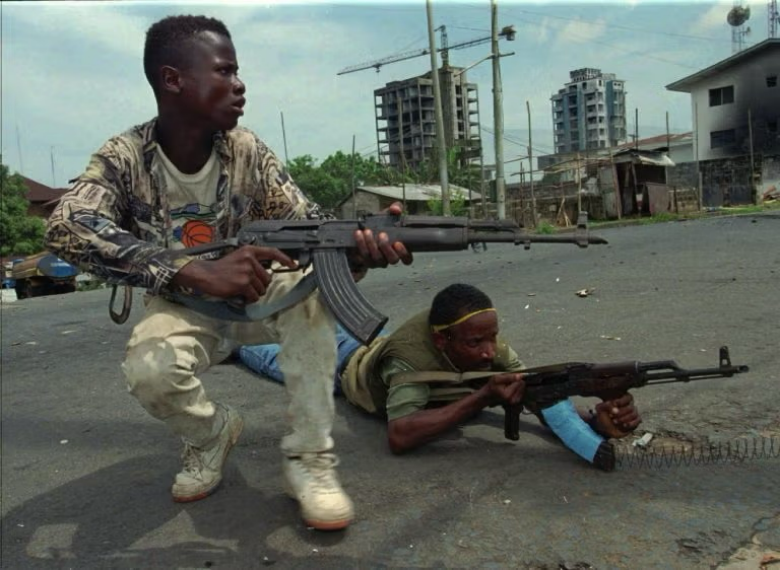
Among the high-profile names on the Commission’s list to be prosecuted are legislators Senator Thomas Nimely and George Boley as accused notorious perpetrators who must face prosecution. The Commission also flagged other political figures, like presidential advisor Emmanuel Shaw, businessman Benoni Urey, and Representative Edwin Snowe, for investigation on economic crimes.
Joshua Blahyi says he fears if the court is not established during the tenure of President Boakai, no other person will have the political will to bring the court.
“It’s sad that politicians who are supposed to be the deciders of the nation’s destiny are playing with it,” Blahyi says. “They are failing Liberia and they can change it.”
But ultimately, Blahyi blames Liberians themselves. By electing former warlords to government, they are ensuring justice stays out of reach, he says. He wants accused perpetrators like himself to be courageous to come forward and tell their stories, and encourage voters to stand against warlords once and for all.
This story is a collaboration with New Narratives as part of the “Investigating Liberia” project. Funding was provided by the Swedish International Development Cooperation Agency. The funder had no say in the story’s content.
Support Independent Journalism
Your support helps FrontPage Africa continue delivering independent, credible, and impactful journalism. Every contribution strengthens our ability to investigate, inform, and hold power accountable while keeping quality journalism accessible to our readers.
Support our journalism or subscribe to receive the latest FrontPage Africa stories and updates.