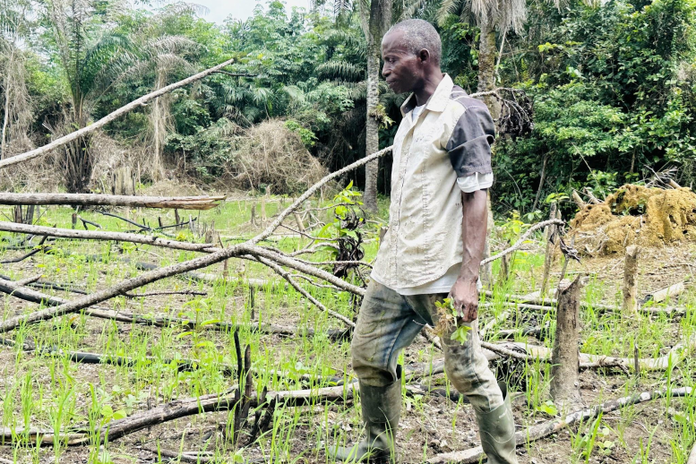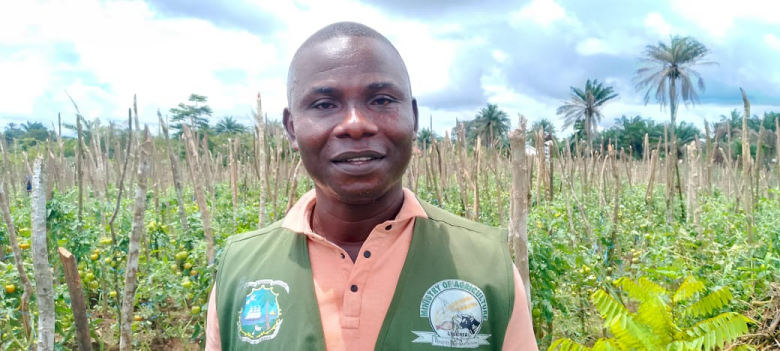
NIMBA — A new county‑led agriculture initiative in Nimba County is already producing significant harvests and aims to make the county a reliable, year‑round supplier of vegetables to Monrovia, county and agriculture officials have said.
By Franklin Doloquee / Nimba County
Launched with roughly US$400,000 from the Nimba County Development Fund, the Nimba County Agriculture Project was created to reverse years of local underproduction and to cut the cost and disruption of importing fresh produce from neighbouring countries.
Jefferson G. Degon, Nimba County Coordinator for the Ministry of Agriculture, said the move reflects decentralization and a push to restore Nimba’s farming reputation.
“Too often our women the ones who drive local markets cross into Guinea or the Ivory Coast to buy vegetables like tomatoes that can be grown here,” Degon said.
“This project aims to reduce those costs, build local markets, and ensure our farmers are paid fairly.”
How the project works
Rather than operating farms directly, the project hires service providers, marketers and a Monitoring and Evaluation Team (MAE) to support producers and manage production.
That contracting model lets the project regulate prices, guarantee growers’ payments and help marketers secure market access before crops leave the field.
The community‑oriented approach includes training and demonstration visits for farmers, students and local youth—measures meant to spread technical skills and encourage continued local ownership.
Current production and expansion plans
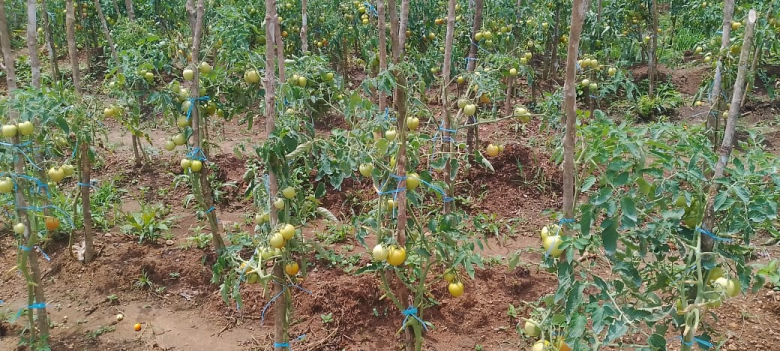
The first demonstration farm, a 1.14‑hectare plot, is now being harvested and is expected to yield more than 20 tons of produce.
Project managers plan to retain roughly 15 tons as a revolving fund to finance the next planting cycle; the remaining 5–10 tons will be paid to the service provider as part of their contract.
Two additional vegetable plots of 1.5 hectares each are being brought online. One will be ready by mid‑September, while seedlings are being transplanted on the other, creating a staggered harvest schedule designed to supply markets continuously rather than in short bursts.
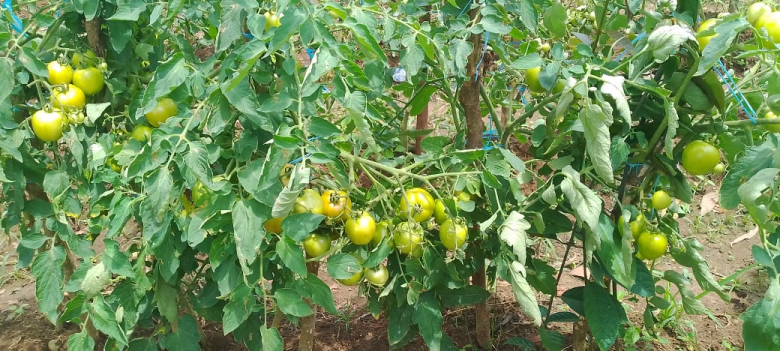
Crops grown across the sites include tomatoes, watermelons, sweet peppers, carrots and corn.
Project staff said an animal‑husbandry component (small ruminants/poultry) and tree crops are planned later to diversify incomes and improve nutritional options.
Rice scale‑up for affordability
To address staple food insecurity and lower import dependence, county officials have contracted Liberia Farming Company (LIFACO) to clear more than 1,000 hectares in the B‑2 area, with an immediate production target of 100–600 hectares.
If scaled as planned, county leaders say they could offer locally grown rice at about US$12 or less per defined volume, a price they argue will be competitive with imported rice and beneficial for household budgets.
From field to market: logistics and pricing
Project teams have already moved produce to Monrovia. In under two weeks, officials shipped 9.7 tons of tomatoes and expect to harvest an additional 3 plus tons in the coming days.
Marketing staff are in talks with buyers in the capital to arrange regular purchases that cut middlemen and reduce reliance on imports from the Ivory Coast.
Price negotiations have varied. Initial project offers were the equivalent of US$3 per box; quoted prices later ranged up to 24,000 Liberian dollars per 50kg box, while some wholesalers proposed 17,000 LD. Degon emphasized that the project covers transport, handling and road tolls and will not accept prices that undercut farmers or jeopardize the program’s sustainability.
Storage, contracts and infrastructure
Service provider contracts run for one year (August through next year) and officials said more providers will be invited as the program expands.
Plans are underway to build a storage and aggregation facility near Nimba Lodge where farmers can keep produce and where the project can consolidate loads for bulk transport to Monrovia.
Wells are being drilled on several hectares to develop irrigation and reduce dependence on rainfall, helping the project keep production steady across seasons.
Revolving fund and financial safeguards
Revenue from produce sales will form a revolving fund to finance subsequent planting cycles and to cushion the program during county budget transitions. By staggering plantings,
adding irrigation and expanding sites, Degon said the county intends to smooth supply and avoid the boom‑and‑bust cycles that have plagued local farming.
Voices from the farm
On a recent visit to the demonstration plot, the soft hum of bees mixed with the sharp odor of damp soil. Workers bent over rows of tomato vines heavy with fruit while another group moved crates toward a waiting truck.
One young female marketer said she was relieved to find local supply for the first time in years.
“Before, I had to travel across the border to buy tomatoes. Now they come from our own fields that saves time and money,” she said.
A local farmer, who requested anonymity, described training sessions that taught spacing, pest management and post‑harvest handling.
“The training helped my yields already. If buyers keep coming, we will stop losing money on bad sales,” he said.
Officials’ acknowledgements and appeal
Degon publicly thanked Nimba County Superintendent Kou Meapeah Gono and national Ministry of Agriculture leadership for enabling the initiative, praising the superintendent for giving young people space to innovate.
He urged residents, traders and institutional buyers to support local agriculture so farmers no longer need to cross borders for produce and invited media and buyers to visit the farms.
One speaker at a recent event said, “We want him to understand that everything we are doing here is to buttress his effort. The youths will never let him down.”
Degon pledged to deliver measurable results to justify the trust placed in the team and invited the superintendent to a harvest lunch.
Challenges and next steps
Project managers acknowledge risks: road conditions that raise transport costs, fluctuating market prices, pests and the need to scale storage and cold‑chain facilities.
To mitigate these, the county plans to expand storage capacity, continue irrigation development, recruit additional service providers, and formalize buyer agreements to ensure predictable off‑take.
If the program meets its targets, Nimba could reduce produce imports, boost local incomes, and strengthen food security for both the county and Monrovia consumers.
For now, Degon said the early harvests and shipments are proof of concept and the beginning of a broader push to revive agriculture in the region.
Support Independent Journalism
Your support helps FrontPage Africa continue delivering independent, credible, and impactful journalism. Every contribution strengthens our ability to investigate, inform, and hold power accountable while keeping quality journalism accessible to our readers.
Support our journalism or subscribe to receive the latest FrontPage Africa stories and updates.