MONROVIA – Liberia is taking steps to formally account for the economic, environmental and social value of its mangrove ecosystems and other natural resources, as stakeholders push for natural capital accounting to become an integral part of national planning, budgeting and investment decisions.
The development emerged Friday, August 7 during a Joint Project Steering Committee Meeting for the Natural Capital Accounting (NCA) and Food Systems, Land Use and Restoration (FOLUR) projects, organized by Conservation International (CI) Liberia in Monrovia.
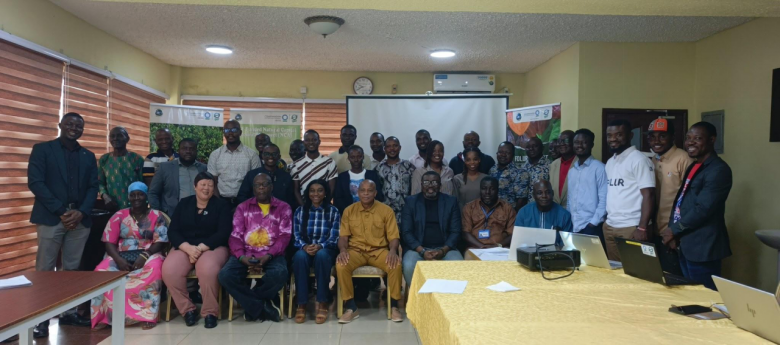
The meeting brought together representatives of government ministries and agencies, development partners, civil society organizations, community leaders, private-sector actors and technical experts to review the achievements of the NCA initiative, assess implementation of the FOLUR project during Fiscal Year 2026, and discuss priorities for FY2027.
A major highlight of the gathering was the planned launch of Liberia’s mangrove account, an initiative intended to quantify the economic and ecological contributions of the country’s mangrove ecosystems and ensure that their value is reflected in national development decisions.
Opening the meeting, CI Liberia Country Director, Momodu Michael Kemokai, said Liberia’s future prosperity depends on its ability to understand, value, and sustainably manage its natural assets.
He noted that Liberia possesses globally important forests, wetlands, mangroves, freshwater systems, and biodiversity, all of which provide critical economic and social benefits to the country.
“The implementation of the NCA initiative has generated important results and lessons,” Kemokai said, emphasizing that collaboration among government institutions, development partners, technical experts and communities has helped strengthen the evidence base for informed policy and investment decisions.
According to him, natural capital accounting has also demonstrated that environmental conservation should not be viewed as competing with economic growth.
“Conserving nature is not a competing priority to economic growth, but an essential foundation for sustainable growth and long-term national resilience,” he said.
Kemokai said the establishment of the mangrove account represents an important milestone because mangroves provide services that are critical to Liberia’s economy and communities.
He pointed to the role of mangroves in protecting coastal communities from erosion and flooding, supporting fisheries and food security, storing significant amounts of carbon, and sustaining the livelihoods of thousands of Liberians.
The mangrove account, he said, is expected to provide a stronger basis for recognizing these benefits within national planning, budgeting, and investment frameworks.
Looking ahead, Kemokai identified three priorities: institutionalizing natural capital accounting within national planning and decision-making, scaling up conservation and restoration, particularly of mangroves and other critical ecosystems and strengthening partnerships to mobilize resources for sustainable landscape development.
Representing FDA Managing Director, Rudolph J. Merab, Governance and Management Consultant E. Ekema A. Witherspoon assured Conservation International and its partners of the Forestry Development Authority’s support for the initiative.
However, Witherspoon cautioned stakeholders to ensure that environmental programs ultimately deliver tangible benefits to Liberians, particularly people living outside Monrovia.
“Let’s understand, but he also asked me to caution all of you that whatever we do, Liberia should be safe. Our national interest should be safe,” Witherspoon said, conveying the FDA Managing Director’s message.
He stressed that Liberia’s development should not be measured only by activities taking place in the capital.
“Liberia is not only those of us who sit in Monrovia. It’s the people out there. So unless the initiatives that we take here can benefit the people out there, they are only bubbles that we are living in.”
Witherspoon urged stakeholders to ensure that policies and decisions made at the national level produce visible benefits in the country’s most remote communities.
“We need to come down and make sure that whatever we do, whatever planning is done, whatever action is taken, the effect is felt in the smallest and remotest part of Liberia,” he said.
He added that history would ultimately judge the decisions being made today based on their impact on future generations.
Also speaking, Prof. Jefferson Karmo of the Environmental Protection Agency (EPA) said the NCA initiative comes at a critical time as Liberia faces mounting environmental challenges.
He said a nationwide environmental monitoring exercise conducted by the EPA in May identified a range of concerns, including soil degradation, declining forest cover, and pollution of water bodies.
“For us at the EPA, we are very much concerned in terms of protecting and managing the environment,” Karmo said.
He described natural capital accounting as an opportunity for Liberia to take stock of its environmental assets and determine how they should be managed for the benefit of present and future generations.
Karmo commended Conservation International and other partners for leading the NCA process, while stressing the importance of involving communities that have historically managed and depended on Liberia’s natural resources.
He said community participation would be essential to sustaining the natural capital accounting process beyond the lifespan of the current project.
The EPA delegation also reaffirmed the agency’s commitment to the initiative, with Karmo noting that three EPA representatives attended the meeting despite the absence of Executive Director Dr. Yarkpawolo due to competing priorities.
Presenting the NCA results framework and achievements, Solomon C. Carlson, Senior Monitoring, Evaluation, Accountability and Learning (MEAL) Manager for West and Central Africa at Conservation International, said the project had achieved all 21 of its indicators.
According to Carlson, all indicators across the project’s three components were reported as 100 percent completed, with several targets significantly exceeded.
Among the areas of overachievement was financing mobilized during implementation. He said the project initially targeted US$1.25 million but succeeded in mobilizing approximately US$4.2 million through its Blue Ocean work and collaboration with the National Fisheries and Aquaculture Authority (NaFAA).
The project also exceeded its targets for mangrove and terrestrial forest protection.
Carlson said the initial target for mangrove protection was approximately 11,975 hectares, but implementation resulted in more than 13,000 hectares being protected.
For terrestrial forests, the project had targeted 5,000 hectares but achieved approximately 6,011 hectares.
He further reported that the project exceeded its target for improving community livelihoods and incomes, with the initial target of a 25 percent improvement increasing to approximately 42.6 percent through project interventions and stakeholder engagement.
Despite the achievements, Carlson warned that the gains could be lost if the natural capital accounts are not maintained and used after the project ends.
He called for the government and stakeholders to ensure that the accounts are regularly updated and incorporated into national planning, budgeting, reporting, and international environmental commitments.
He also emphasized the need for stronger knowledge-management systems so that information generated through the project remains accessible to government institutions and other stakeholders.
“The account is there. There is a need that we continue to update the account and to also use the account,” Carlson said.
He also called for follow-up mechanisms to ensure that communities continue benefiting from interventions after project implementers withdraw.
Presenting on the NCA project’s results, successes, and potential next steps, Joseph Moinsema, NCA Project Administrative Officer, explained that the project was launched in 2020 and implemented through three major components.
The first component focused on building capacity and mainstreaming natural capital accounting into policy and decision-making.
The second component focused on innovative financing mechanisms and supporting local conservation organizations.
The third component centered on long-term conservation, restoration, and community-based management of natural ecosystems.
Moinsema said the project trained 50 technicians in natural capital accounting and established a national mangrove account, while NCA principles and information were incorporated into a number of government policy and planning documents.
He also reported that the project supported four small-grant organizations, providing assistance for awareness programs, community initiatives, production activities, training, and equipment.
Under the conservation component, Moinsema said the project established and implemented 10 conservation agreements involving communities across four counties.
Through these agreements, approximately 250 green jobs were created, while communities were supported to protect about 303 hectares of mangrove ecosystems.
The project covered communities in River Cess, Grand Bassa, Margibi, and Grand Cape Mount counties.
The steering committee meeting also reviewed implementation progress under the Food Systems, Land Use and Restoration (FOLUR) project during FY2026 and considered the workplan for FY2027.
Stakeholders said the initiative remains important to promoting sustainable land use, ecosystem restoration, agricultural productivity, and community resilience.
The discussions are expected to generate recommendations aimed at improving coordination, strengthening monitoring and learning, mobilizing additional resources, and maximizing the project’s impact on both communities and Liberia’s natural environment.
With the NCA project reaching a major implementation milestone, stakeholders now face the challenge of ensuring that the information, systems, community structures, and natural resource accounts developed through the initiative are institutionalized and remain operational beyond the project’s closure.
The meeting therefore placed renewed emphasis on transforming natural capital accounting from a project-based exercise into a permanent tool for Liberia’s development planning, ensuring that the country’s forests, mangroves, wetlands, fisheries, and other natural assets are recognized not only for their environmental importance but also for their contribution to the national economy and livelihoods.
Support Independent Journalism
Your support helps FrontPage Africa continue delivering independent, credible, and impactful journalism. Every contribution strengthens our ability to investigate, inform, and hold power accountable while keeping quality journalism accessible to our readers.
Support our journalism or subscribe to receive the latest FrontPage Africa stories and updates.