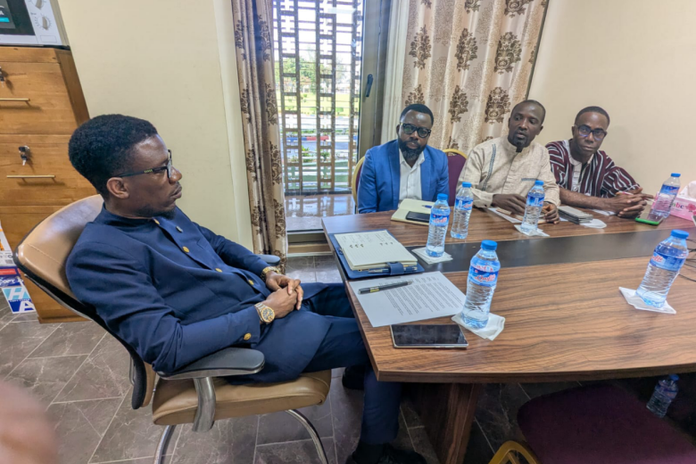
MONROVIA — Liberia’s cocoa and coffee export sector is set to receive a new layer of oversight in the coming weeks, after the Liberia Agricultural Commodities Regulatory Authority (LACRA) concluded a two-day technical training in Monrovia aimed at preparing 47 staff members — most of them newly recruited — for deployment to warehouses across the country. The training closed with a pointed message from the authority’s top official, one clearly intended to travel with the new officers long after they leave the classroom and take up posts in the field.
By Selma Lomax, [email protected]
For a country whose agricultural export earnings depend heavily on cocoa and coffee meeting international buyers’ quality expectations, the people responsible for inspecting those commodities before they leave Liberian soil occupy an outsized position of trust.
It is a position, LACRA’s leadership made clear this week, that comes with a specific and non-negotiable loyalty test.
A Warning Aimed at the Field, Not the Classroom
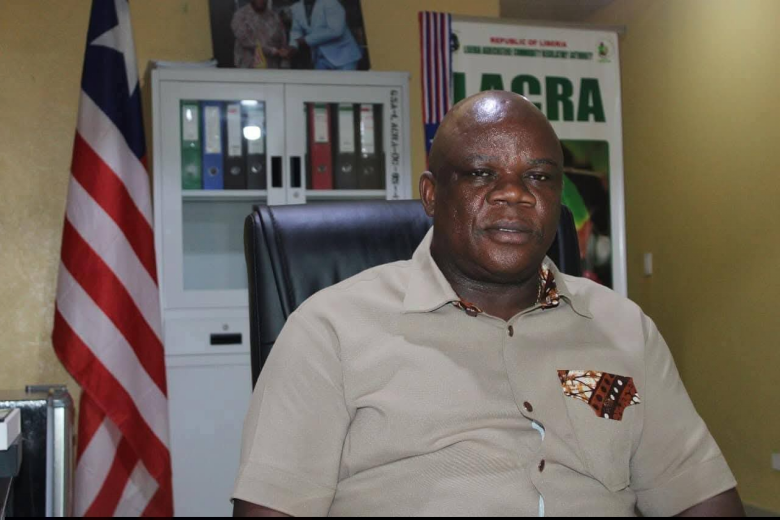
Closing out the training, LACRA Director General Christopher D. Sankolo told participants directly where their obligations lie once they are stationed at cocoa warehouses far from the authority’s Monrovia headquarters. “Don’t be agents for exporters; be agents for LACRA,” Sankolo said, a line that framed the entire purpose of the gathering in a single sentence. The remark was less a passing aside than the central takeaway organizers wanted the new recruits to carry into their postings — a reminder that proximity to exporters in the field should never translate into divided loyalty.
The distinction Sankolo drew matters because of how Liberia’s cocoa and coffee supply chain actually functions on the ground. Inspectors are typically stationed at or near the warehouses and collection points where raw commodities are aggregated before export, placing them in regular, sometimes daily contact with the same exporters whose shipments they are tasked with scrutinizing.
That proximity, familiar to commodity-regulating bodies across West Africa, is precisely where institutional integrity is most often tested — far from supervisory oversight, in routine interactions where the line between professional cooperation and compromised inspection can blur.
What the 47 Recruits Learned
The training itself was organized by LACRA’s Department of Operations and Technical Services and structured around the technical fundamentals inspectors will need once deployed. Participants were taken through essential quality-control practices including post-harvest handling, fermentation, and farm maintenance — each a critical checkpoint in determining whether a batch of cocoa or coffee ultimately meets export-grade standards.
Because the majority of the 47 trainees are newly recruited personnel with limited prior exposure to warehouse-level inspection work, the curriculum was designed to move them from theoretical understanding to field-ready competence within a compressed two-day window.

Once deployed, these officers will be responsible for conducting inspections and enforcing quality control measures at cocoa warehouses across the country — front-line work that directly affects whether Liberian commodities retain their standing with international buyers who have other origin countries to choose from if standards slip.
Deputy Director General for Operations and Technical Services Godia Alpha Gongolee, addressing the purpose behind the exercise, said the initiative was built specifically to strengthen the capacity of these new recruits before they take on independent field responsibilities.
He noted that the staff being trained will become vital assets to LACRA, since their deployment is expected to help ensure that strict quality control standards are consistently upheld at designated storage and export facilities nationwide — a goal that depends as much on technical competence as it does on the kind of institutional loyalty Sankolo emphasized in his closing remarks.
A Rollout That Doesn’t Stop in Monrovia
The Monrovia session represents only the opening phase of a larger, multi-county training effort. LACRA has confirmed that the program will next move to Gbarnga, Bong County, where additional field staff will be trained ahead of deployment across Bong, Nimba, and Grand Gedeh counties — three of the country’s most productive cocoa- and coffee-growing regions, and areas where warehouse-level inspection carries particular weight given the volume of commodities that pass through them each season.
The decision to extend training beyond the capital reflects a broader institutional reality: quality control cannot be enforced from Monrovia alone. It has to be applied consistently at the point of origin, in the warehouses and collection points scattered across Liberia’s cocoa- and coffee-producing counties, long before any shipment reaches a port or a buyer’s inspection report.
By training staff regionally rather than centralizing the process, LACRA appears to be positioning itself to enforce uniform standards across geographically dispersed and often difficult-to-monitor supply chains.
Support Independent Journalism
Your support helps FrontPage Africa continue delivering independent, credible, and impactful journalism. Every contribution strengthens our ability to investigate, inform, and hold power accountable while keeping quality journalism accessible to our readers.
Support our journalism or subscribe to receive the latest FrontPage Africa stories and updates.