MONROVIA –In an effort for further strengthen an already existing fiscal policy that restricts public officials serving on the boards of state-owned enterprises (SOEs) and public corporations from receiving additional compensation, the House of Representatives has passed what stands out to be an important Bill that bars these officials from serving on boards completely.
By Emmanuel Weedee-Conway
As effective as of the 2024–2025 budget guidance, the Government of Liberia or GoL instituted a policy that prohibits ministers and other officials on boards from being paid sitting fees.
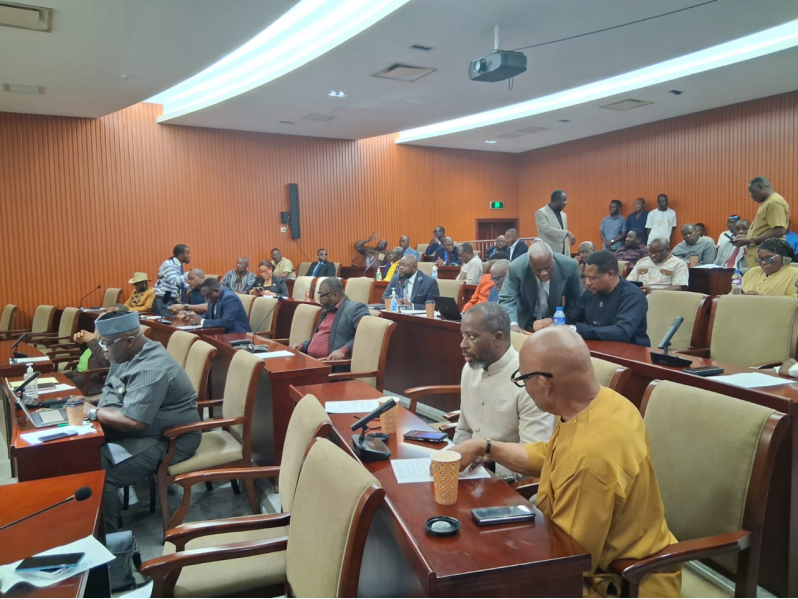
In line with this, the Plenary of the House of Representatives during its 19th day sitting of the 3rd session of the first quarter on Tuesday, March 17 passed an Act prohibiting active government officials from serving on the boards or management of public institutions.
The legislation also establishes a framework for independent supervision and transparent oversight.
The decision follows the submission of a report by the House Committees on Judiciary and Good Governance, which recommended the bill’s passage after a thorough review.
According to our legislative reporter, the Act aims to strengthen governance across public institutions by promoting accountability, independence, and efficiency in the management and oversight of state entities.
The decision grew out of a bill introduced by Maryland County Electoral District 2 Representative, Anthony F. Williams, during the House’s first day sitting of the third quarter of its second session.
In his communication to Plenary, Rep. Williams pointed out five key objectives of the legislation.
According to him, the instrument is intended to enhancing effectiveness, oversight, accountability, and transparency: Ensuring public institutions operate efficiently under strong supervisory mechanisms.
The Maryland County lawmaker opined that this would also prevent conflicts of interest by establishing legal safeguards to stop officials from making decisions that may serve personal interests.
Furthermore, the bottom line of the bill is to eliminate double compensation otherwise referred to as “double dipping” by preventing individuals from receiving multiple payments for similar roles, and promoting responsible use of public funds.
At the same time, it is geared to promote job creation by encouraging institutional independence to create more opportunities for qualified professionals.
Among other things, the bill is expected to expand funding opportunities by allowing independent boards to attract and manage financial and development resources in a transparent manner.
Following minutes of deliberations on the report, the instrument was passed by plenary on the outcome of unanimous votes.
It is now being forwarded to the Liberian Senate for concurrence, in line with established legislative procedures.
Support Independent Journalism
Your support helps FrontPage Africa continue delivering independent, credible, and impactful journalism. Every contribution strengthens our ability to investigate, inform, and hold power accountable while keeping quality journalism accessible to our readers.
Support our journalism or subscribe to receive the latest FrontPage Africa stories and updates.