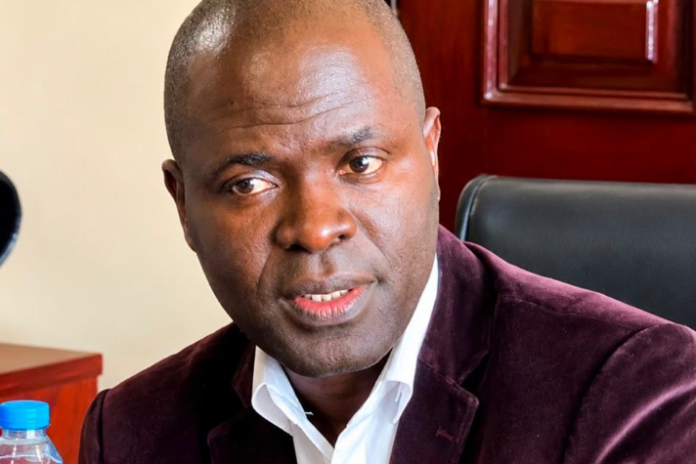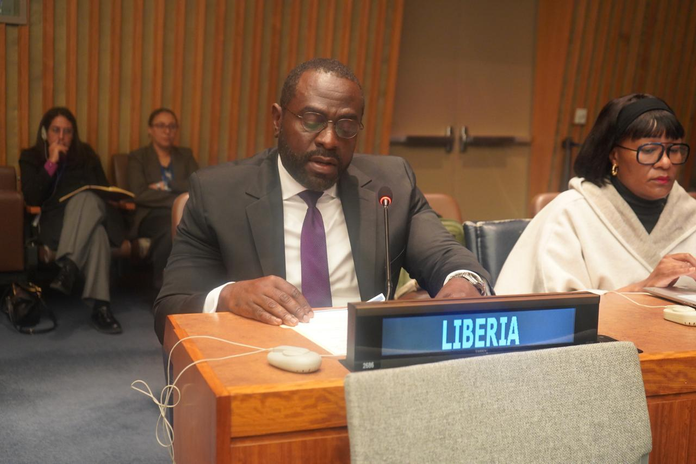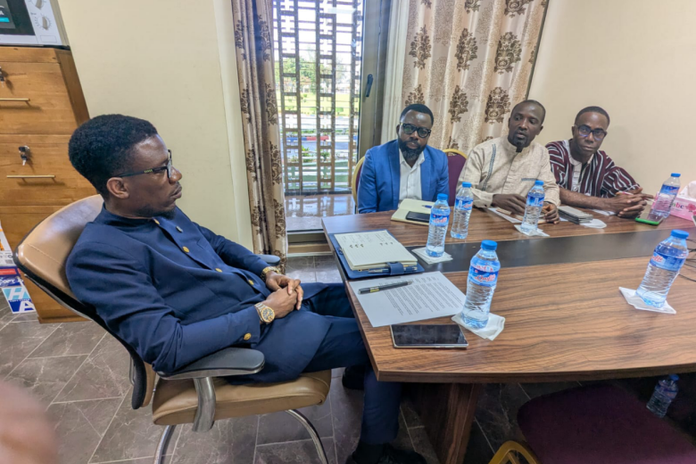
ZOTA DISTRICT, Bong County — The Executive Director of the Environmental Protection Agency (EPA), Dr. Emmanuel Urey Yarkpawolo, has called on Liberians to look beyond the celebration of Independence Day and dedicate themselves to building a legacy of education, productive work, peace, cultural preservation and opportunities for future generations.
By Selma Lomax, [email protected]
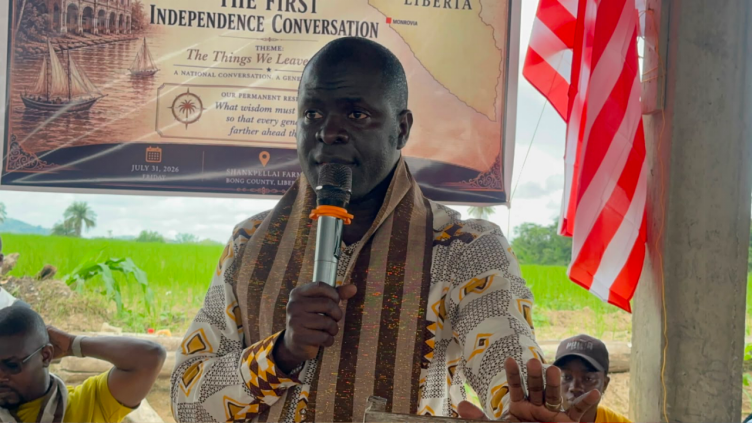
Dr. Yarkpawolo made the call on Friday, July 31, 2026, when he delivered remarks at the First Independence Conversation, held at the Shankpallai Micro-Zone Farm in Zota District, Bong County.
Speaking before elders, traditional leaders, farmers, teachers, young people, community members and other distinguished guests, the EPA Executive Director challenged Liberians to reflect on what they will leave behind for their children and the generations that will follow.
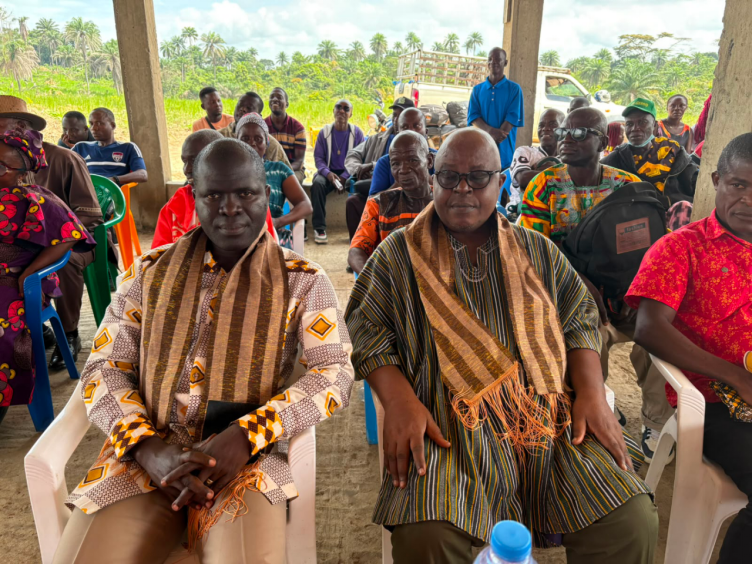
The gathering, organized to create a space for reflection around Liberia’s independence and the country’s future, brought together community stakeholders and other distinguished personalities, including Dr. Yarkpawolo and his host, Quanuquanei Alfred Karmue, former Bong County Senator Franklin Siakor, as well as elders, traditional leaders, farmers, educators, young people and representatives of the local community.
The event centered on history, agriculture, education, culture, community development and the responsibility of citizens to contribute to the advancement of their communities.
In his keynote remarks, Dr. Yarkpawolo framed his message around a fundamental question: “When we are gone, what will we leave behind?” He challenged his audience to consider whether their lives would be remembered merely because of the positions they occupied or the possessions they accumulated, or whether future generations would remember them because they improved lives, created opportunities and prepared the way for others.
The EPA boss said the answer to that question should determine how Liberians approach leadership, community development and national service. He argued that a meaningful legacy cannot be measured only by wealth, political influence or material possessions, but by the positive impact an individual leaves on society.
“My message is called: ‘The Things We Must Not Leave Behind: Our History, Our Work, and the Legacy We Are Building,’” Dr. Yarkpawolo said, urging his audience to consider history, productive work and service to others as essential components of a meaningful life.
Reflecting on his own family history, Dr. Yarkpawolo spoke about his late father, who lived in the community and died at the age of 104. He described his father as a peaceful, hardworking and industrious man who did not leave behind substantial financial wealth but whose character, peaceful life and lessons continue to influence his children.
Dr. Yarkpawolo used his father’s life to illustrate his broader understanding of legacy, saying that the most valuable inheritance does not necessarily consist of money or property. Instead, he said, a person’s legacy can live through the character they demonstrate, the children they educate, the jobs they create, the institutions they establish and the peace they promote.
He said his father’s memory continues to speak to him, describing that enduring influence as the true meaning of legacy.
According to Dr. Yarkpawolo, Liberia must also protect the positive elements of its cultural heritage while ensuring that traditional practices do not become obstacles to education and national development.
He specifically highlighted the knowledge historically transmitted through Kpelle communities and traditional institutions, noting that before the expansion of modern education, families and institutions such as Poro and Sande played important roles in teaching discipline, respect, farming and community service.
The EPA executive director said Liberians should preserve the positive values embedded in their culture, including peace, honesty, unity, hard work and respect, while remaining willing to discuss and reform practices that prevent children from attending school or otherwise hinder development.
He emphasized the importance of combining traditional knowledge with formal education, arguing that Liberian children should be able to acquire modern knowledge without becoming ashamed of their languages, families, villages and cultural identities.
“Country knowledge and book knowledge must walk together,” Dr. Yarkpawolo declared, stressing that education should not require young Liberians to abandon the history and identity of their communities.
He urged parents and community leaders to ensure that children learn about their villages, their ancestors, the stories of their elders and the importance of the land while simultaneously receiving quality formal education.
Dr. Yarkpawolo said the preservation of culture must never be used as an excuse to deny children educational opportunities, stressing that both boys and girls should be allowed to attend school and acquire the knowledge necessary to contribute meaningfully to Liberia’s development.
He pointed to his own investment in education as an example of the kind of legacy he believes individuals should build. He said he constructed and sponsors the Yarkpawolo Public School in Gomue, a facility serving children from Gomue and surrounding communities.
According to him, every child attending the school represents hope for the future and demonstrates why investments in education should be viewed as investments in the long-term development of communities.
But Dr. Yarkpawolo cautioned that education by itself cannot solve all of the challenges confronting young Liberians. He said young people also need employment opportunities and productive economic activities that can allow them to use their education and skills to build sustainable livelihoods.
He disclosed that he is developing sustainable palm farms and a renewable-energy palm-oil processing factory as part of efforts to create employment, increase agricultural productivity and retain more economic value within the district.
The initiative, he explained, is intended not only to produce agricultural commodities but also to add value to locally produced crops, create employment and stimulate economic activity within the community.
Dr. Yarkpawolo also acknowledged the contributions of Quanuquanei Alfred Karmue, who he said is supporting community development through rice farming, microloan initiatives and other businesses.
He said the combination of education, agriculture, access to finance, employment and entrepreneurship can create the foundation for sustainable community development.
According to him, such initiatives should not be undertaken simply to attract public praise or establish the names of individuals in the history of a community. “We are not doing these things so people can praise our names. We are doing them because this is our home. When God gives us an opportunity to help, we must use it to lift other people,” he said.
Dr. Yarkpawolo also reflected on comments made by President Joseph Boakai during the dedication of the Environmental Protection Agency’s new headquarters and laboratory, where the President described him as “a gift to the nation.”
The EPA boss said he received the President’s description with humility and viewed it not simply as an expression of praise but as a responsibility to continue serving the Liberian people.
“To be called a gift means your life must benefit others,” Dr. Yarkpawolo said, stressing that public recognition carries an obligation to produce tangible benefits for society.
He said a person’s legacy should not be determined by the title bestowed upon them but by whether their work contributes to education, employment, peace, hope and stronger institutions.
Dr. Yarkpawolo said he could only honor President Boakai’s words by continuing to serve and by helping establish useful institutions that will benefit people long after those who created them are gone.
However, he cautioned that sustainable community development cannot be achieved by individuals working alone. He called on elders to share their wisdom, parents to ensure that children attend school, young
people to embrace education and productive work, farmers to organize themselves and community leaders to protect peace and the land.
He also called for deliberate efforts to document Liberia’s oral history, particularly the experiences and knowledge of older generations. According to him, communities should encourage students to interview their grandparents and other elders and document what they learn about the origins of towns, traditional songs, farming practices and other aspects of community life.
He said such efforts would help ensure that valuable knowledge does not disappear as older generations pass away. Dr. Yarkpawolo said the responsibility to preserve history is especially important because Liberia’s independence should be understood as more than an annual celebration.
He argued that genuine independence must be reflected in the ability of Liberians to educate their children, produce enough food, create jobs and make responsible decisions about the country’s future.
“Independence is not only celebrating July 26. True independence means educating our children, feeding ourselves, creating jobs and making responsible decisions about our future,” he said.
The EPA executive director further urged Liberians to view the country’s natural resources, land and cultural heritage as responsibilities that must be protected and developed for future generations.
He said previous generations left Liberia with land, wisdom, language and examples of community life, and the present generation therefore has a responsibility to add something useful to that inheritance.
Dr. Yarkpawolo said Liberians should aspire to leave their children more than physical property. “Let us leave our children more than land,” he urged. “Let us leave them memory, good character and education. Let us leave them productive farms, businesses, jobs and peace.”
He said human beings cannot prevent the passing of generations, but they can ensure that the wisdom and good work of those who came before them continue to influence society.
The EPA boss concluded by urging the audience to consider how history would judge the use of their time and opportunities. He said the desired legacy for the present generation should be one characterized by remembering where Liberians came from, working together, lifting others and preparing the way for those who will inherit the country.
“When history asks what we did with our time, let the answer be: We remembered where we came from. We worked together. We lifted other people. And we prepared the way for those coming after us,” Dr. Yarkpawolo said.
Support Independent Journalism
Your support helps FrontPage Africa continue delivering independent, credible, and impactful journalism. Every contribution strengthens our ability to investigate, inform, and hold power accountable while keeping quality journalism accessible to our readers.
Support our journalism or subscribe to receive the latest FrontPage Africa stories and updates.