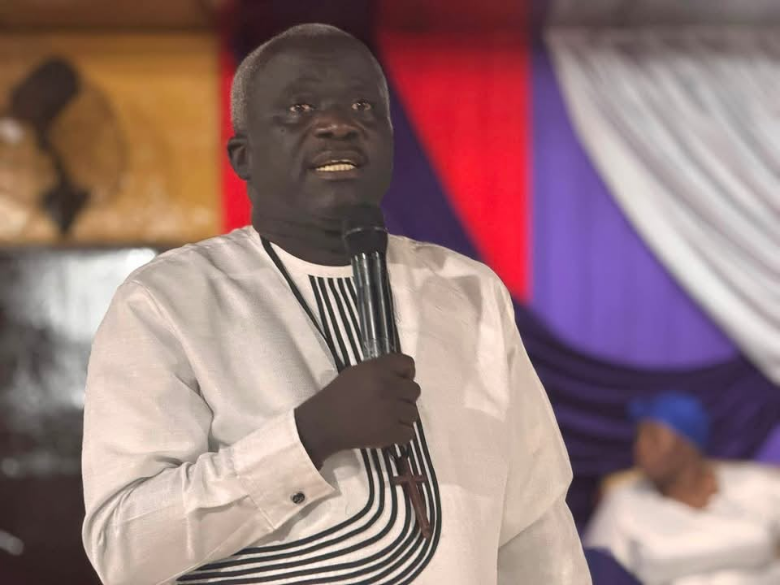
Monrovia — Former Liberia Council of Churches President, Bishop Kortu Brown, has urged opposition politicians to approach Liberia’s political challenges with greater responsibility, cautioning them against allowing the pursuit of political power to overshadow the national interest.
By Obediah Johnson, [email protected]
Brown, who is Founder and General Overseer of the New Water in the Desert Apostolic Pentecostal Church, said Liberia’s political class has a responsibility to create an environment where disagreements can be managed through dialogue rather than confrontation.
His appeal comes at a time when political actors from opposition parties and members of the governing establishment have increasingly engaged in discussions aimed at addressing national issues and exploring areas of common interest.
While welcoming recent roundtable engagements involving opposition leaders and lawmakers associated with the ruling Unity Party, Brown said such meetings would only be meaningful if they produced discussions centered on the welfare of ordinary Liberians.
He made the remarks during a thanksgiving service at his church in Brewerville, outside Monrovia.
For Brown, Liberia’s political future should not be reduced to the question of who will control the Executive Mansion after the 2029 elections.
He argued that political leaders should be more concerned about the decisions they make today and how those decisions affect the country’s stability and future generations.
Brown acknowledged that politicians naturally seek state power, but maintained that the outcome of elections ultimately cannot be determined solely by political calculations.
“Liberians have seen everything. We’ve seen war and peace, CDC and UP,” he said, emphasizing that Liberia’s political history should encourage leaders to act with greater responsibility.
He called on opposition politicians to become a constructive force capable of criticizing government while also contributing ideas toward solving the country’s problems.
Brown said opposition leaders should not view political engagement solely through the lens of gaining power, but should also consider their responsibility to maintain peace and national cohesion.
His message was particularly directed at political leaders preparing for the next electoral cycle. He urged them to engage one another, communicate with government officials and seek common ground on issues affecting Liberians.
Brown believes political disagreements are inevitable, but warned that the manner in which those disagreements are handled can either strengthen or weaken the country.
He therefore encouraged opposition leaders to maintain dialogue among themselves and with those currently exercising state authority. “God is in control of this country,” Brown said, stressing his belief that Liberia’s political destiny cannot be determined entirely by human calculations.
He urged opposition leaders to make peace and demonstrate political maturity as they prepare for the 2029 elections.
The religious leader also cautioned Liberians against allowing historical grievances to dictate contemporary relationships.
He warned against attempts to punish or seek revenge against members of the present generation because of wrongdoing committed by their ancestors.
According to Brown, Liberia’s history contains numerous examples of conflicts that began with disputes involving families and communities and later developed into wider divisions.
His appeal was therefore not limited to political parties. He called on Liberians generally to resist the temptation to inherit conflicts and grievances from previous generations.
Brown’s remarks also reflected on Liberia’s turbulent political history.
His reference to “war and peace” and successive political administrations underscored the dramatic changes the country has experienced over the years.
For him, those experiences should provide sufficient lessons for the current generation to avoid repeating the mistakes that contributed to division and instability.
He maintained that Liberia still has people capable of contributing positively to national development if given the opportunity. “But Liberia still got some good people that can be used to produce more good people,” he said.
The statement appeared to be a call for greater confidence in Liberians themselves and for the country’s political and social institutions to encourage citizens who can contribute constructively to national life.
Brown also commented on the legal situation involving former Vice President Jewel Howard Taylor, whose temporary release on medical grounds has attracted considerable political attention.
He commended the court for granting Taylor compassionate relief and placing her under house arrest in connection with the ongoing cocaine case.
The former vice president’s detention had become a politically sensitive issue, particularly among supporters of the opposition National Patriotic Party and other political actors who had raised concerns about her health and treatment.
Brown argued that Taylor’s release had helped ease political tensions surrounding the case. He said the development should provide an opportunity for Liberians to redirect their attention toward issues affecting their daily lives rather than allowing political disagreements to escalate.
His comments came against the backdrop of wider concerns over political polarization and the increasingly heated exchanges among supporters of rival political camps.
Brown also challenged Liberians to reconsider what he described as a culture of constant complaint. Rather than spending their energy blaming government, relatives or other people for their difficulties, he encouraged citizens to make productive use of whatever opportunities and resources are available to them.
His appeal extended beyond politics to personal responsibility. Brown suggested that national progress requires citizens to recognize their own capacity to improve their circumstances while simultaneously holding public officials accountable.
The distinction, he implied, is between constructive criticism and a culture in which citizens remain focused entirely on what others have failed to do.
With Liberia’s next presidential and general elections still ahead, Brown’s intervention places renewed emphasis on the conduct of political actors before the campaign period intensifies. His message is that the competition for political power should not come at the expense of national peace.
He wants opposition parties to remain engaged, but responsible; critical, but constructive; and ambitious, but mindful of the consequences of political confrontation.
The 2029 elections will inevitably produce competing interests and competing visions for Liberia. But Brown believes the country should not have to pay the price for those differences. His broader appeal is for political leaders to learn from Liberia’s history rather than reproduce it.
For Brown, the most important political calculation is not simply who wins an election, but whether Liberia remains peaceful, united and capable of giving its citizens a better future.
Support Independent Journalism
Your support helps FrontPage Africa continue delivering independent, credible, and impactful journalism. Every contribution strengthens our ability to investigate, inform, and hold power accountable while keeping quality journalism accessible to our readers.
Support our journalism or subscribe to receive the latest FrontPage Africa stories and updates.