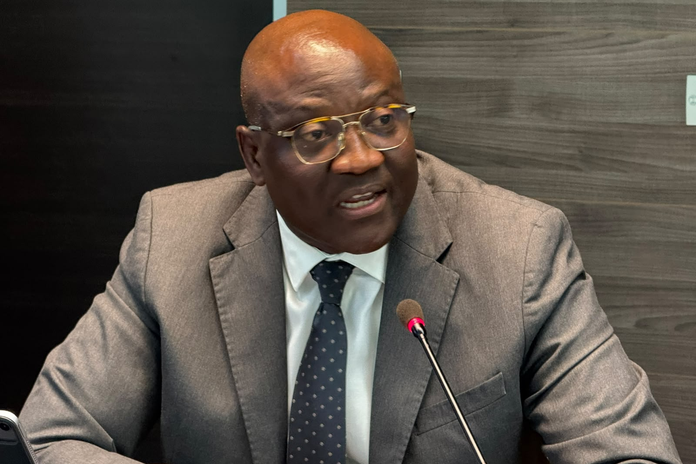
Monrovia – A national conversation has emerged around the future of Liberia’s rail and road infrastructure following comments made earlier today by Senator Amara Konneh. The senator highlighted the need to support the expansion of the Yekepa to Buchanan transport corridor in order to facilitate the movement of up to twenty million metric tons of iron ore each year, placing ArcelorMittal Liberia at the heart of Liberia’s future infrastructure planning.
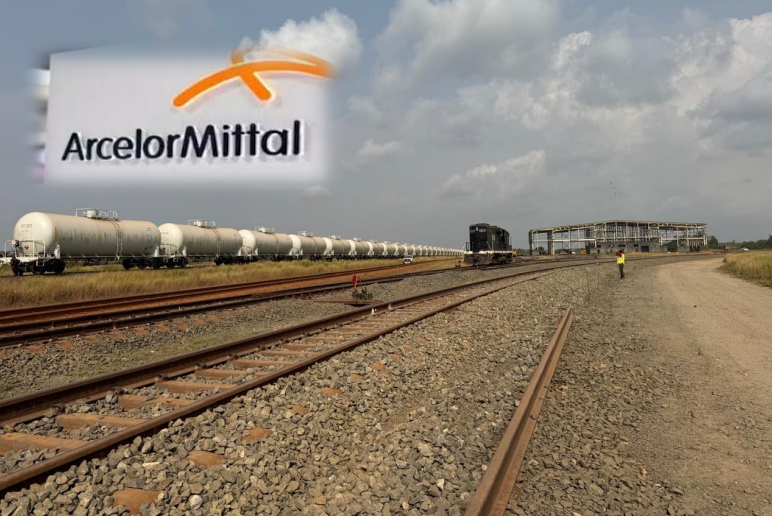
The statement comes at a moment when ArcelorMittal Liberia is nearing completion of its Phase Two expansion. The project is expected to push AML’s production to about fifteen million tons annually, with the potential for further increases pending future upgrades. The company is already operating the only functioning heavy haul rail system in the country, stretching more than two hundred forty-three kilometers from the mines in Nimba County to the Port of Buchanan in Grand Bassa.
Senator Konneh’s comments underscore a central reality. The Yekepa to Buchanan corridor is no longer just a mining asset. It has become an essential national artery for trade, transport, and industrial growth. As Liberia faces rising demand for rail access from other mining companies, policymakers are debating how to modernize and expand the corridor without undermining the operational stability of the country’s largest taxpayer and most advanced mining investor.
ArcelorMittal’s current expansion already includes extensive rail rehabilitation, new passing loops, upgraded bridges, and modern signaling systems for which the company could pay a whopping 200 million to Liberia each year. These improvements are designed to support the higher volume of ore that will be produced once the new concentrator plant is fully operational. The company has indicated that the upgraded line will be capable of handling at least fifteen million tons per year, with the structural potential for even higher volumes as investments continue.
The idea of building capacity toward twenty million tons aligns with the national objective of maximizing resource-based growth. A more efficient transport corridor would reduce transit time, improve safety, and create opportunities for domestic commerce along the route. It would also position Liberia as a more competitive destination for mining investment at a time when regional competitors such as Guinea and Sierra Leone are aggressively expanding their own rail networks.
However, the move toward increased capacity also introduces questions about regulation, ownership, and shared use. The rail line remains a concession asset tied to ArcelorMittal’s Mining Development Agreement. Any third-party access would require careful management to ensure safety, scheduling discipline, and fair compensation for infrastructure usage. Senator Konneh’s comment suggests a possible shift toward a model where the government plays a stronger coordinating role, while still recognizing AML’s contractual rights and long-term investments.
The broader economic implications are substantial. With AML expected to contribute more than two hundred million United States dollars annually once Phase Two reaches full production, Liberia stands to gain the highest fiscal inflows from a single concession in its history. This revenue boost could help stabilize the national budget, support infrastructure expansion, and reduce reliance on unpredictable donor funding.
Infrastructure growth would also unlock opportunities for communities along the corridor. Improved roads, wider access to markets, and increased employment in logistics and maintenance could transform local economies in Nimba, Bong, and Grand Bassa counties. The connection between rail expansion and community development is becoming more pronounced as Phase Two nears completion.
Yet success will depend on coordinated planning. If Liberia treats the rail corridor as a strategic national asset, supported by clear regulations and enforced standards, the country could build a modern transport system capable of handling not only mining exports but future industrial trade. If politics or rushed decisions weaken the system, Liberia risks damaging both investor confidence and the reliability of its most important infrastructure.
Senator Konneh’s call therefore carries weight. Supporting the expansion of the Yekepa to Buchanan corridor is not simply about moving more ore. It is about defining how Liberia will manage its most valuable infrastructure, how it will balance national interest with concession obligations, and how it will position the economy for long-term growth.
As ArcelorMittal prepares to enter a new era of high-volume production given its modern concentrator is fully operational by end of this year, Liberia faces a pivotal choice. The country can build on the existing rail backbone to create a transport system that supports twenty million tons of exports and fuels national development. Or it can allow uncertainty and fragmented decision making to undermine one of the strongest growth opportunities the nation has seen in decades.
Support Independent Journalism
Your support helps FrontPage Africa continue delivering independent, credible, and impactful journalism. Every contribution strengthens our ability to investigate, inform, and hold power accountable while keeping quality journalism accessible to our readers.
Support our journalism or subscribe to receive the latest FrontPage Africa stories and updates.