“Justice Is Not a Favor; It Is the Foundation of the State”
By Victoria G. Wesseh
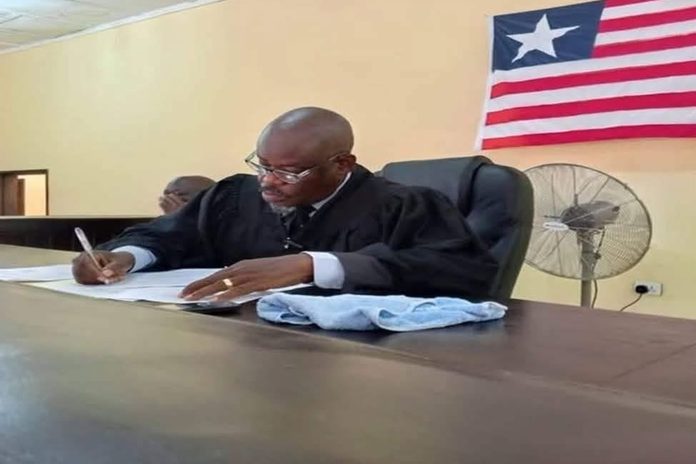
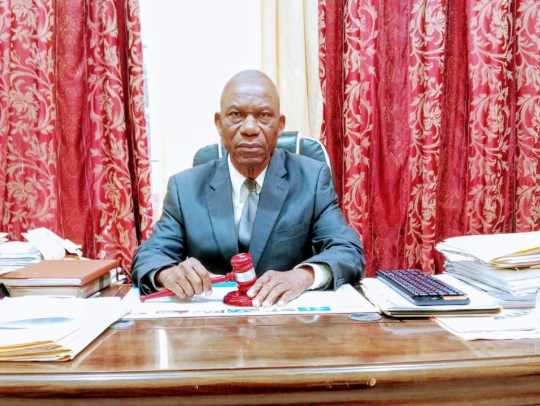
BARCLAYVILLE, Grand Kru County — Resident Judge George Gbeneweleh of the 12th Judicial Circuit Court in Grand Kru County has declared that Liberia’s courts must reclaim their constitutional responsibility as promoters of justice, protectors of fundamental rights and guardians of the rule of law.
Judge Gbeneweleh made the assertion Monday while delivering his charge at the formal opening of the August Term of Court in Barclayville, where he spoke on the theme, “The Court as Promoter of Justice.”
The judge’s address went beyond the customary opening of a court term, focusing on judicial independence, constitutional rights, due process and the judiciary’s role in maintaining peace in a post-war society.
The Law Is the Command
Judge Gbeneweleh grounded his charge in the Revised Judicial Canons of Liberia, particularly Canon Eight, which states that courts exist to promote justice and serve the public interest and that judges must administer justice with speed and care.
He also cited Judicial Canon Nine, which places a duty on judges to uphold and support the Constitution and laws of Liberia and to fearlessly observe and apply fundamental rights and guarantees.
For Gbeneweleh, those provisions impose more than an administrative obligation on judges.
He argued that a judge who delays justice, yields to outside influence or disregards violations of constitutional rights risks failing in the judiciary’s fundamental responsibility.
Justice as the Foundation of the State
“The sole reason for the court’s existence is to serve the public interest,” Judge Gbeneweleh said. “Justice is the foundation of a peaceful and democratic nation, like Liberia.”
He identified three central responsibilities of the judiciary: protecting the rights of citizens, defending the Constitution and laws of Liberia, and safeguarding the rule of law.
The judge said the judiciary’s role has become increasingly important as Liberians continue to rely on the courts to resolve disputes that could otherwise threaten social stability.
He pointed to land disputes, concession-related conflicts, corruption cases, electoral disputes and human rights complaints as matters that require credible judicial resolution.
According to Gbeneweleh, the ability of courts to resolve such disputes fairly is essential to Liberia’s sustainable peace.
Three Pillars of Justice
The Grand Kru judge outlined what he described as three pillars supporting the court’s responsibility to promote justice.
First, equality and due process.
Gbeneweleh referenced Articles 11 and 20 of the 1986 Constitution, which guarantee fundamental rights and protections, including due process.
He said those guarantees require that individuals be given an opportunity to be heard, access to legal representation and impartial consideration based on the law and evidence.
The judge stressed that justice must be administered without discrimination based on status, ethnicity, nationality, political affiliation or other considerations.
Second, protection of fundamental rights.
Gbeneweleh described the judiciary as a shield for citizens against unlawful actions by the state.
He urged judges and magistrates to remain vigilant in protecting citizens from illegal detention, excessive use of police authority and violations of property rights.
He said holding violators accountable should not be viewed as vengeance but as a means of deterrence and a constitutional obligation.
“A court that tolerates rights violations becomes complicit in them,” he warned.
Third, the promotion of peace.
For Gbeneweleh, the judiciary’s contribution to peace is best demonstrated through impartial adjudication rather than political speeches.
He warned that when citizens lose confidence in the courts, they may resort to self-help, mob violence, trial by ordeal and other forms of “jungle justice.”
But when disputes are fairly resolved through legitimate judicial processes, he said, confidence in the state and the rule of law is strengthened.
Judicial Independence Is Non-Negotiable
One of the strongest elements of the judge’s address was his defense of judicial independence.
“Respect for judicial independence is cardinal for the court to always promote justice,” Gbeneweleh said.
He urged judges to decide cases solely on the basis of law and evidence, without fear or favor.
He cautioned against political pressure, financial inducements from litigants and public pressure generated through social media or other platforms.
The judge also appealed to citizens to respect judicial processes rather than resort to violence, land grabbing or trial by public sentiment.
He said respect for court authority should not be understood as personal loyalty to judges, but as respect for the rule of law that ultimately protects every citizen.
A Warning Against Mob Justice
Gbeneweleh’s remarks come amid continuing concerns about the use of extrajudicial methods to resolve disputes in Liberia.
He argued that the judiciary must remain accessible and credible enough to convince citizens that the courts offer a legitimate alternative to retaliation and self-help.
Where the courts fail to command public confidence, he warned, the consequences can extend beyond individual disputes and threaten broader social stability.
His message was therefore directed both at the judiciary and the public: judges must uphold the law independently, while citizens must channel grievances through lawful institutions.
Invoking Denning and Marshall
In closing his address, Judge Gbeneweleh invoked two influential figures in the common law tradition.
He referenced the late English jurist Lord Denning, known for his emphasis on the court’s duty to do justice between parties.
He also cited John Marshall, the fourth Chief Justice of the United States Supreme Court, whose decision in Marbury v. Madison established the principle of judicial review and reinforced the role of courts in protecting constitutional supremacy.
Gbeneweleh linked those principles to Liberia’s own constitutional order, particularly Article 2 of the 1986 Constitution, which establishes the Constitution as the supreme and fundamental law of Liberia.
His central message from Barclayville was clear: the judiciary is not merely a forum for settling disputes.
It is a constitutional institution charged with ensuring that justice is administered fairly, rights are protected and the rule of law remains the foundation of Liberia’s peace and democratic order.
“Justice is not a favor,” the judge’s charge emphasized in substance. “It is the foundation of the state.”
Support Independent Journalism
Your support helps FrontPage Africa continue delivering independent, credible, and impactful journalism. Every contribution strengthens our ability to investigate, inform, and hold power accountable while keeping quality journalism accessible to our readers.
Support our journalism or subscribe to receive the latest FrontPage Africa stories and updates.