Teeth cleaning, eye tests, heart health, lung X-rays and even a mani-pedi for chimps at Humane World for Animals Liberia refuge
Monrovia – Former laboratory chimpanzees living at Humane World for Animals’ Second Chance Chimpanzee Refuge Liberia have undergone comprehensive health checks as part of the sanctuary’s ongoing commitment to their lifetime care.
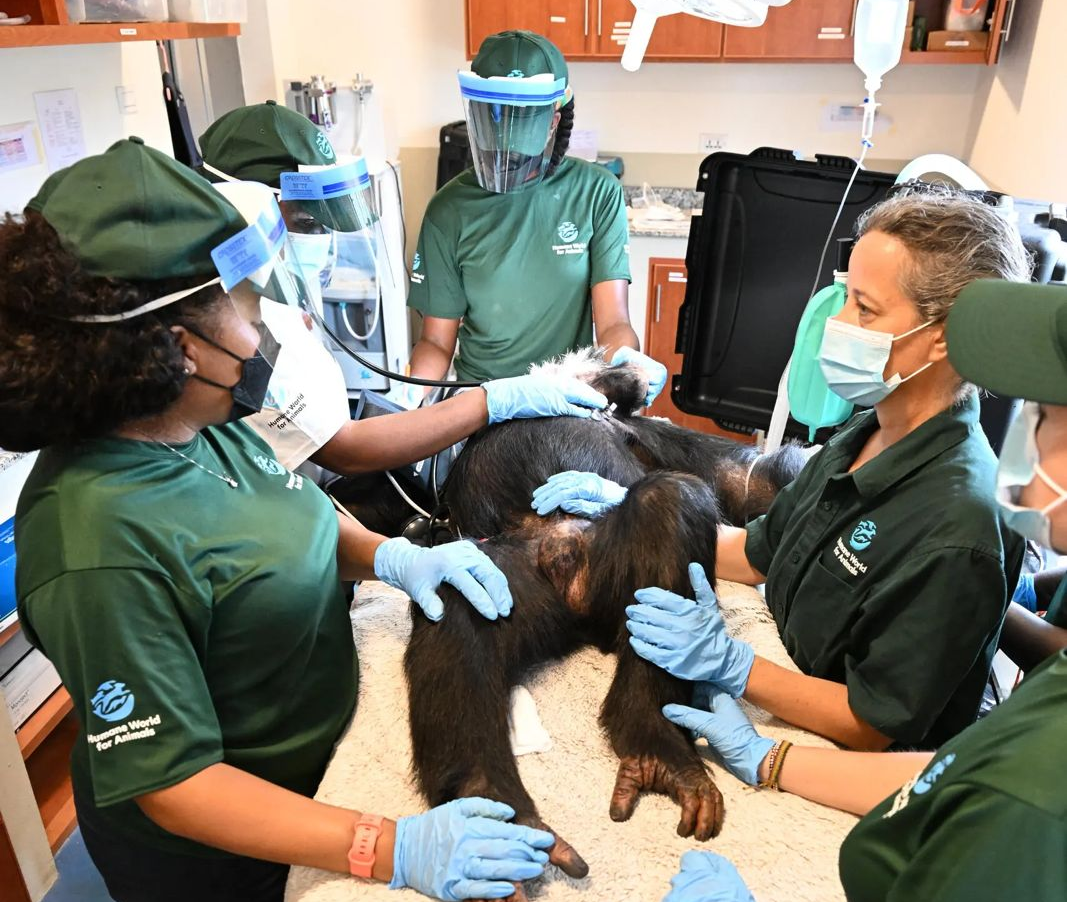
The examinations, conducted by the sanctuary’s veterinary team and specialist experts, provided the chimpanzees with “head-to-toe” medical assessments aimed at monitoring their long-term health, detecting early signs of disease and developing individualized care plans as the animals age.
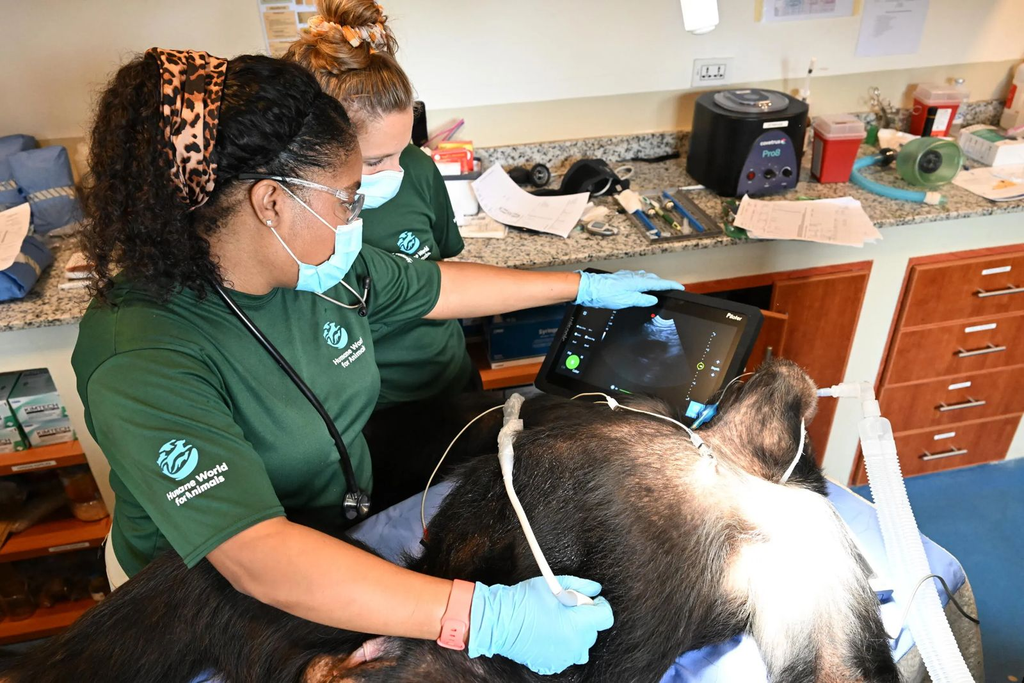
Under anesthesia, the chimpanzees underwent dental examinations to check for signs of decay, along with thorough teeth cleaning. Veterinary specialists also examined their eyes, hearts, lungs, abdomens and nervous systems.
The health checks included blood tests and heart scans, while the chimpanzees also received booster vaccinations and fingernail trims.
According to the sanctuary, anesthesia allows veterinary professionals to conduct detailed examinations safely while minimizing stress and discomfort for the animals.
Belen Perez Hernando, the sanctuary’s veterinarian, said the comprehensive examinations are essential to caring for chimpanzees that have endured years of laboratory use.
“The health checks are a vital part of caring for these chimpanzees who have been through so much,” Hernando said.
She explained that many aspects of chimpanzee healthcare are similar to those required by humans, including monitoring dental health, eyesight, heart and lung function, blood results, joints, abdominal organs and the nervous system.
“The aim is to spot concerns early and do all we can to make sure each individual continues to live safely and comfortably in their sanctuary home,” she said.
A Retirement Home in Liberia
The chimpanzees receiving the examinations are among dozens living at the Second Chance sanctuary, which is located on a series of mangrove forest-covered islands.
There, the animals roam freely and live in social groups designed to replicate conditions as close to life in the wild as possible.
Last year, a small group of chimpanzees was temporarily relocated to a purpose-built chimpanzee villa at the sanctuary’s mainland headquarters while their island habitat underwent upgrades.
The improvements include a new facility for routine health examinations and shelter during extreme weather.
The chimpanzees are expected to return to their island home early next year.
Many of the animals at Second Chance were captured from the wild as infants before being transferred to a laboratory, where they endured decades of invasive and distressing experiments.
Their history has left many with complex medical needs, making preventative healthcare particularly important as they grow older.
Liliana Pacheco Ricote, director of Second Chance Chimpanzee Refuge Liberia, said the examinations represent more than routine medical appointments.
“These are not simply medical appointments, they are part of our lifelong commitment to give these extraordinary chimps the best life possible,” Ricote said.
“Every result helps us understand what each chimpanzee needs now and what they may need in the future. Our priority is always their welfare, their comfort and their quality of life,” she added.
Liberia’s Unique Chimpanzee Refuge
Second Chance is described as the only sanctuary in Africa dedicated to caring for former laboratory chimpanzees.
The laboratory where the animals were once held housed more than 400 chimpanzees over a 30-year period. Many died during Liberia’s two civil wars between 1989 and 1997, with some reportedly shot and killed by militia forces.
In the early 2000s, the laboratory phased out chimpanzee experiments and transferred the remaining animals to estuary islands, where caregivers provided them with food and fresh water.
In 2015, the laboratory withdrew funding for the chimpanzees’ care, prompting their caregivers to launch an emergency appeal for assistance.
Humane World for Animals was among the organizations that responded, providing emergency assistance and subsequently making a lifelong commitment to the animals’ welfare.
Chimpanzees typically live for between 50 and 60 years, meaning many of the animals at Second Chance could require decades of continued care.
The sanctuary employs more than 40 people, largely recruited from surrounding communities. It also purchases fresh fruits and vegetables locally for the chimpanzees’ daily meals and supports community initiatives, including repairs to schools and roads.
Humane World for Animals Liberia also supports wildlife protection projects around the sanctuary, including efforts to protect the forest ecosystem and wildlife from logging, poaching and conversion of forest land to farmland.
For the former laboratory chimpanzees, the latest medical examinations represent another step in a long-term journey from exploitation to protection—and from a life of experimentation to retirement in Liberia’s forests.
Support Independent Journalism
Your support helps FrontPage Africa continue delivering independent, credible, and impactful journalism. Every contribution strengthens our ability to investigate, inform, and hold power accountable while keeping quality journalism accessible to our readers.
Support our journalism or subscribe to receive the latest FrontPage Africa stories and updates.