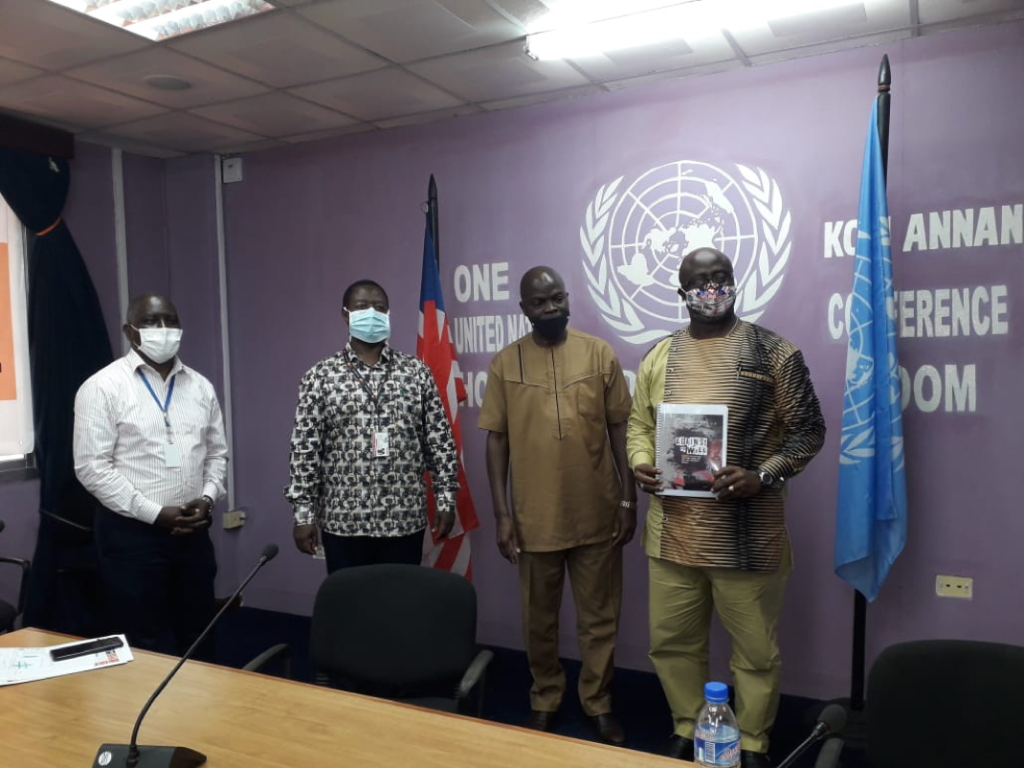
Monrovia – The Liberian Government, in collaboration with the United Nations Population Fund (UNFPA) and through the Ministry of Youth and Sports, has officially launched the State of the World Population 2020 report with a call to end harmful practices against women and girls.
The report titled, “Against My Will: Defying the Practices that Harm Women and Girls and Undermine Equality”, is UNFPA’s flagship report, which focuses on issues of population and development. The focus of this year’s report is on the “Silent and endemic crisis of harmful practices” across the world.
Before he did the launching on Monday, July 13, Youth and Sports Minister D. Zoegar Wilson said, “Everyday, hundreds of thousands of girls are subjected to practices that harm them physically or psychologically, or both, with the full knowledge and consent of their families, friends and communities. If these practices are not addressed, there is a potential for them to worsen overtime.”
According to the Min., among the 19 harmful practices universally denounced as human rights violations, three remain stubbornly widespread: female genital mutilation, child marriage and son preference over girl child.
Min. Wilson further stated that Liberia, through the Ministry of Gender Children and Social Protection, in collaboration with key partners, launched a National Strategy to end Child Marriage on December 8, 2015.
“In Liberia, girls and women are part of the Sande Society where FGM is practiced. This is an aged-old practice that seems very difficult to end. As of yet, there is no data in Liberia that speaks to the baseline of FGM as it is under reported.”
It is estimated that 200M women and girls are affected by FGM; 650M women and girls alive today were married as children and more than 140M females are missing today due to ‘son preference’.
According to the UNFPA SOWP June report, “FGM is often performed to ensure a girl is accepted by her future spouse or by the broader community. And families may choose to have boys over girls in communities where sons alone are tasked with caring for their ageing parents or carrying on the family name.”
According to Min Wilson, these practices are harmful and can be deadly.
The UNFPA report shows why harmful practices persist around the world and what can be done about them.
Min. Wilson than called for a concerted effort to end these harmful practices; adding: “We need to openly hold these discussions with communities and our elders, information on these practices need to be shared; our girls need to understand the harm associated with these practices. We need to enact laws that bar these harmful practices as a nation and as a people.”
Touching on the launch of the State of World Population, he called attention to the vulnerabilities and needs of women and girls during the COVID-19 crisis, and why protecting sexual and reproductive health and rights and ending the shadow pandemic of gender-based violence is imperative.
Speaking earlier, Dr. Bannet Ndyanabangi, UNFPA Country Representative, called attention to the vulnerabilities and needs of women and girls during the COVID-19 crisis, and why protecting sexual and reproductive health and rights and ending the shadow pandemic of gender-based violence are imperative.
“UNFPA had committed to zero unmet need for contraception, zero preventable maternal deaths, and zero gender-based violence and harmful practices by 2030 against women and girls – by 2030 which will likely be hampered by the COVID-19,” he added.
Also speaking, Mr. Kingsley Amaning, United Nations Resident Coordinator for Liberia, said the World Population Day is significant because it highlights the problems of over population, raises awareness about the effects of population on the environment and development.
“It also talks about the health problems faced by child bearing women and the importance of Family Planning, gender equality, poverty, maternal health and human rights,” he added.
According to him, the day was inspired by the public interest in Five Billion Day on July 11, 1987, the approximate date on which the world’s population reached five billion people.
Touching on the population of Liberia, Mr. Amaning stated that Liberia, in its 172 years’ history of existence, has conducted four National Population and Housing Censuses in 1962, 1974, 1984 and 2008. All four Censuses revealed a constantly growing population of 1.1 million, 1.5 million, 2.1 and 3.5 million inhabitants respectively. The next census for 2021 is ongoing.
Support Independent Journalism
Your support helps FrontPage Africa continue delivering independent, credible, and impactful journalism. Every contribution strengthens our ability to investigate, inform, and hold power accountable while keeping quality journalism accessible to our readers.
Support our journalism or subscribe to receive the latest FrontPage Africa stories and updates.