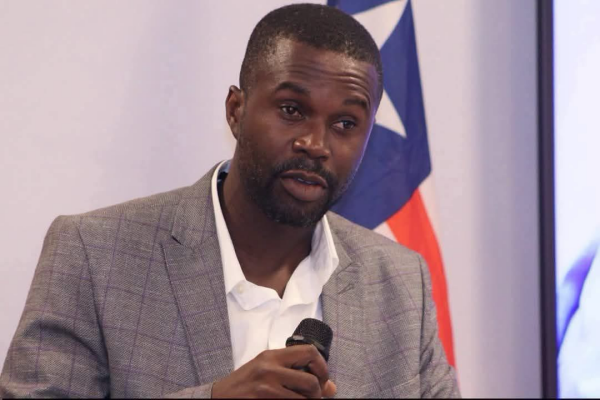
PAYNESVILLE, Liberia — The President of the Press Union of Liberia (PUL), Julius Kanubah, has cautioned the Liberia Telecommunications Authority (LTA) against turning broadcasting regulations into instruments of restriction and censorship, warning that excessive regulatory controls could undermine press freedom and democratic accountability in Liberia.
By Patience M. Jones
Kanubah said while the media community recognizes the need for effective regulation of the country’s broadcasting sector, such measures must not create an atmosphere of fear, uncertainty, or intimidation among radio broadcasters.
He made the statement on Monday, November 23 while delivering the keynote address at the opening of a two-day FM Radio Regulations Stakeholders’ Sensitization Workshop organized by the LTA and implemented by Howe Trainers and Associates (HTA) at the Paynesville City Hall.
Speaking under the theme:, “Towards a Regulatory Framework that Protects Both Order and Freedom,” the PUL president emphasized that regulation must be grounded in transparency, fairness, consultation, and respect for constitutional freedoms.
“Regulation must never become synonymous with restriction. And I like the fact the Director of National Communications Bureau at the Ministry of Information, Mrs. Agatha Thompson-Venn, said it must not be synonymous with censorship,” Kanubah declared.
He stressed that the media community is not opposed to regulation, acknowledging that the airwaves are a limited national resource requiring technical standards, proper frequency management, and professional broadcasting practices.
However, he maintained that regulatory authorities must prioritize legitimacy and stakeholder confidence rather than rely primarily on sanctions and enforcement.
According to Kanubah, radio remains Liberia’s most accessible communication medium, particularly for rural communities where newspapers have limited circulation and internet connectivity remains a challenge.
He described radio as more than a commercial enterprise, noting that it serves as a public good and a critical democratic institution through which citizens access information on governance, elections, public health, education and national development.
The PUL President also referenced President Joseph Nyuma Boakai’s recent description of journalism and media work, particularly radio broadcasting, as a public service.
Kanubah warned that any regulatory framework that fails to recognize the public interest role of broadcasting risks weakening the very democratic principles it is intended to support.
PUL Raises Concerns Over Licensing, Fees and Due Process
The PUL president outlined several concerns requiring urgent attention from the LTA, including the transparency of licensing and renewal procedures, the financial burden of regulatory compliance, due process, and the protection of freedom of expression.
He argued that radio stations investing in equipment, personnel, content production, and community engagement deserve predictable and objective licensing procedures.
According to him, unnecessary delays, unclear requirements, and inconsistent decisions could discourage investment and create uncertainty within the broadcasting industry.
He also expressed concern over the financial difficulties confronting community radio stations, particularly those operating in rural Liberia with limited donor support and resources.
Kanubah warned that excessive regulatory costs could force some of these stations out of operation, thereby depriving thousands of Liberians of access to essential public information.
On due process, he insisted that broadcasters accused of violating regulations must be given opportunities to respond to allegations and access fair and independent appeal mechanisms before administrative actions are imposed.
He further cautioned against regulatory interference with legitimate criticism, investigative journalism, and public debate.
While acknowledging broadcasters’ responsibility to avoid incitement, misinformation, and harmful content, Kanubah maintained that democratic societies must allow scrutiny and accountability rather than silence dissenting voices.
Demands Eight Reforms from LTA
Moving beyond criticism, Kanubah presented eight practical recommendations aimed at improving regulatory compliance and strengthening relations between the LTA and broadcasting stakeholders.
Among his proposals is the establishment of a permanent Broadcasting Stakeholders Forum that would bring together radio station owners, journalists’ associations, community broadcasters, and civil society organizations for quarterly consultations.
He said regular engagement would help address challenges before they escalate into disputes and prevent the regulator from engaging stakeholders only when introducing new regulations or responding to problems.
Kanubah also called on the LTA to publish simplified regulatory guidelines explaining licensing requirements, renewal procedures, compliance obligations, technical standards, sanctions, and appeal processes.
To support his argument, he referenced a 2021/2022 research assessment conducted by Internews, which, according to him, found that more than 30 community radio stations participating in the project did not meet the LTA’s regulatory requirements despite already operating.
He said the findings demonstrate the need for clearer regulatory guidance to help broadcasters understand and meet their obligations.
“Many stations, particularly in rural areas, struggle to interpret complex legal and regulatory language. Clear guidance would improve compliance and transparency,” he noted.
The PUL President also proposed a graduated compliance framework that would prioritize advisory notices, corrective action plans, technical support, and written warnings before resorting to administrative sanctions.
He argued that such an approach would encourage radio stations to correct violations without unnecessarily threatening their operations.
Additionally, Kanubah called for a comprehensive review of licensing and regulatory fees affecting community radio stations, proposing a differentiated fee structure that considers the financial realities of small, nonprofit broadcasters.
He further urged the LTA to establish clear timelines for processing licensing applications and renewals, publicly communicate reasons for denied, suspended, or revoked licenses, and strengthen independent appeals mechanisms.
On professional development, he encouraged the Authority to collaborate with the PUL, media training institutions, and development partners to provide broadcasters with technical training, regulatory compliance education, digital broadcasting knowledge, spectrum management awareness, and emerging technology skills.
He also called for the development of a national digital broadcasting roadmap to address digital migration, online broadcasting, streaming services, artificial intelligence in media, and cross-platform broadcasting standards.
Warns Against Excluding PUL from Regulatory Process
In one of his strongest messages, Kanubah called for a new regulatory relationship between the LTA and broadcasters, insisting that effective regulation cannot be achieved without the meaningful participation of the media community.
He said the success of the LTA should not be measured by the number of radio stations it sanctions but by the number of stations it helps become compliant, sustainable, professional and independent.
“The future of broadcasting in Liberia requires a new compact between regulators and broadcasters. One grounded in mutual respect. One based on transparency rather than suspicion. One built on dialogue rather than directives,” he stated.
Kanubah also emphasized that independent media and effective regulation should not be treated as opposing forces but as essential partners in democratic development.
He called for the institutional involvement of the Press Union in future regulatory consultations, warning that the Union should not be sidelined in decisions affecting the broadcasting industry.
Acknowledging Howe Trainers and Associates for implementing the workshop in partnership with the LTA, Kanubah disclosed that he had held discussions with the company’s Chief Executive Officer and Managing Consultant, Aris Leviticus Howe, regarding opportunities for broader engagement.
He expressed hope that the PUL would be actively involved in organizing future stakeholder consultations rather than being treated merely as a participant or invited speaker.
“The LTA must not avoid or ignore the PUL in such a process,” he stressed.
Kanubah maintained that the LTA, the Ministry of Information, the Press Union of Liberia, and other relevant stakeholders must work collectively if the country is to establish an effective and accountable broadcasting regulatory system.
He concluded by reaffirming the media community’s readiness to work with the Authority while making clear that the Union would continue to challenge regulatory decisions that threaten constitutional freedoms.
“For in the end, a free and responsible media is not a threat to national development. It is one of its strongest foundations,” Kanubah declared.