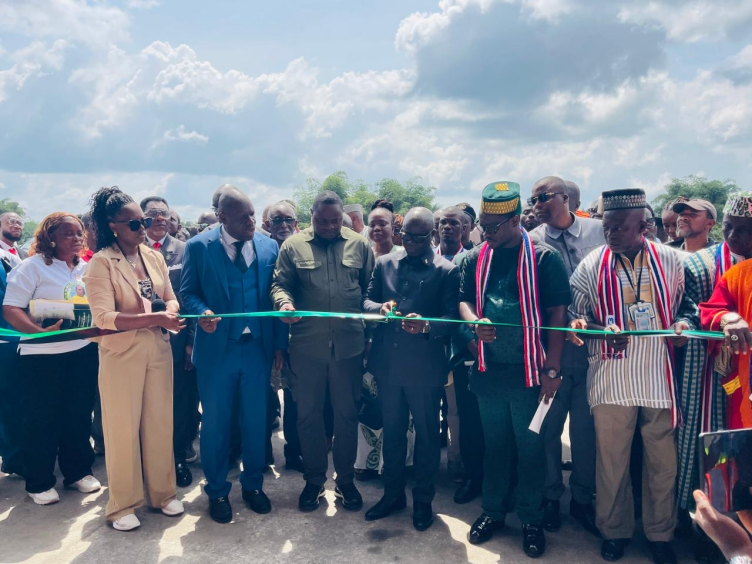
Monrovia-Liberia’s ambition to move beyond exporting raw agricultural commodities and build a stronger domestic industrial economy has received a boost with the commissioning of BNB Rubber Factory Incorporated, a 100 percent Liberian-owned processing facility, expected to strengthen the country’s rubber value chain and expand local participation in one of its most important agricultural sectors.
By Willie N. Tokpah
Located in the Morris Farm Community, Todee District, Montserrado County, the multi-million-dollar investment is designed to process locally produced natural rubber into Technically Specified Rubber, TSR, particularly TSR 10 and TSR 20, products used by international rubber and manufacturing industries.
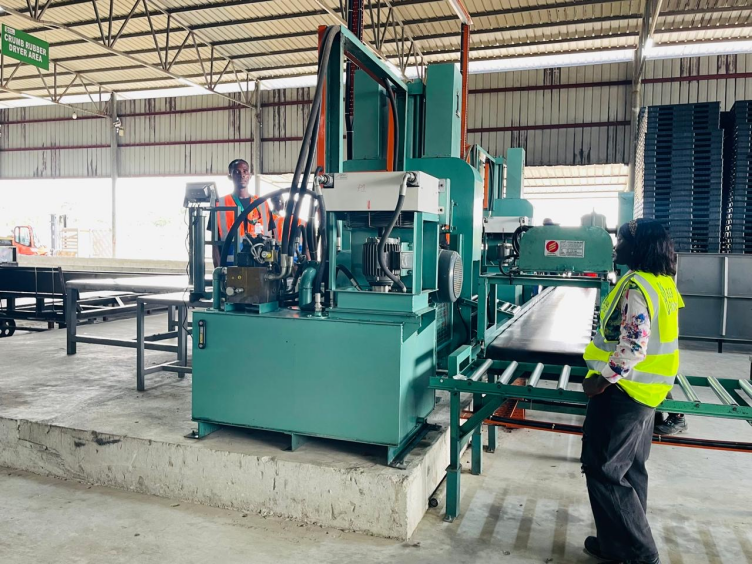
With an installed processing capacity of four metric tons per hour, equivalent to approximately 100 metric tons daily, the facility represents an important step toward retaining more economic value within Liberia, reducing dependence on the exportation of relatively unprocessed commodities and creating opportunities for domestic industrial development.
The factory’s commissioning on November 24, comes nearly a century after Liberia entered the modern commercial rubber industry through its landmark 1926 agreement with Firestone, presenting what government officials described as an opportunity for Liberians to take greater ownership of the economic possibilities surrounding the country’s natural resources.
Representing President Joseph Nyuma Boakai at the ceremony, Agriculture Minister Alexander Nuetah said the investment was strategic, not merely because of its ownership structure but because it reflects the kind of domestic entrepreneurship needed to transform Liberia’s agricultural economy.
The Minister recalled that the President considers rubber the lifeblood of Liberia’s economy, emphasizing the historical and economic importance of the commodity.
However, he argued that despite Liberia’s early entry into commercial rubber production and its historical position in the industry, the country has failed to achieve the level of production, industrial development and domestic ownership necessary to maximize the sector’s potential.
From Raw Commodity Export to Domestic Value Addition
For decades, Liberia’s rubber economy has largely depended on producing and exporting natural rubber, with much of the additional industrial value generated outside the country.
BNB’s establishment seeks to change that pattern by introducing domestic processing capacity that will transform raw rubber sourced from Liberian farmers and suppliers into standardized industrial products for international markets.
According to the company’s Chief Executive Officer, Sylvanus B. Broh, Sr, the investment emerged from the experience of Broko Enterprising Corporation, established in Tappita, Nimba County, in 2018.
The company initially operated in the rubber trade, purchasing, aggregating, and exporting natural cup lump rubber while working with farmers, brokers, suppliers, and other participants in the value chain.
That experience, the CEO explained, exposed the limitations of an economy that produces agricultural commodities but captures relatively little of the value generated through processing and manufacturing.
The realization led to the establishment of BNB Rubber Factory, with a vision of positioning Liberia as a competitive center for rubber processing and eventually finished rubber manufacturing.
The CEO said the factory’s production process begins with receiving, weighing, inspecting, and sorting raw rubber before it undergoes washing, shredding, cleaning, dewatering, and controlled drying.
The material is subsequently compressed into standardized bales, tested through laboratory quality-control procedures, and prepared for packaging and shipment.
He disclosed that the company sources its raw materials from smallholder farmers, brokers, cooperatives, and aggregators across Liberia.
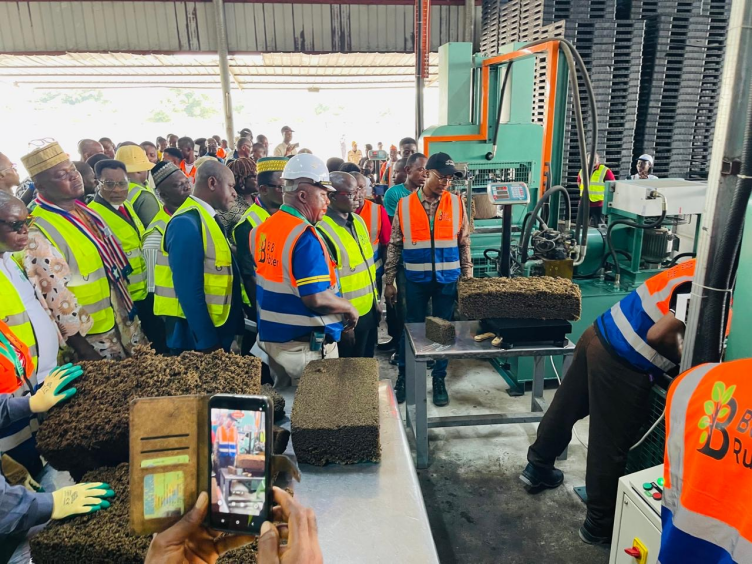
The company has also established business relationships with buyers in Austria, Malaysia, Singapore, China, and Europe, according to the CEO.
The international market connections could provide an opportunity for Liberian-produced rubber to enter broader industrial supply chains while allowing the country to retain a greater portion of the value generated from its agricultural resources.
New Competition Could Reshape the Rubber Industry
Beyond its contribution to local processing, BNB’s entry could introduce a new competitive dimension into Liberia’s rubber industry, where large foreign-owned concessions and established companies have historically occupied prominent positions.
Minister Nuetah challenged Liberians to move beyond depending on foreign investors and begin taking advantage of opportunities in sectors where the country possesses natural resources and comparative advantages.
He cited Côte d’Ivoire as an example of how domestic participation can contribute to the development of a competitive rubber industry, noting that locally owned small and medium-sized enterprises have played important roles in its expansion.
The Minister presented figured showing that Liberia exported approximately 41,000 metric tons of rubber in 1961, compared with about 88 metric tons from Côte d’Ivoire during the same period.
By 2024, he said, Côte d’Ivoire’s rubber exports had increased to approximately 1.6 million metric tons, while Liberia exported about 118,000 metric tons.
The comparison, according to the Minister, illustrates the extent to which Liberia has lost ground despite its historical advantage in commercial rubber production.
He attributed part of the problem to the country’s limited domestic investment and failure to expand production and processing opportunities.
BNB’s emergence, could therefore encourage competition not only among rubber processors but also across the broader value chain.
With another processing outlet available, farmers, cooperatives, brokers, and aggregators could have additional opportunities to market their products. Increased competition among buyers could also encourage improved purchasing arrangements, more responsive services, and potentially better farm-gate prices.
For existing operators, the entry of a Liberian-owned processor could create additional pressure to improve efficiency, strengthen relationships with farmers, and consider investments in domestic value addition.
However, the extent of these benefits will depend on BNB’s ability to sustain production, maintain competitive purchasing prices, and establish a reliable nationwide supply network.
Policy Environment and the Push for Local Investment
The factory’s establishment also reflects the relationship between government policy and private-sector investment.
Minister Nuetah recalled that the government inherited an executive order restricting the exportation of unprocessed rubber, a policy environment that presented challenges for traditional participants in the rubber trade while creating incentives for investment in domestic processing.
He praised BNB’s leadership for recognizing the potential business opportunity in local value addition rather than viewing the policy change exclusively as a disadvantage.
The investment demonstrates how government policies can potentially encourage domestic industrialization when supported by private capital and entrepreneurial initiative.
However, the long-term success of such policies will depend on consistency, transparency and the government’s ability to create an enabling environment for businesses, including access to financing, reliable electricity, transportation infrastructure and efficient regulatory services.
For Liberian-owned enterprises to compete effectively with established international companies, policy restrictions alone will not be sufficient.
They must be accompanied by practical measures that reduce production costs and strengthen the competitiveness of local industries.
A New Market for Smallholder Farmers
Perhaps the most important development implication of BNB’s investment lies in its potential relationship with smallholder rubber farmers.
Liberia’s rubber economy depends not only on large plantations but also on thousands of farmers whose livelihoods are tied to the production and sale of natural rubber.
By sourcing raw materials from smallholder farmers, brokers, cooperatives, and aggregators, BNB could provide an additional commercial outlet for producers who often depend on established purchasing networks.
The factory’s demand for raw materials could help strengthen the connection between agricultural production and industrial processing.
If properly implemented, this relationship could stimulate local economic activities, improve market access, and encourage farmers to increase production in response to more dependable demand.
It could also create opportunities for cooperatives and aggregators to formalize their operations and become more active participants in the industrial supply chain.
Nevertheless, the company will need to demonstrate that its operations translate into tangible benefits for farmers through fair purchasing arrangements, timely payments, and sustained demand.
The number of farmers expected to supply the factory, the annual quantity of rubber it intends to purchase, and its proposed farm-gate pricing arrangements will be important indicators of its actual impact on rural livelihoods.
From Processing to Manufacturing, The Bigger Vision
While the immediate operation focused on producing technically specified rubber for international buyers, BNB’s leadership has outlined a longer-term ambition to move into finished rubber manufacturing.
Such a transition could represent a more substantial transformation of Liberia’s industrial economy.
Instead of exporting processed rubber for further manufacturing abroad, the country could eventually develop domestic industries producing rubber-based goods for local consumption and international markets.
This could expand employment opportunities beyond agricultural production and primary processing, while creating demand for technicians, engineers, laboratory personnel, logistics workers, and other skilled professionals.
Mr. Broh said the company’s journey from concept to commissioning took less than two years.
The facility was acquired in January 2025, construction began in April 2025, equipment installation commenced in January 2026, and was completed in July 2026.
Trial operations were conducted between September and October before the official launch.
The timeline, according to Broh, reflects its commitment to establishing a domestic industrial operation capable of supporting Liberia’s agricultural transformation.
Measuring Investment Beyond the Launch
For Liberia, BNB’s commissioning represents more than the opening of another commercial facility. It raised concerns about local ownership, agricultural productivity, industrial employment, and the country’s ability to capture greater economic benefits from its natural resources.
The investment also offers an opportunity to test whether Liberian entrepreneurs can successfully enter an industry traditionally dominated by foreign capital and compete through processing, technology, quality assurance, and international market access.
But the ultimate measure of its developmental contribution will not be the commissioning ceremony or installed production capacity.
It will be determined by the number of Liberians employed, the volume of rubber purchased from local farmers, the consistency of production, the competitiveness of its products and the extent to which its operations stimulate additional investment in the agricultural and manufacturing sectors.
For the Boakai administration, the emergence of BNB presents an opportunity to demonstrate that policies promoting local value addition can translate into tangible economic development.
For Liberia’s rubber farmers and entrepreneurs, it offers the prospect of a more diversified market and greater domestic participation in the industry’s future.
Nearly 100 years after the country entered the modern commercial rubber industry, BNB’s establishment presents a renewed opportunity to shift the conversation from simply producing and exporting rubber to processing, manufacturing and building an industrial economy in which Liberians have a greater stake.