Monrovia, Liberia | November 17, 2026
The Government of Liberia, through the Ministry of Foreign Affairs, today launched the first foreign policy document in the nation’s history. Since independence in 1847, Liberia has never had a foreign policy document that sets out the vision, strategy and pillars of its foreign relations. Instead, Liberia’s foreign policy has been guided by statements pronounced by successive Presidents. The last policy statement update came in 1971, when President William R. Tolbert, Jr. updated Liberia’s foreign policy statement upon assumption of his new role as President following the passing of President William V. S. Tubman. Fifty-five years later, on November 17, 2026, Liberia launched its first ever foreign policy document, one that is forward looking and fully gender mainstreamed, updating the statement, but articulating a full vision, strategic approach and outlook.
Since 1971, the global political landscape has undergone significant transformations. The Organization of African Unity has evolved into the African Union, regional institutions such as ECOWAS and the Mano River Union have expanded their roles, and shifting geopolitical dynamics, technological advancements and emerging global challenges have redefined international relations. Liberia itself has experienced profound change, transitioning from civil conflict through peacebuilding and democratic consolidation to becoming an elected member of the United Nations Security Council for 2026-2027, with its historic Presidency scheduled for December 2026.
Recognizing many of these developments, the Ministry of Foreign Affairs undertook a comprehensive review of Liberia’s foreign policy to align its diplomatic vision with contemporary global realities, national development priorities, and the country’s growing role in international affairs. The new Foreign Policy, endorsed by Cabinet on May 28, 2026, emphasizes economic diplomacy, national sovereignty, regional integration, peace and security, citizen protection, and international cooperation. The policy articulation was led by seasoned Liberian diplomats such as former foreign ministry officials and received inputs from current ambassadors and missions around the world.
A defining feature of this historic foreign policy is the adoption of Liberia’s Gender-Responsive Foreign Policy (GRFP), also known as a Feminist Foreign Policy, making Liberia the first country on the African continent to adopt such a framework.
The policy emerged from a deliberate process that identified gaps between Liberia’s commitments to gender equality and the practical inclusion of women in foreign policy formulation, diplomatic leadership, and international engagement. It seeks to bridge these gaps by placing women’s rights, leadership, participation, and empowerment at the center of Liberia’s diplomatic priorities.
The Gender-Responsive Foreign Policy is anchored in five strategic pillars: Women’s Rights; Women’s Economic Empowerment and Inclusive Trade; Women, Peace and Security; Climate Justice and Natural Resource Governance; and Women’s Political Representation and Leadership.
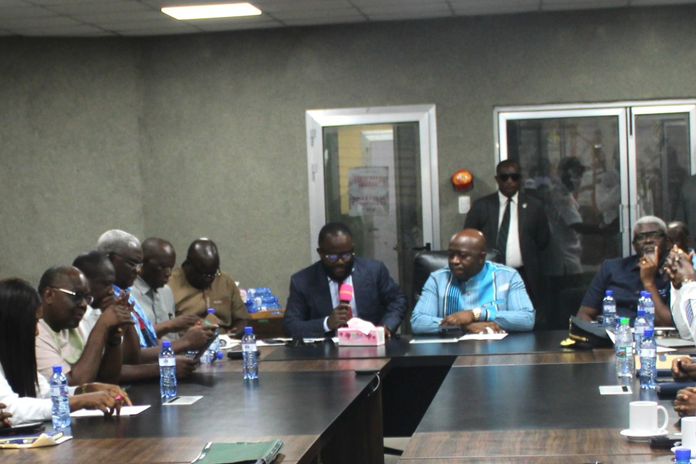
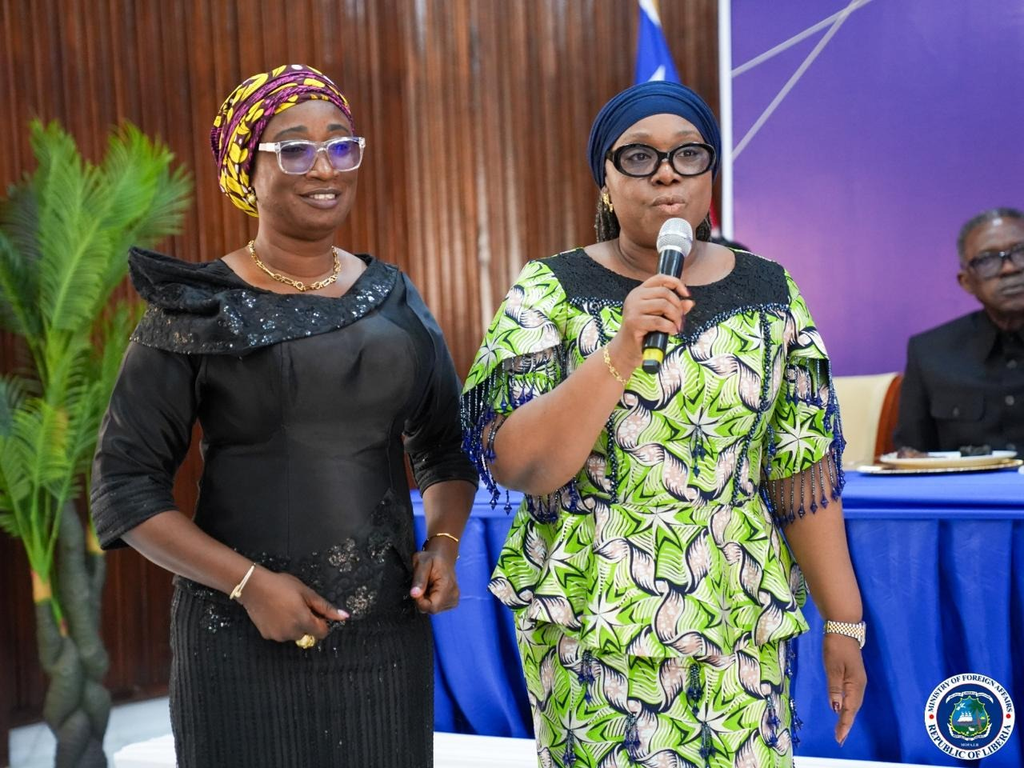
The launch at the Ministry of Foreign Affairs brought together senior government officials, members of the diplomatic corps, development partners, civil society organizations and other stakeholders to formally unveil the policy and outline its implementation priorities.
The Ministry of Gender, Children and Social Protection has been the key partner in government for this achievement. Supported by UN Women, the policy was also validated by the technical team of the Ministry of Gender to ensure alignment on gender related approaches and targets.
The launch was also witnessed by distinguished leaders of Africa’s women’s movement, foreign diplomats, most of whom traveled to Monrovia for the occasion. They included H.E. Cecilia Adut Manyok Adeng, Minister of Foreign Affairs of South Sudan who represented the 14 African Female Foreign Ministers, H.E. Ambassador Yusuf Maitaima Tuggar, immediate past Chair of the ECOWAS Council of Ministers and Minister of Foreign Affairs of Nigeria, Nobel Peace Laureate Leymah Gbowee, Madam Bineta Diop, Founder of Femmes Africa Solidarité and the African Union’s first Special Envoy on Women, Peace and Security; Dr. Bisi Adeleye-Fayemi, Co-Founder and first Executive Director of the African Women’s Development Fund; Ms. Thelma Ekiyor-Solanke, whose vision gave rise to the Women in Peacebuilding Network (WIPNET), the network through which Liberian women organized the mass action for peace; Madam Rosalie Lo; and other great women of Africa’s gender movement.
Their presence marked a moment in which Africa itself bore witness as the continent’s first Gender-Responsive Foreign Policy was launched.
Under the leadership of President Joseph Nyuma Boakai, Sr., and Minister of Foreign Affairs H.E. Mme. Sara Beysolow Nyanti, this historic initiative signals a new chapter in Liberia’s diplomatic engagement, advancing a modern, inclusive, and forward-looking foreign policy that reflects the country’s transformation and aspirations for global leadership.