Monrovia-More than a year after a man pleaded guilty to statutory rape and was sentenced to five years in prison for sexually abusing a 14-year-old girl, the Liberian government is now facing judicial scrutiny over its failure to provide the survivor with the educational and social support contemplated in the court’s ruling.
By: Willie N. Tokpah
The matter has taken a new turn, with Criminal Court ‘E’ at the Temple of Justice summoning the Ministers of Justice and Gender, Children and Social Protection to appear before the court on Monday, November 16, 2026, to explain the government’s handling of its responsibilities toward the survivor and her child.
The summons, issued on November 11 by the Clerk of Criminal Court ‘E’, Abraham Richards, was made at the directive of Assigned Circuit Judge Wesseh Alphonsus Wesseh Sr.
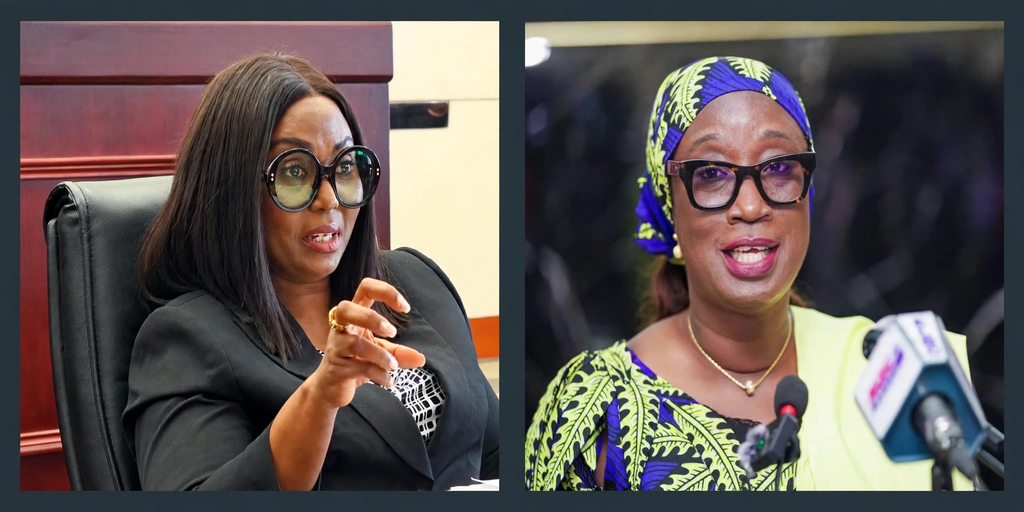
The two officials summoned are Acting Minister of Justice and Attorney General Betty M. Lamin-Blamo and Gender Minister Gbeme Horace-Kollie.
According to the court’s communications, the conference, scheduled for 10:00 a.m., concerns the provision of support for the rape survivor and her child in keeping with the court’s ruling in the case involving the Republic of Liberia and Victor Eze.
The court’s intervention comes amid concerns that the survivor, who was supposed to benefit from educational assistance and other support, is reportedly still out of school despite the reopening of schools across the country.
For a child whose education and childhood were disrupted by sexual violence, the failure to secure continued schooling raises troubling questions about the effectiveness of Liberia’s protection system for survivors of sexual and gender-based violence.
A Conviction, But What Happened To Survivor?
Court records show that Victor Eze, then 35, was arrested on December 9, 2024, and subsequently indicted for statutory rape in violation of Section 14.70 of Liberia’s New Penal Law.
The indictment alleged that in October 2024, in Jallah’s Town Community, Montserrado County, Eze sexually assaulted a 14-year-old girl.
According to the indictment, the defendant lived in the same yard as the survivor and allegedly entered the room where she slept, threatening her with a knife before sexually abusing her.
The court records further stated that the survivor sustained injuries and was taken to the JDJ Memorial Hospital for medical examination and treatment.
The case took a major turn on June 11, 2025, when Eze pleaded guilty to the statutory rape charge.
During the court’s inquiry into his plea, the defendant acknowledged that the survivor had given birth to a child as a result of the sexual abuse and expressed a willingness to support both the child and the mother.
The court subsequently adjudged him guilty after satisfying itself that his plea was made voluntarily and with an understanding of the charge.
On October 7, 2025, the court sentenced Eze to five years’ imprisonment, inclusive of the nine months he had already spent in pretrial detention.
The court consequently ordered that he serve the remaining four years and three months in a correctional facility within Liberia.
The Government’s Responsibility
Beyond the criminal sentence, the proceedings also brought the government’s responsibility toward the survivor and her child into focus.
The court’s sentencing records referenced support of US$50 provided through the Ministry of Justice’s Sexual and Gender-Based Violence Crimes Unit.
The records also referenced an additional intervention by the Ministry of Gender, Children and Social Protection, including the provision of seed funding for a small business and support under an initiative involving SOS.
These interventions reflected the need to address the survivor’s circumstances beyond the conviction and imprisonment of the perpetrator.
However, the latest court summons suggests that questions remain about the implementation and continuity of the support contemplated by the court.
At the center of the present controversy is the survivor’s education. With schools now in session, the reported absence of the teenage survivor from school raises a fundamental question: What happens to a child whose education is interrupted by sexual violence when the very institutions expected to help rebuild her life fail to deliver the necessary support?
A prison sentence may punish the offender, but it can not, on its own, restore the survivor’s education, provide for her child’s welfare, or guarantee her economic security.
Those responsibilities require sustained institutional commitment.
A Test for the Ministries
The appearance of the two ministers before Criminal Court ‘E’ could become an important test of accountability for institutions responsible for protecting women and children in Liberia.
The Ministry of Justice, which oversees the prosecution of criminal cases and the government’s legal responsibilities, and the Ministry of Gender, Children and Social Protection, which has a central mandate to promote the welfare and protection of vulnerable persons, are now expected to address the court’s concerns.
The November 16 conference will provide an opportunity for both ministries to explain what measures have been taken, what support has reached the survivor and her child, and what concrete arrangements are in place to ensure that she returns to school.
It also raised questions about whether the assistance referenced during sentencing was intended as a one-time intervention or part of a sustained rehabilitation and protection arrangement.
For the survivor, the issue is not simply an administrative disagreement between government institutions and the court.
It is about her future.
She is a young person who, according to the prosecution’s case, suffered sexual violence at an age when she should have been concentrating on her education, personal development, and childhood.
She now has a child to care for, while the government is being called upon to account for the support expected to help her rebuild her life.
When Justice Must Go Beyond The Courtroom
Liberia has made legal and institutional commitments to combat rape, protect children, and support survivors of gender-based violence. But the effectiveness of those commitments cannot be measured solely by arrests, prosecutions, and prison sentences.
The true measure of justice must also include what happens to survivors after their cases are concluded.
A conviction without meaningful rehabilitation risks leaving victims to confront the consequences of sexual violence alone.
The situation involving the survivor, therefore, presents an important question for the country’s justice and social protection systems, as to whether Liberia claims to have delivered justice when a survivor’s education and welfare remain uncertain after her perpetrator has been convicted.
The court’s decision to summon the two ministers signals that the matter is not being treated as a closed criminal proceeding but as an issue requiring further attention to the welfare of the survivor and her child.
On Monday, November 16, the attention will shift from the courtroom conviction to the government’s response.
For the teenage survivor, however, the most important outcome will not be another official explanation or promise.
It will be tangible support, a return to school, protection for her child, and a genuine opportunity to reclaim the future that sexual violence threatened to take away.
Support Independent Journalism
Your support helps FrontPage Africa continue delivering independent, credible, and impactful journalism. Every contribution strengthens our ability to investigate, inform, and hold power accountable while keeping quality journalism accessible to our readers.
Support our journalism or subscribe to receive the latest FrontPage Africa stories and updates.