MONROVIA — Liberia’s rubber industry is reporting increased production and stronger market prices following the government’s ban on exporting unprocessed rubber, as regulators intensify efforts to enforce Executive Order No. 166 and crack down on illegal buyers, fraudulent weighing practices, and the non-payment of statutory fees.
By Patience M. Jones,[email protected]
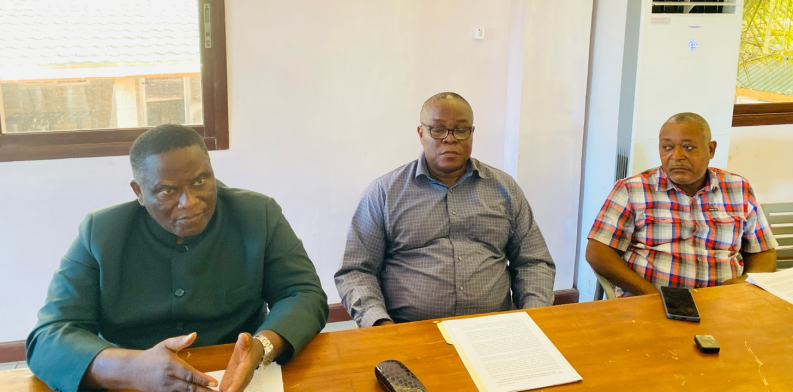
The Rubber Development Fund Incorporated (RDFI) and the Rubber Planters Association of Liberia (RPAL) made the disclosure in a joint press statement issued on November 10, providing an update on developments in the country’s rubber sector since President Joseph Nyuma Boakai issued Executive Order No. 166 in June 2026.
The order, which took effect on July 1 prohibits the exportation of unprocessed rubber, a policy the two institutions say is intended to strengthen local processing, create employment opportunities, increase domestic value addition, and ensure that Liberian rubber farmers benefit more directly from the industry.
Reading the statement, RDFI Executive Director William Johnson said the government’s intervention followed longstanding concerns among rubber producers about the fairness and transparency of the country’s rubber pricing system.
He recalled that the concerns were extensively discussed during the National Rubber Conference hosted by the RDFI in Gbarnga, Bong County from November 8–9, 2024.
The conference brought together more than 300 stakeholders representing over 60,000 rubber farmers, alongside local and international experts, including representatives of APROMAC from Côte d’Ivoire.
According to Johnson, one of the major concerns raised was that monthly rubber prices were not independently determined, leaving producers feeling disadvantaged in the marketplace.
In response, President Boakai established an eight-member committee in November 2024, chaired by the Minister of Agriculture and comprising relevant government institutions and representatives of the rubber industry.
The committee, subsequently known as the Liberia National Rubber Pricing Committee (LNRPC), was mandated to establish an independent mechanism for determining and publishing monthly rubber prices.
Johnson said the committee began its work immediately and, in June 2025, independently determined and published Liberia’s monthly rubber price for the first time.
He disclosed that the initial net price was US$545 per metric tonne in June 2025, increasing to US$972 per metric tonne in November 2026.
The RDFI Executive Director described the development as a significant achievement for the industry, noting that the committee has continued meeting monthly to determine and publish rubber prices.
Despite the reported progress, Johnson raised concerns about buyers who allegedly operate outside the established regulatory framework by failing to pay statutory rubber development fees to the RDFI.
He warned that the enforcement task force would soon begin taking action against individuals and businesses violating the country’s rubber regulations.
He also accused some buyers of failing to withhold and transfer subscription fees owed to the Rubber Planters Association of Liberia.
According to him, the RPAL fee per tonne is published in the monthly rubber buying notices and must be deducted whenever rubber transactions take place.
Johnson further disclosed that the RDFI has received reports of unscrupulous rubber buyers using fraudulent weighing instruments to cheat farmers during transactions.
To address the situation, he said the RDFI signed a Memorandum of Understanding (MOU) with the Liberia Standards Authority (LiSA) in June 2026 to ensure that weighing instruments used by rubber buyers meet established standards.
He announced that an implementation exercise would begin in November, requiring rubber buyers across the country to use weighing instruments certified by LiSA.
RDFI Chairman J. Tokpah Mulbah said the exercise would be preceded by a nationwide public awareness campaign to educate farmers and buyers about the process.
He explained that LiSA would provide the technical expertise, while the RDFI would identify buying locations and communities where the exercise would be conducted.
Mulbah disclosed that reports of irregular weighing practices had already emerged from Bong and Nimba counties.
He said farmers have been encouraged to report suspected malpractice, adding that the RDFI has field agents and personnel who can investigate complaints.
The chairman stressed that standardizing weighing instruments across the country would help protect farmers from being cheated and ensure fairness in rubber transactions. Providing an update on the enforcement of Executive Order 166, Mulbah said the task force, working with the Liberia Revenue Authority and other relevant institutions, had taken steps to prevent the exportation of unprocessed rubber.
He explained that customs officials had been involved in inspecting shipments at the Freeport of Monrovia to determine whether exporters were complying with the executive order.
According to him, shipments found to be inconsistent with the order were stopped, while the task force continues working to strengthen enforcement.
He added that customs officials would inspect rubber-related shipments before they are cleared for export to ensure that the products meet the requirements of the order.
Mulbah said the policy was already encouraging increased deliveries of rubber to local processing companies, with some previously inactive facilities resuming operations.
He cited the reopening of the Liberia Rubber Development Company (LIGRU), which he said had been inactive for more than five years but has now resumed rubber processing.
He also disclosed that other companies were making efforts to enter or expand their participation in local processing.
The RDFI chairman maintained that the objective of the executive order was not to prevent businesses from making profits but to establish a regulatory system that protects local farmers and strengthens Liberia’s domestic rubber industry.
He urged businesses previously engaged in exporting unprocessed rubber to consider investing in local processing facilities. Beyond regulatory enforcement, the RDFI reported substantial growth in rubber production over the past three years.
Johnson disclosed that Liberia recorded 115,000 dry metric tonnes of rubber in 2024, equivalent to approximately 176,923 wet metric tonnes. In 2025, production increased to 184,381 dry metric tonnes, equivalent to 295,010 wet metric tonnes.
For the first, second, and third quarters of 2026, the country recorded 120,968 dry metric tonnes, equivalent to 193,549 wet metric tonnes. The RDFI projected additional production during the fourth quarter, indicating continued expansion in the sector.
Johnson, however, acknowledged that Liberia’s production potential remains largely untapped, pointing to the need for increased farmer training, improved planting materials, and stronger support for local producers.
He said the RDFI was prioritizing free training and workshops to equip farmers with improved agricultural practices rather than limiting its interventions to direct cash assistance.
According to him, the institution’s objective is to help farmers improve productivity while ensuring they benefit from prevailing international market prices.
He also encouraged young Liberians to consider agriculture, particularly rubber, cocoa, and cashew farming, as viable economic opportunities.
On the question of when Liberians could expect locally manufactured rubber products, including tyres and gloves, Johnson said the country must first strengthen its production and processing capacity before moving into large-scale manufacturing.
He described the development of the rubber industry as a gradual process, beginning with production, followed by processing and eventually the manufacturing of finished products.
Johnson disclosed that JETI had publicly committed to beginning the production of tyres and gloves in Liberia between 2027 and 2028.
He added that the RDFI would encourage other investors and manufacturers to establish finished-product industries in the country. He also indicated that the institution would engage relevant government agencies to explore possible tax incentives and other investment benefits to attract manufacturers.
Johnson emphasized that Liberia should not remain a country that produces and exports raw materials without developing the capacity to manufacture finished products locally.
Meanwhile, T. Bannie Browne, Vice President of the Rubber Planters Association of Liberia, attributed the reported growth in the country’s rubber industry partly to the enforcement of Executive Order 166 and increased regulatory oversight.
Browne said Liberia’s rubber industry was gaining recognition across Africa, pointing to what he described as the country’s emergence as the continent’s second-largest rubber producer.
He argued that restrictions on exporting unprocessed rubber had helped reduce the smuggling of rubber through disguised export arrangements.
According to him, some exporters previously concealed rubber in containers declared as other commodities to circumvent existing regulations.
However, he said increased inspections and scanning at the Freeport of Monrovia had helped identify such practices.
Beyond the export restrictions, Browne disclosed that the association had expanded its rubber nursery development initiatives to six additional counties, bringing the number of counties covered to 15.
The newly included counties are Lofa, Grand Gedeh, River Gee, Sinoe, Maryland, and Grand Kru.
He said the association was establishing three to four nursery projects in each of the newly targeted counties to provide farmers with improved rubber planting materials.
Browne announced that the association expects to begin distributing free improved rubber seedlings to farmers by 2027.
He explained that the initiative would help farmers replace aging rubber trees with improved clones capable of producing higher yields.
According to him, the intervention is expected to significantly increase Liberia’s rubber production over the next four to five years. The RDFI also disclosed that it was strengthening international partnerships to improve research, production, and technical capacity within Liberia’s rubber industry.
Johnson said that in October this year, representatives of the RDFI and RPAL participated in the annual conference of the International Rubber Research and Development Board and the Rubber Research Institute of Nigeria.
The conference brought together researchers, policymakers, planters, and other stakeholders from major natural rubber-producing countries.
He said the engagement provided an opportunity for Liberia to explore cooperation with international research institutions, particularly in establishing a rubber research center in the country.
Johnson also disclosed that an RDFI delegation participated in activities organized by the Association of Professionals of Natural Rubber in Côte d’Ivoire from November 4–8, 2026, marking the association’s 50th anniversary.
During the visit, the Liberian delegation held discussions with Côte d’Ivoire’s Minister of Agriculture and other stakeholders on possible areas of cooperation, including opportunities to strengthen rubber production and develop processing facilities along the border.
The RDFI and RPAL said the engagements were intended to expose Liberian rubber farmers to international best practices and create opportunities for partnerships that could improve the country’s rubber industry.
Support Independent Journalism
Your support helps FrontPage Africa continue delivering independent, credible, and impactful journalism. Every contribution strengthens our ability to investigate, inform, and hold power accountable while keeping quality journalism accessible to our readers.
Support our journalism or subscribe to receive the latest FrontPage Africa stories and updates.