MARGIBI COUNTY – For some patients arriving at the 14 Military Hospital in Margibi County, the opportunity to receive medical attention is more than a routine hospital visit. It is a chance to confront illnesses they have lived with for years, conditions they could not afford to treat, and medical problems for which specialized care has remained difficult to access.
By Gerald C. Koinyeneh
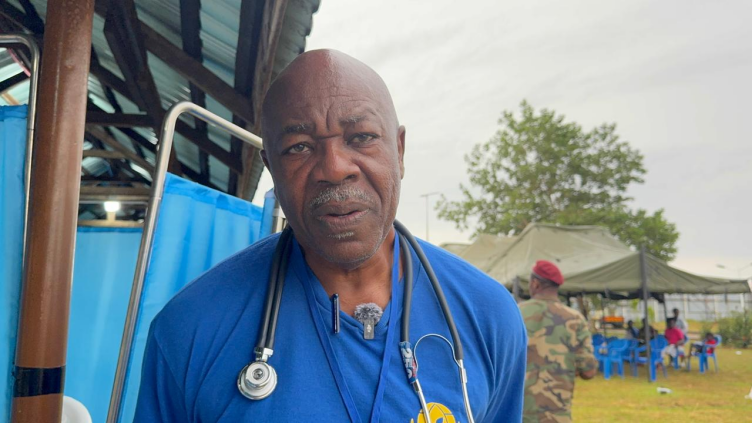
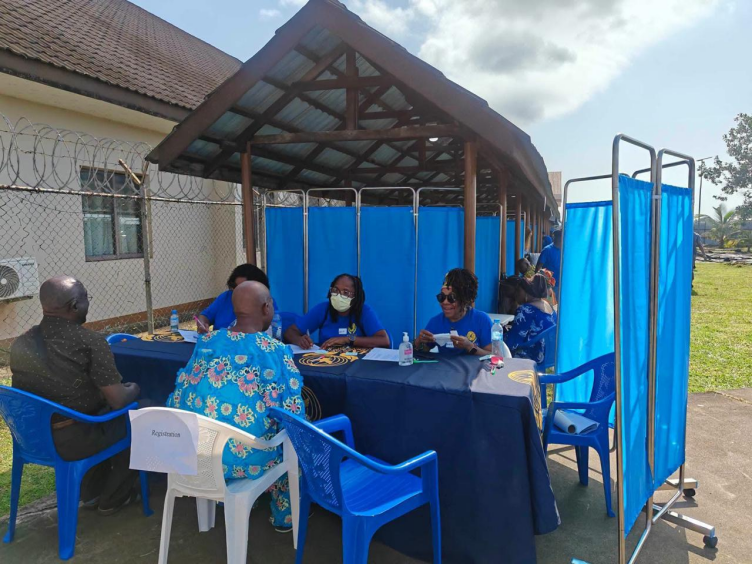
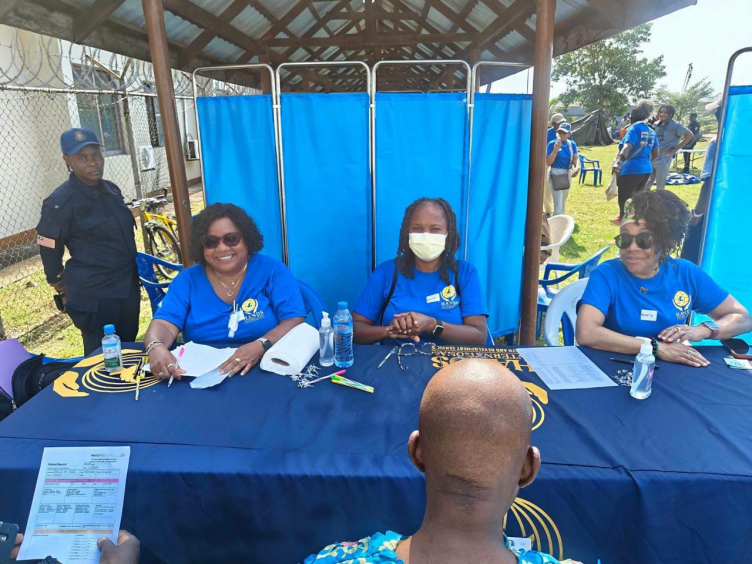
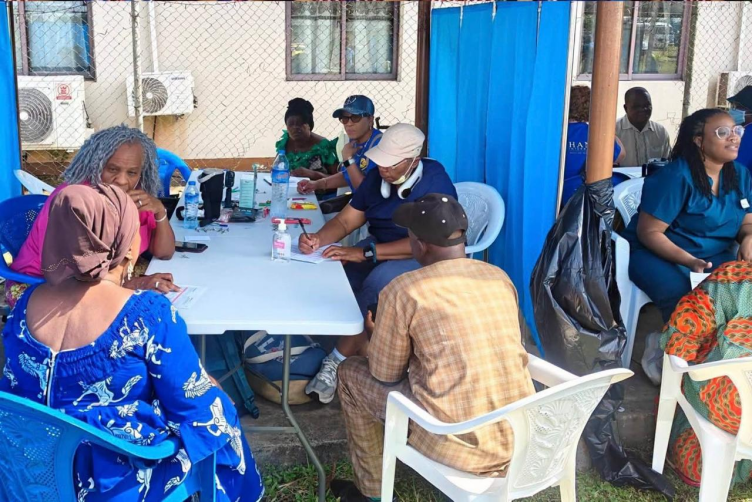
Since Monday, November 9, a team of 62 medical professionals from the United States and the Liberian Diaspora has been providing free medical services to members of the public through the HANDS International Medical Mission.
The outreach, now in its third day as of Wednesday, November 11, has brought together specialists in cardiology, obstetrics and gynecology, internal medicine, family medicine, pediatrics, dentistry, ophthalmology, dermatology, physical therapy, occupational therapy and wound care.
For the visiting professionals, however, the mission is revealing something deeper than the immediate demand for medical consultations: the extent of the country’s unmet healthcare needs and the financial difficulties that prevent many Liberians from obtaining treatment.
By the first three days, the team had recorded more than 700 patient encounters. Its president, Dr. Reynold Agard, said the mission was initially targeting more than 2,000 patients before concluding on Saturday, November 14.
But some of the cases encountered have already prompted discussions about interventions that could extend well beyond the scheduled outreach.
When a Medical Diagnosis Becomes a Lifeline
Among the cases that particularly concerned the visiting team is that of an eight-year-old girl suffering from a congenital heart condition known as Ebstein anomaly.
According to Agard, the child has experienced breathing difficulties and poor physical development, appearing considerably younger than her actual age because of the condition.
Ebstein anomaly is a rare congenital heart defect involving the tricuspid valve, which affects blood flow through the heart. Depending on its severity, the condition can cause breathing difficulties, heart enlargement and other complications.
Agard said the girl’s condition had reportedly gone undiagnosed, raising concerns about the consequences of limited access to specialized cardiac services.
The team is exploring arrangements to facilitate her treatment, potentially through a cardiac program in Nigeria.
For Agard, the case illustrates why the medical mission cannot be limited to treating patients during a few days of outreach.
He said the team had encountered several conditions that could be treated but remained difficult to address because of limited medical resources and access to specialized services.
HANDS International is therefore considering how it could help connect patients with appropriate treatment facilities and explore longer-term healthcare collaboration in Liberia.
The organization’s experience in Nigeria offers one possible model.
Born in Trinidad and Tobago, a twin-island nation in the Caribbean, Agard migrated to Philadelphia, Pennsylvania, where he began pursuing his dream of becoming a medical missionary.
He studied Biology at Cheyney University, completing his undergraduate studies in two and a half years with highest honors and graduating as class valedictorian.
He subsequently attended Penn State College of Medicine before completing a residency in Internal Medicine at the Medical Center of Delaware, now known as ChristianaCare Health System.
Agard currently operates his own medical practice, Premiere Physicians PA, serving patients in Delaware through medical care aimed at helping them improve and maintain healthy lifestyles. He is also a member of the medical and dental staff of the Department of Internal Medicine at ChristianaCare Health System.
Agard explained that a previous medical mission by HANDS International in Nigeria helped lay the foundation for a specialized healthcare initiative led by Dr. Adeleke. The initiative has since expanded to include three hospitals and training institutions for medicine, pharmacy, nursing and allied health.
He said the Nigerian experience demonstrated how medical outreach could develop into sustainable healthcare infrastructure and help reduce the need for patients to travel abroad for treatment.
“We have even spoken with Dr. Adeleke, who was here. We will try to work in coordination with the medical team here and the government to see if we could establish a program,” Agard told FrontPage Africa.
He said there was potential for a similar initiative in Liberia, although discussions and arrangements would still be required.
A Mission Years in the Making
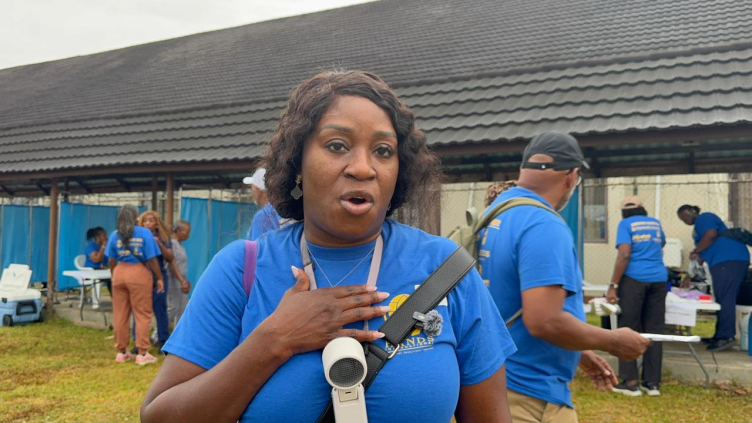
Behind the arrival of the medical team is Christine Lawrence Nayor, a Liberian based in the United States who serves as the mission’s lead planner.
Nayor said she had spent years encouraging Agard to bring HANDS International to Liberia, having witnessed the organization’s medical interventions in other parts of the world.
For her, 2026 presented an opportunity to turn that longstanding appeal into reality.
She believes the mission could become the starting point for a more enduring partnership between Liberian healthcare institutions and medical professionals in the Diaspora.
Nayor said discussions were already taking place about bringing back a specialized surgical team to address cases that the current group of professionals could not handle.
One of her aspirations is to help establish a cardiac center of excellence in Liberia.
“The need here is so great, and that is just the start. If this mission can lead into perhaps a school of nursing or anything else that could come from it, how wonderful would that be for our people?” she said.
She believes such an initiative could improve access to specialized treatment while strengthening the country’s medical workforce.
However, she acknowledged that establishing such a facility would require sustained collaboration, resources and commitment beyond the current medical outreach.
Nayor also expressed appreciation to members of the Liberian Diaspora communities whose contributions and collective efforts helped make the medical mission a reality.
She acknowledged their support in planning and coordinating the initiative, noting that the successful arrival of the medical team was the result of sustained collaboration and commitment from Liberians abroad.
Nancy Witherspoon, the Mission’s media and communications lead and a resident of Delaware, also expressed delight at being part of the mission, describing its realization as the fulfillment of years of planning.
Witherspoon thanked Agard and his team for their dedication and the medical services they are providing to Liberians.
She said she was pleased to see the long-awaited initiative finally materialize and commended the visiting professionals for their commitment to bringing healthcare services to communities in need.
The Cost of Being Sick
Beyond the complicated medical cases, Nayor said the mission has exposed the financial barriers that prevent many Liberians from accessing even relatively affordable procedures.
She recalled meeting a man who had reportedly lived with a colostomy for more than 12 years and needed a reversal procedure.
A colostomy is a surgical procedure that creates an opening in the abdomen to allow waste to leave the body into an external bag. Depending on the patient’s condition, a subsequent operation may be required to reverse it.
The visiting team could not immediately perform the procedure because the surgeon expected to participate in the mission had been involved in an accident shortly before the trip.
For Nayor, the case demonstrates how a medical problem that might be manageable under the right circumstances can become a prolonged burden when patients lack the financial means or access to specialized treatment.
She said some patients require procedures that might cost a few hundred dollars but remain unable to afford them.
“Someone needed a surgery that’s going to cost $250. In my mind, that is not a lot. But to someone who doesn’t have the means, that is a whole lot,” she said.
For Families, Free Medical Care Brings Relief and Gratitude
For families who have brought sick relatives to the 14 Military Hospital, the medical mission represents an opportunity to receive treatment that might otherwise be difficult to afford.
Francis Paygar, who brought his father to the hospital, described the outreach as a rare opportunity for struggling families to access healthcare without paying consultation and treatment fees.
“This is an opportunity for most of us. Healthcare is costly for us who are struggling. To get this access free of charge is just once in a lifetime,” Paygar told FrontPage Africa.
He said his father was receiving medical attention from the visiting team and expressed appreciation to HANDS International and the Liberians whose efforts helped bring the mission to the country.
Paygar also encouraged other Liberians with sick relatives to take advantage of the outreach before it concludes.
“I want to call on other Liberians who are sick to come and make use of this opportunity, or those whose relatives are sick to bring them. I brought my father, and he is being treated,” he said.
For Lorpu Kpadeh, a mother who also brought her child to the hospital, the experience has been one of gratitude and hope.
She told FrontPage Africa that her child was receiving medical attention while she waited for the consultation to be completed.
“I brought my child. He is seeing the doctor. I’m here waiting for him,” she said.
Kpadeh offered prayers for the visiting medical professionals, acknowledging their journey from the United States to provide healthcare services to Liberians.
“I pray that God bless the doctors and all those who came from all the way America to bring free healthcare to us. We are grateful,” she added.
High Blood Pressure Among Recurring Concerns
Another concern emerging from the outreach is the number of patients presenting with elevated blood pressure.
Nayor said medical practitioners had repeatedly encountered patients with high blood pressure, with some readings sufficiently elevated to warrant additional checks and follow-up.
The medical team has been prescribing medications where appropriate and developing follow-up plans for patients requiring further attention.
High blood pressure, also known as hypertension, is a major risk factor for heart disease, stroke and kidney complications. It can remain undetected for years because many people experience no obvious symptoms.
The team’s observations are preliminary and do not constitute a nationwide assessment of hypertension in Liberia. Nevertheless, they underscore the importance of routine screening, early diagnosis and continued access to treatment.
More Than Medical Supplies and Consultations
HANDS International describes its work as extending beyond the immediate treatment of illnesses.
Based in Loma Linda, California, the organization brings together medical professionals and volunteers to provide healthcare services and health education in underserved communities.
Agard said the organization has completed more than 35 medical missions globally, served over 50,000 patients and facilitated more than 5,000 surgeries.
Its interventions also include the distribution of personal hygiene supplies and educating communities about preventing illnesses.
He described the organization’s approach as delivering assistance directly to the people who need it.
“We just don’t send relief; we hand-deliver it with care and compassion,” he said.
Agard praised the visiting medical professionals for their commitment, noting that members of the team worked for more than 12 hours on some days to attend to patients.
He also commended the reception from Liberians, saying the patience and respect shown by people waiting for medical attention had left a positive impression on the visiting team.
Diaspora Engagement Beyond Remittances
The medical mission is being undertaken as part of the Diaspora Annual Return 2026 initiative, under the theme “Many Roots, One Home,” with support from the Office of Diaspora Affairs.
The office, headed by Erasmus Williams, has welcomed the participation of Liberians abroad, describing the initiative as an example of how diaspora engagement can contribute directly to national development.
In a statement, the office said the contributions of Liberians abroad should not be measured solely by financial remittances but also by their professional expertise, knowledge transfer, networks and direct services to communities.
It said the mission reflects President Joseph Nyuma Boakai Sr.’s call for Liberians in the Diaspora to contribute actively to national development.
The office also acknowledged the importance of partnerships between the government and Liberians abroad in strengthening healthcare delivery, professional collaboration and investment.
Meanwhile, Nayor praised the 14 Military Hospital’s leadership and personnel for their cooperation.
She recalled that a major storm destroyed the team’s tents shortly before the commencement of operations on Monday. However, she said the military personnel worked quickly to restore the arrangements and ensure that the outreach could proceed.
She also acknowledged the support of the Ministries of Health and National Defense and officials in the Office of Diaspora Affairs.
An Opportunity Beyond November 14
Although the current mission is scheduled to end on Saturday, November 14, its organizers say the possibilities emerging from the outreach could extend much further.
A return surgical mission is being considered, while discussions about a possible cardiac center and broader medical training opportunities remain under exploration.
For patients, the immediate opportunity is to receive consultations, treatment and selected surgical services from the visiting specialists.
The organizers have encouraged members of the public to take advantage of the remaining days of the exercise. Doctor consultations and surgeries under the mission are free, although patients remain responsible for laboratory tests and other related medical fees.
Ultimately, whether the outreach develops into a lasting healthcare partnership will depend on the resources, institutional cooperation and follow-through that come after the visiting professionals leave.
For the eight-year-old girl whose heart condition has drawn the team’s attention, the man who has lived for more than a decade with a condition requiring surgery, and hundreds of others seeking medical attention, those longer-term possibilities carry real significance.
The HANDS International mission may last only a few days. But for its organizers, the larger ambition is to help create a healthcare system in which fewer Liberians have to wait for a visiting medical team to receive the specialized care they need.
Support Independent Journalism
Your support helps FrontPage Africa continue delivering independent, credible, and impactful journalism. Every contribution strengthens our ability to investigate, inform, and hold power accountable while keeping quality journalism accessible to our readers.
Support our journalism or subscribe to receive the latest FrontPage Africa stories and updates.