Summary:
- Nearly eight years after Liberia adopted its “Inclusive Education Policy”, parents say schools still turn away children with the more severe end of the autism spectrum disorder, a developmental condition that affects communication, social interaction, and behavior, and other developmental disabilities.
- Liberia has no data on how many children live with the disorder. Applying an African research estimate suggests about 11,600 Liberian children aged five to 14 could be on the spectrum.
- A privately funded autism classroom in Paynesville offers free education but cannot meet demand. Despite lawmakers’ calls for action, government funding and nationwide support remain limited.
By Joyclyn Wea, gender correspondent with New Narratives
BASSA TOWN, Gardnersville: Anita watches children in neat uniforms walk to school. Her daughter watches too, but she can’t follow them.
For years, Anita has carried the girl from one school gate to another, hoping someone would finally give her daughter a chance to learn, but all refused. Sometimes that makes her cry.
Her daughter has not been clinically diagnosed, but Anita believes she is on the severe end of the autism spectrum. She has difficulty following instructions, frequently flaps her hands, reacts to bright lights, speaks only a few words at a time, often so softly that others struggle to understand.
Despite these challenges, Anita believes her daughter can learn if a school provides the support she needs.
“I want Mourine to go to school,” Anita said. “I know she can learn.”
Experts say Anita is right. In many settings, children with autism are helped to thrive. Nearly eight years after Liberia adopted its Inclusive Education Policy promising children with disabilities equal access to school, many children on the autism spectrum (often shortened to ASD for Autism Spectrum Disorder) are still being turned away.
Adopted in 2018, the policy said children with disabilities should learn alongside other children and that schools should adapt to their needs rather than exclude them. It called for teacher training, early identification of disabilities, county resource centers, classroom support, and closer coordination between the education and health sectors. But implementation has lagged.
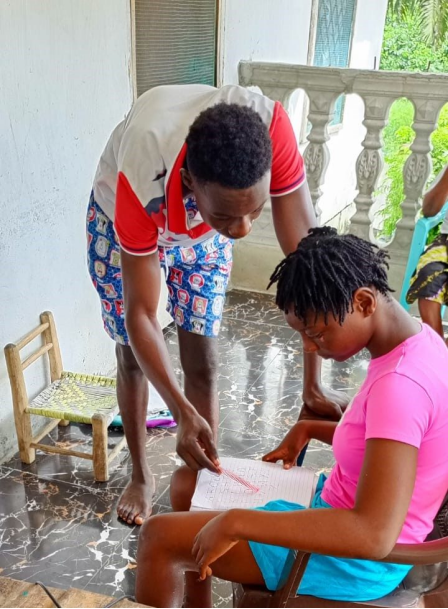
Parents and advocates say schools lack trained teachers, classroom support, and resources to meet their needs. The only specialized classroom identified by New Narratives relies on private donations.
Autism occurs on a spectrum. In some children, the signs are so mild they are almost impossible to notice, and they can do well in a regular classroom. Elon Musk, the head of SpaceX, which runs Starlink, and the electric car company Tesla, and the world’s richest man, has said he has Asperger’s syndrome, an older name for someone on the milder end of the spectrum.
At the more severe end, children may not speak at all, may struggle to understand others, and may become very upset by noise, light, or changes in routine. In a classroom, they may need a teacher’s aide working with them one-on-one, a quiet space, and lessons designed just for them.
Liberia has no national count of children with autism. A 2026 review of seven studies in four African countries found that about one percent of participants had autism confirmed by a clinician. Another four percent screened as being at high risk of disorder but had not necessarily been diagnosed. If that one-percent rate applied to Liberia, 11,600 children aged five to 14 could be on the spectrum.
Parents interviewed by FrontPage Africa/New Narratives said many schools still refuse to admit their children, and families are largely left to navigate the system on their own. Some move from school to school searching for one willing to accept their child. Others keep their children at home after repeated rejection. For most families, inclusion remains more of a policy promise than a reality.
Anita said finding a classroom has been one of the hardest parts of raising a child on the spectrum. She has endured years of rejection. Some principals told her they did not know how to teach a child like hers.
One school, Rev. Phillips Academy in Logan Town, eventually admitted her daughter after an American visitor intervened. But constant bullying and mistreatment drove the family to Bassa Town, Gardnersville. Neighbors called her a witch and stopped her from playing with their kids.
Schools in their new community also refused to accept her, forcing Anita to search again. Desperate to see her daughter learn, she asked a boy in their neighborhood to help teach the girl at home, where she receives basic lessons.
“It breaks my heart when I tell parents I can’t take them,” says Agnes Fallah Kamara, founder of Straight from the Heart International, which provides the only support and free educational care for children on the more severe end of the autism spectrum in Liberia and Sierra Leone.
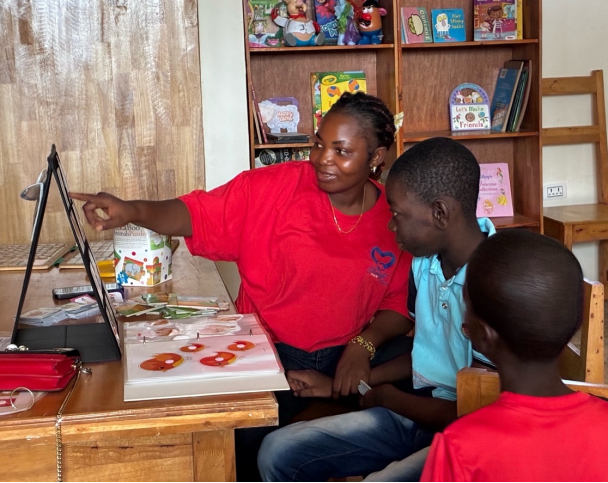
Kamara’s facility is the Arthur and Zwannah First Autism Classroom in Bernard Farm, Paynesville. Created through a community initiative, it operates largely on private donations from Kamara’s friends and supporters. She does not charge fees.
But the classroom has limited space, funding, and trained staff. Although four teachers support the program, only two work regularly because she cannot afford to pay the others full-time. Kamara also helps cover transportation for families who cannot afford the journey.
Kamara says supporting these families should not be left to private citizens.
“The policy already exists,” Kamara says. “What we need now is the commitment to make it real.”
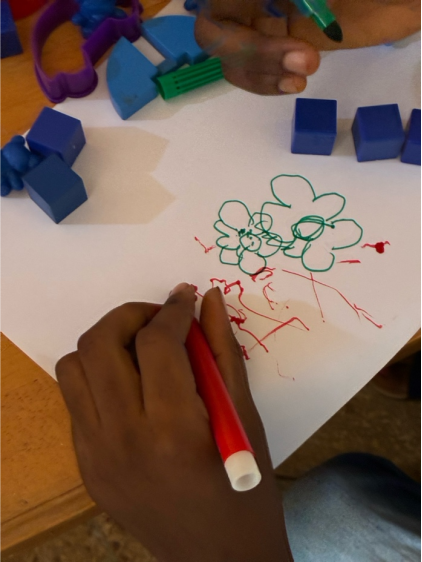
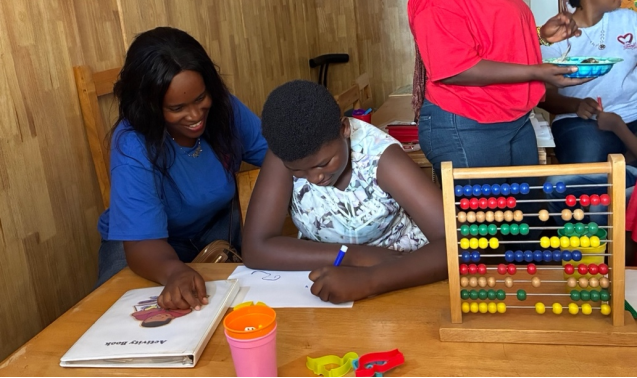
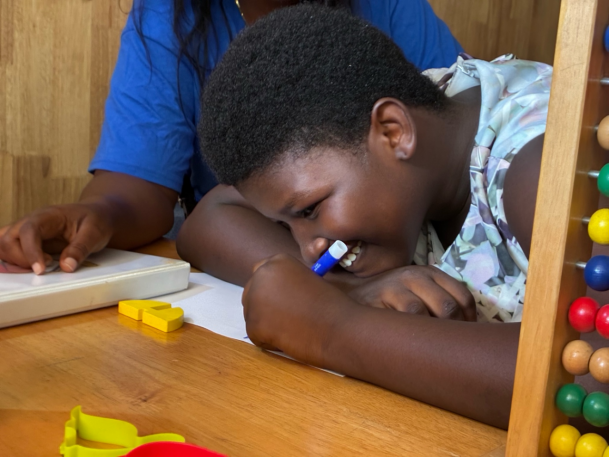
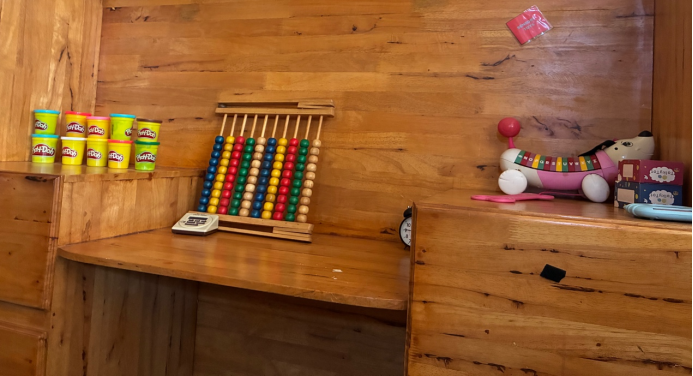
Inside the classroom, learning here looks different. Individualized instruction allows teachers to work at each child’s pace and gently redirect students when they lose focus. One little girl asks to use the bathroom by handing her teacher a picture card instead of speaking. Another spends the morning sorting blocks by color.
Nearby, a teacher patiently repeats the same instruction until a boy who once struggled to remain seated completes a simple task by himself. Success is measured differently. For one child, it may mean saying a first word. For another, it may mean eating independently or learning to use the bathroom without help.
“We are not asking the children to learn the same way every other child learns,” Kamara said. “Every child has a different goal.”
This classroom began when Kamara, a former UN radio broadcaster, became good friends with a woman from Kenya during a women’s fellowship in South Africa. The woman’s eight-year-old son with the disorder, Arthur, could not speak. She could not find a school to take him. After visiting the family in Kenya and witnessing their struggles, Kamara decided to help. She studied autism and gained practical experience working with children on the spectrum in the United States. When Arthur began communicating through pictures during a program she helped arrange, Kamara saw what similar support could mean for children in Liberia.
In 2017, she organized an autism awareness discussion on ELBC, the national broadcaster. Within three days of the broadcast, about 60 parents contacted her for help. Their stories convinced Kamara that awareness alone was not enough. Their children needed somewhere to learn.
With help from an American friend, she secured space inside an existing school and obtained renovation support from former Vice President Jewel Howard-Taylor. In March 2018, she opened the Arthur and Zwannah Autism Classroom, named after the Kenyan boy who inspired her work and a Liberian child whose family she encountered while researching autism.
But advocates said it also exposes the limits of relying on private support. Every week, parents arrive hoping to enroll their children. Many leave disappointed.
Operating the classroom costs about $US6,000 a month, funded largely through Kamara’s own salary and donations from friends and supporters abroad. Parents are not charged tuition or other fees. Without stable funding, she said, expansion
Kamara said she has repeatedly engaged officials from the Ministry of Education’s Division of Special and Inclusive Education about teacher training and has also held discussions with the Ministry of Health about expanding autism awareness nationwide. Those discussions, she said, have not resulted in government funding.
Advocates say Liberia’s small government budget is not an excuse. Other African countries are taking steps to address similar barriers. In Ghana, UNICEF has supported teacher training, disability screening and assessment centers to help children with disabilities enter and remain in school. Ghana has also introduced inclusive teaching methods into teacher professional development. Kenya’s 2018 education policy for learners with disabilities provides for early assessment, teacher training, specialized learning materials and educational support. However, these policies do not mean every child can access the services.
A June 2026 UNICEF global report found that making education inclusive requires governments to train teachers, identify children’s learning needs, provide adequate resources, and strengthen accountability.
New Narratives also sent WhatsApp messages to Maxim Bleeten, public relations officer at the Ministry of Education, the government arm responsible for implementing the inclusive education policy, but he did not respond by the deadline.
But the gap has begun drawing political attention.
Late last year, representatives Prescilla Cooper of Montserrado County and Ellen Attoh-Wreh of Margibi County introduced a “communication” urging the House of Representatives to establish autism-safe classrooms and summon the Ministry of Education to explain what progress had been made in expanding educational services for autistic children. Such requests are presented to lawmakers for consideration and may be debated, referred to a committee, or approved for further action. Neither lawmaker responded to requests for comment on whether the House took action on the communication.
For Liberia, which adopted its Inclusive Education Policy in 2018, advocates said the challenge is turning that promise into services available nationwide. Kamara’s classroom demonstrates what targeted support can offer children, but its limited space, staffing, and funding show why private initiatives alone cannot meet the demand. Kamara and parents like Anita say it must become a model the government can replicate rather than a charity project dependent on donations.
This story was produced in collaboration with New Narratives as part of the Investigating Liberia project.
Support Independent Journalism
Your support helps FrontPage Africa continue delivering independent, credible, and impactful journalism. Every contribution strengthens our ability to investigate, inform, and hold power accountable while keeping quality journalism accessible to our readers.
Support our journalism or subscribe to receive the latest FrontPage Africa stories and updates.