At the CDC’s National Martyrs’ Day commemoration in Kinjor, former President George Manneh Weah accused the Unity Party-led government of weaponizing the justice system against political opponents, demanded the release of former Vice President Jewel Howard-Taylor and CDC youths detained in the Capitol arson case, and defended former officials convicted in the Saudi-donated rice scandal. In a message delivered by MOVEE Political Leader and former Foreign Affairs Minister Dee-Maxwell Saah Kemayah, Weah also challenged the government to account for the 2024 Kinjor killings and warned that electoral victory does not place any administration above constitutional limits.
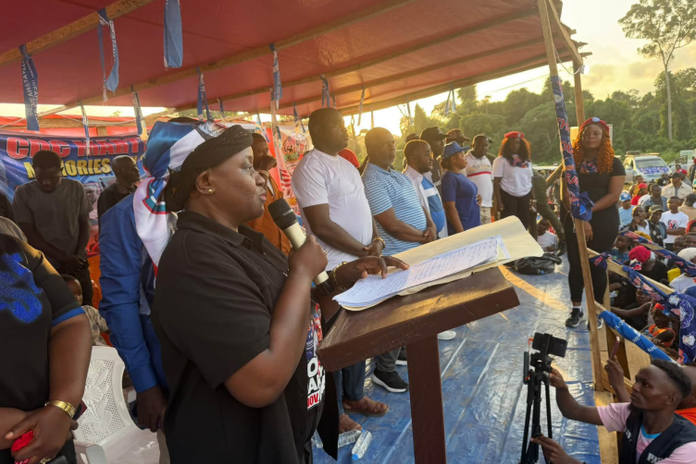
KINJOR, Grand Cape Mount County — Former President George Manneh Weah has used the Coalition for Democratic Change’s (CDC) National Martyrs’ Day commemoration to launch a sweeping political attack on President Joseph Nyuma Boakai’s administration, accusing the ruling Unity Party of selective justice, political persecution and abuse of state power.
By Willie N. Tokpah
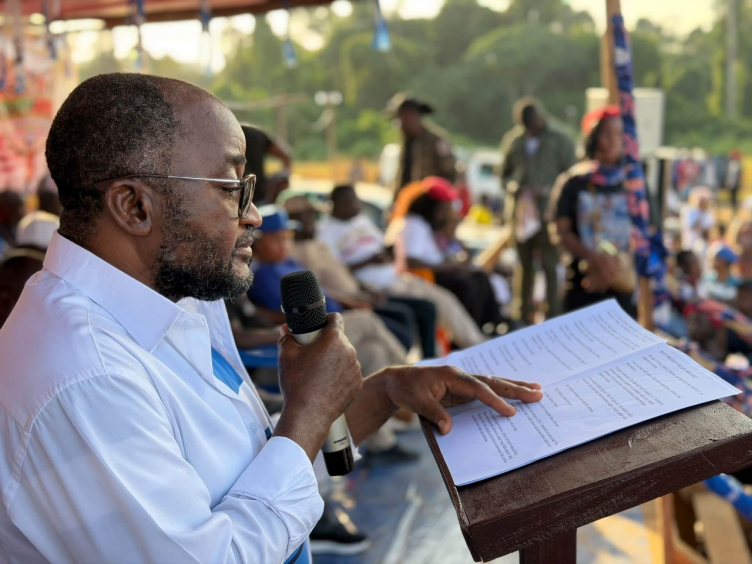
In a strongly worded message delivered Saturday, November 7, by former Foreign Affairs Minister Ambassador Dee-Maxwell Saah Kemayah Sr., Weah demanded the release of former Vice President Jewel Howard-Taylor, defended former officials of his administration convicted in the Saudi-donated rice scandal, and called for the release of young CDC supporters detained in connection with the Capitol Building arson case.
He also challenged the government to account for the February 29, 2024 killings in Kinjor, where protesters and security personnel clashed during demonstrations in the Bea Mountain mining area.
The address, delivered under the theme, “They Carried the Struggle, We Carry Their Legacy,” went beyond commemorating fallen CDC supporters. It was a pointed challenge to the Boakai administration over its handling of justice, human rights and political opposition, with Weah reminding the governing party that an electoral mandate does not confer unlimited authority.
“A tyrant with a certificate of return is still a tyrant,” Weah declared, recalling remarks he said he made before the Nigerian Bar Association in Port Harcourt.
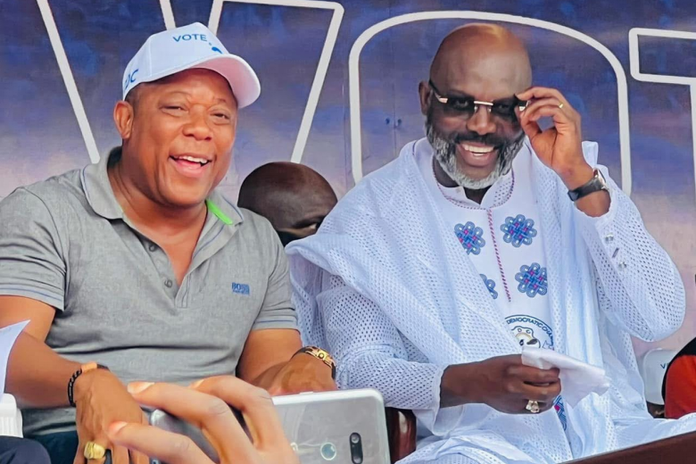
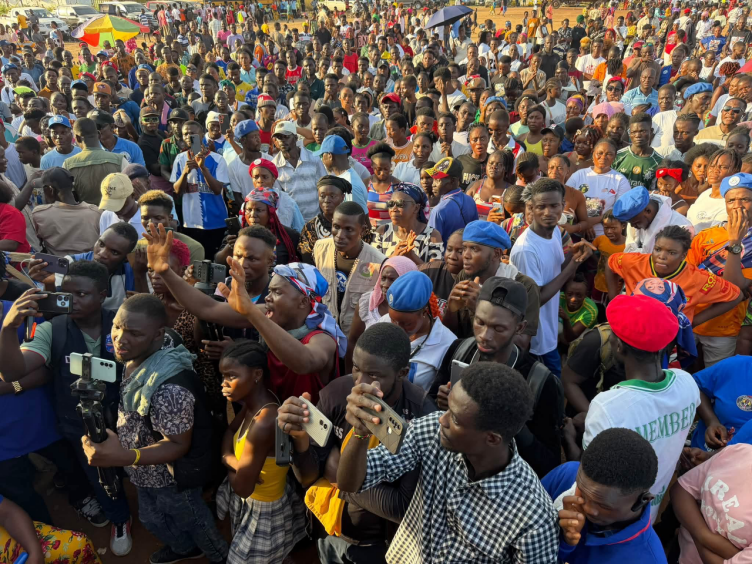
The ceremony brought together CDC National Chairman Atty. Janga Augustus Kowo, members of the party’s National Executive Committee, the CDC Legislative Caucus, opposition political leaders and representatives, keynote speaker Paulita Cece Wie, bereaved families and supporters from across Liberia.
Kemayah, who serves as Weah’s Senior Adviser and Chief Special Envoy, is also the Political Leader of the Movement for Economic Empowerment (MOVEE).
His delivery of the message placed him at the intersection of the CDC’s political mobilization and the wider opposition community.
Kinjor killings put Boakai government on the spot
Speaking from Kinjor, the community where residents were killed during the February 29, 2024 confrontation involving protesters and security personnel deployed in the Bea Mountain mining area, Weah called for accountability over the deaths.
He accused the Liberia National Police of using live ammunition against protesters and characterized the incident as an act of “unprovoked brutality.”
“The killings in Kinjor demand accountability,” he declared.
Addressing bereaved families, Weah said their loved ones were citizens entitled to protection and deserving of a government response that respected their dignity.
“Your loved ones were citizens of this Republic. Their lives did deserve protection. Their grievances did deserve attention. Your community deserves a Government’s response that respects human dignity,” he said.
In a symbolic gesture, Weah called for a separate moment of silence for the Kinjor victims, placing their deaths alongside those of CDC supporters remembered during the annual commemoration.
He argued that poverty and lack of political influence should never determine the level of protection citizens receive from the state.
“No community’s poverty makes its people less deserving of protection. No lack of political influence of any citizen reduces the value of that citizen’s life,” he said.
His remarks renewed attention on the government’s response to the Kinjor killings, particularly the accountability measures pursued against security personnel and the support provided to affected families.
Weah demands release of Jewel Howard-Taylor
Weah also threw his political weight behind former Vice President Jewel Howard-Taylor, whose ongoing criminal proceedings have become a major point of political contention.
Describing her continued detention as political persecution, the former president demanded her release.
“Her continued detention is political persecution. I condemn it unequivocally and demand her release,” Weah said.
Howard-Taylor, who served as vice president during his administration, faces criminal allegations arising from an investigation into an alleged transnational narcotics network. She has denied the allegations.
Her arrest and subsequent court proceedings have generated controversy within opposition circles, with supporters questioning the circumstances surrounding the case.
However, the allegations remain subject to judicial determination, and Weah’s characterization of the proceedings as political persecution represents his political position rather than an established finding about the case.
Defends Kemayah, Sirleaf and other convicted officials
In another significant portion of his address, Weah defended former officials of his administration convicted in the Saudi-donated rice scandal, including Kemayah, who delivered the message on his behalf.
Others he identified included former Internal Affairs Minister Varney A. Sirleaf, former Deputy Foreign Minister for Administration Thelma E. Duncan-Sawyer, former Deputy Internal Affairs Minister Momolu S. Johnson and former General Services Agency Deputy Director-General for Operations Edris Bility.
Weah described the verdict against Kemayah as unjust and accused the Boakai administration of pursuing what he called a political witch hunt against members of his former government.
He nevertheless distinguished his opposition to what he considers politically motivated prosecutions from his support for genuine anti-corruption efforts.
“I support any genuine evidence-based fight against corruption, and detest any political persecution and political witch hunt against any Member of my Family and Former Government Officials and/or any individual, for that matter,” he declared.
The Saudi rice case involves 29,412 bags of rice donated by the Kingdom of Saudi Arabia for disaster victims and vulnerable communities in Liberia. Prosecutors alleged that thousands of the donated bags were diverted from their intended beneficiaries.
Following a lengthy trial at Criminal Court C, a jury returned mixed verdicts on October 9, 2026, convicting several defendants while acquitting others.
The outcome has generated legal and political debate, with defense lawyers challenging aspects of the proceedings and pursuing available legal remedies.
Weah’s public defense of the convicted officials underscores his continued political ties to members of his former administration. His position, however, does not determine the legal merits of their convictions, which remain subject to the judicial process.
Capitol arson case also draws Weah’s attention
The former president also called for the release of young CDC supporters detained in connection with the Capitol Building arson case.
The case followed the fire at the Capitol Building and involves former House Speaker Cllr. J. Fonati Koffa and several other defendants.
Although Weah did not address the individual allegations or evidence against those charged, he placed their detention within his broader criticism of what he described as the government’s use of the justice system to intimidate political opponents.
“The Boakai-Koung-Unity Party Led Government must stop using the machinery of justice to intimidate political opponents,” he said.
His remarks signal the CDC’s intention to keep the cases involving its members and associates at the center of the national political debate, even as the judicial proceedings continue.
Warns Unity Party against abusing electoral mandate
Weah’s broader argument centered on the distinction between electoral legitimacy and the constitutional responsibilities of government.
He maintained that winning an election does not place a government above the law or give it the authority to suppress dissent.
According to him, democratic governance requires the protection of citizens’ lives and civil liberties, impartial administration of justice, respect for judicial independence, legislative oversight and the right of citizens to criticize those in power.
“Our place in opposition does not diminish our citizenship,” he declared.
He also revisited the 2023 presidential election, saying he accepted the outcome because national stability and the decision of the electorate were more important than his personal desire to remain in office.
But he directed a pointed message toward the ruling Unity Party ahead of the next presidential election.
“We expect the Unity Party Government to submit peacefully to the decision of the Liberian people in 2029,” he said.
The statement places the question of peaceful political transition firmly within the opposition’s emerging political messaging as the country moves toward another electoral cycle.
Kemayah’s dual political role adds opposition dimension
The decision to have Kemayah deliver the address added another dimension to the gathering.
A former chief diplomat in the Weah administration, Kemayah now serves as Weah’s Senior Adviser and Chief Special Envoy while leading MOVEE, an opposition political party.
His presence was significant because the message he delivered defended former members of Weah’s government, criticized the current administration and called for greater protection of opposition rights.
The participation of other opposition political leaders and representatives also gave the gathering a broader political character, although the event did not announce any formal coalition arrangement.
The repeated calls for political solidarity, accountability and respect for constitutional freedoms nevertheless highlighted issues around possible cooperation among opposition parties while they maintain their separate political identities.
From martyrs’ remembrance to political legacy
Despite the political attacks, the commemoration remained centered on the CDC’s efforts to preserve the memory of supporters who died during the party’s political struggle.
Weah recalled the contributions of ordinary Liberians who helped build the movement, including market women selling bitterballs and peppers, young campaigners, commercial motorcyclists, laborers and families who sacrificed their limited resources because they believed in the party’s vision.
He specifically remembered Papie Solo, whom the CDC recognizes as its first martyr and whom Weah said he knew personally from Sasstown, the village of his childhood.
Others remembered included Morris Kromah, associated with the November 7, 2011 Bloody Monday events; Tamba Momo; Joshua Solomon; Janjay Baikpeh; Christmas Wen Sailey; Nelson Korquoi; Ranny S. Gbatu; James Gray; Munah Pelham Youngblood; and Ma-Watta Kumba Soliyah-Larmie.
He also paid tribute to the late Gabriel Baccus Matthews, whom he described as the father of Liberia’s multiparty democracy and credited with providing revolutionary guidance that contributed to the birth and development of the CDC movement.
In an emotional segment, Weah called out the names of martyrs from all 15 counties and the Liberian diaspora, with each call followed by a solemn declaration that the fallen comrades had not answered and that their memories would be honored.
The symbolic roll call underscored the party’s effort to present its history as a national political struggle rather than one confined to a particular county or community.
Weah also pledged that the contributions of the departed supporters would remain part of the CDC’s institutional memory and that their children deserved to know the sacrifices their parents made for the party.
2029 elections loom over Weah’s message
The concluding portion of the address left little doubt that Weah wanted supporters to look beyond the commemoration and toward the 2029 elections.
He urged CDC members to remain confident in the people’s right to choose their leaders and determined to ensure that every vote is respected.
He praised CDC National Chairman Atty. Janga Augustus Kowo, the National Martyrs’ Day Committee, keynote speaker Paulita Cece Wie, county delegations, diaspora chapters, opposition representatives and residents of Kinjor and Grand Cape Mount County.
The address closed with the party’s rallying declaration:
“They Carried the Struggle, We Carry Their Legacy, The Party Remains Supreme.”
For Weah, the Kinjor gathering provided an opportunity to defend his political legacy, stand behind embattled former officials, challenge the government’s record on justice and human rights, and remind the Unity Party that its electoral mandate is not permanent.
For the Boakai administration, the accusations raise questions that extend beyond partisan exchanges, including accountability for the Kinjor killings, the handling of criminal cases involving opposition figures and public confidence in the impartiality of the justice system.
And for the opposition, Kemayah’s dual role as Weah’s special envoy and MOVEE Political Leader offered a visible reminder of the political relationships shaping engagement beyond the CDC.
Although the 2029 elections remain years away, Weah’s message from Kinjor makes clear that the struggle over political accountability, opposition rights and the country’s democratic direction is already taking shape.
Support Independent Journalism
Your support helps FrontPage Africa continue delivering independent, credible, and impactful journalism. Every contribution strengthens our ability to investigate, inform, and hold power accountable while keeping quality journalism accessible to our readers.
Support our journalism or subscribe to receive the latest FrontPage Africa stories and updates.