BONG COUNTY, Gbelekpala — Beneficiaries of the Spotlight Initiative 2.0 in Gbelekpala, Bong County, have praised the programme for improving their literacy, business management knowledge, and vocational skills as the Ministry of Gender, Children and Social Protection continues its county assessment tour.
By: Patience M. Jones,[email protected]
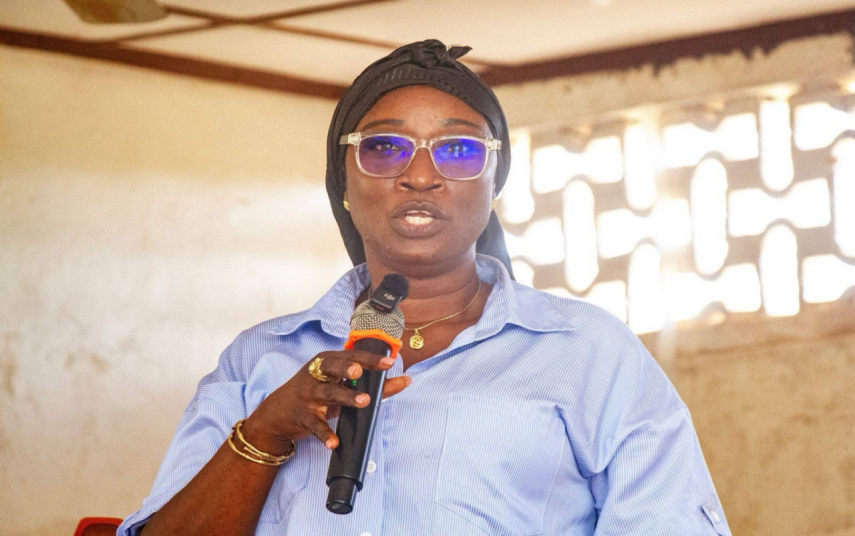
During the visit, women expressed excitement over the opportunity to meet the Minister of Gender, Children and Social Protection, Gbeme Horace-Kollie, face-to-face and discuss issues affecting their lives.
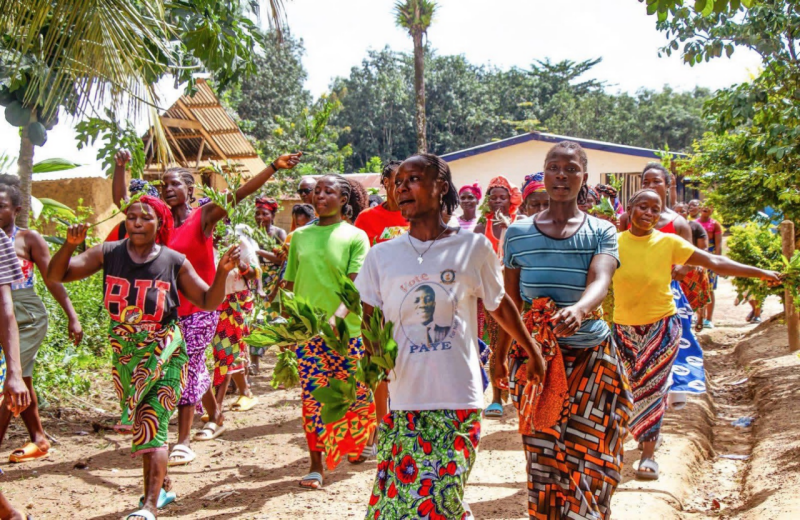
Community leaders also welcomed the Minister, describing her visit to their community as a rare and encouraging experience that demonstrated the government’s commitment to engaging directly with rural residents.
The visit provided beneficiaries with an opportunity to share their experiences and explain how the initiative is helping women and other community members acquire practical knowledge and skills to improve their livelihoods.
The project, titled Empowering Women to End Violence in Liberia, focuses on strengthening women’s knowledge and skills while promoting their economic empowerment.
Speaking during the visit, Boakia Yamah, Field Officer of the Spotlight Initiative 2.0 under the Hope Consortium in Bong County, said the project began with a community mapping exercise conducted in collaboration with local authorities.
According to Yamah, the exercise initially identified two communities for the programme, but the number of residents interested in participating exceeded expectations.
He explained that more than 350 people were reached during the initial engagement in Gbelekpai, leading to the selection of beneficiaries and the expansion of activities to additional communities.
Yamah said six people were selected to participate in a five-day training-of-trainers session at the Gbelekpai Women’s Centre. Those trained are now helping to facilitate lessons for other participants in their communities.
He explained that the project uses a seven-module learning approach designed to equip women with practical knowledge and skills that can improve their daily lives.
The modules cover literacy and numeracy, business education, savings and loan associations, vocational skills, and digital learning, among other areas.
Yamah said participants had progressed to the fifth module, which focuses on digital learning, while practical vocational training would begin once the necessary materials arrived.
He noted that the initiative also provides a second chance for women and other adults who missed the opportunity to acquire basic education earlier in life.
Through the programme, participants are learning to identify letters and numbers, write their names, sign documents, read simple sentences, and recognize common signs in public places, including hospitals.
The programme also introduces participants to business management, savings practices, and vocational training to help them strengthen their livelihoods and improve their economic independence.
To make the training more accessible, organizers established additional learning sessions in Bangasiri after discovering that some beneficiaries lived outside the initially selected communities.
Yamah said facilitators currently conduct training sessions on Fridays and Saturdays to accommodate participants from different communities.
Beneficiaries Celebrate Improved Literacy and Economic Skills
One of the beneficiaries, Mary L. Sonah, shared her experience since the project began in her community, describing the training as a life-changing opportunity.
Sonah said she previously did not know how to read or write but can now read, write, sign documents, and apply basic business management skills.
She described the opportunity to participate in women’s empowerment activities as a significant step forward for women in Bong County.
Another beneficiary, Gbanago Xarkpalwolo, praised the Government of Liberia and the Ministry of Gender, Children and Social Protection for supporting the programme.
Xarkpalwolo said she had previously struggled with basic literacy but had now learned to read, write, identify numbers, sign documents, and manage a business through the Spotlight Initiative 2.0.
She expressed gratitude for the knowledge she had acquired and pledged to pass it on to her children and grandchildren.
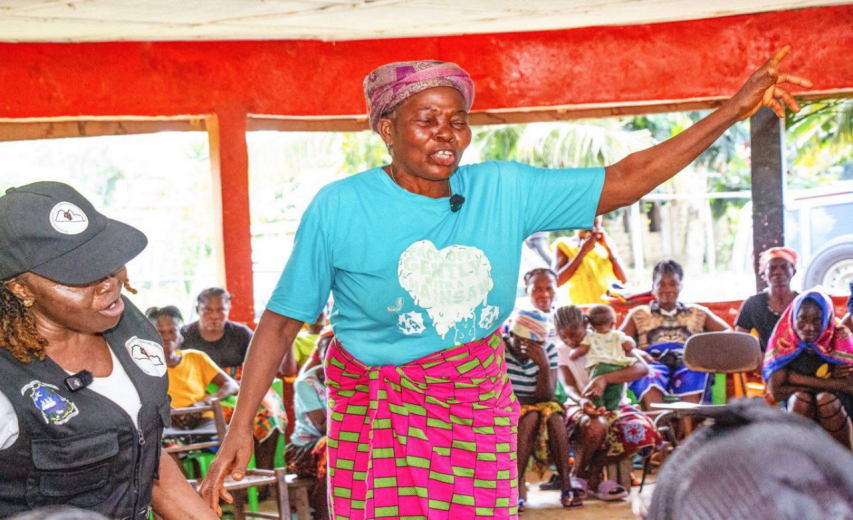
“What I have learned, I am going to pass it down to my children and grandchildren. If I die today, I will die a happy person because of what the Ministry is doing for us,” she said.
She added that before participating in the programme, she had little knowledge of business management and savings.
“From the day we started the training, things have turned around for our good. All thanks to the Government and the Ministry of Gender for equipping us through this project,” she stated.
Government Ownership and Sustainability
During the visit, Minister Gbeme Horace-Kollie emphasized that the Spotlight Initiative 2.0 should be understood as a government-led programme supported by the European Union (EU), with funding channelled through the United Nations (UN).
The Minister stressed that the initiative should not be viewed as a programme belonging solely to the UN, noting that government ownership is essential to ensuring its continuation after external funding ends.
She explained that the government, the EU, and the UN work together to support the initiative, with the UN helping to channel funding and support implementation.
The Minister also underscored the importance of sustainability, urging project officers and community stakeholders to ensure that the programme’s activities continue beyond the current funding period.
She said the government’s involvement from the beginning was intended to encourage communities to take ownership of the programme and understand that its benefits should not end when the current project closes.
The Minister further highlighted plans to organize beneficiaries into Better Savings Groups to strengthen their savings practices and improve their access to financial opportunities.
Under the proposed arrangement, the 270 beneficiaries would be divided into three groups, with the relevant savings institutions registered to support their activities.
She said the initiative’s long-term success would depend on effective coordination, community participation, and the government’s commitment to sustaining the programme.
The Spotlight Initiative 2.0 seeks to support efforts to address violence against women while promoting women’s empowerment and expanding opportunities for women at the community level.
Support Independent Journalism
Your support helps FrontPage Africa continue delivering independent, credible, and impactful journalism. Every contribution strengthens our ability to investigate, inform, and hold power accountable while keeping quality journalism accessible to our readers.
Support our journalism or subscribe to receive the latest FrontPage Africa stories and updates.