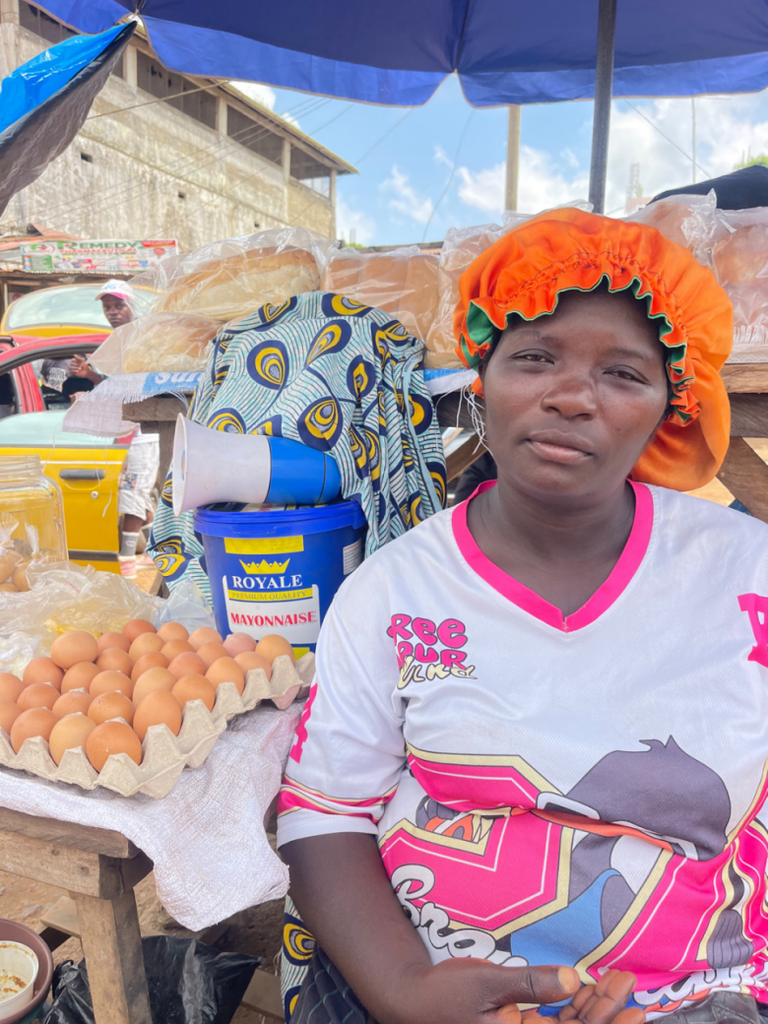
MONROVIA – Importers and consumers are raising concerns over reported shortages and rising wholesale prices of eggs on the Liberian market, calling on the government to open the market to more suppliers and ensure fair competition in the importation of the commodity.
They argue that restrictions on egg imports, coupled with declining local production, have created supply constraints, pushed up prices and placed additional financial pressure on petty traders and consumers.
The stakeholders are urging the government to facilitate the issuance of Import Permit Declarations (IPDs) and Import Notification Forms (INFs) to qualified local and foreign companies interested in importing eggs into Liberia.
On June 6, 2023, former President George Manneh Weah issued Executive Order 119, imposing surcharges on the importation of eggs and other commodities as part of measures to protect local production.
President Joseph Nyuma Boakai subsequently extended the protective measures through Executive Orders 135 and 156, issued in 2024 and 2025, respectively.
The President’s support for local poultry production gained further attention following his visit to the Liberian American Poultry (LAP) Farm in Bomi County in May 2025.
A report released by the International Finance Corporation in August 2026 identified LAP and Modern Mills of Liberia as businesses majority-owned by West African Premier Investment LLC (WAPI), an investment fund of the Siblani family.
The companies operate within a broader network of affiliated businesses, including United Commodities Incorporated (UCI), which has interests in trading, manufacturing and agriculture.
However, concerns are emerging over whether the government’s protective measures are creating an uneven competitive environment in the egg market, particularly for UCI, while limiting opportunities for other importers.
Rising Prices, Growing Hardship
A carton of eggs is reportedly being sold at UCI for approximately US$65, while some local stores and shops in Monrovia and surrounding communities are reportedly selling cartons to petty traders for between US$70 and US$75.

At the retail level, individual eggs are selling for between L$40 and L$50 in some areas.
For petty traders who depend on egg sales to support their families, the rising wholesale prices are cutting into already limited profit margins.
A Business Under Pressure
Sally Kiaweh, a mother of four who has sold eggs for more than a decade in Brewerville, outside Monrovia, says the rising cost of the commodity is making it increasingly difficult for her to sustain her business and provide for her family.
She said she now pays approximately US$70 for a carton of eggs, compared with about US$50 several years ago.
“I can buy one carton of eggs for US$70 from the store. This egg business is what helps me pay my children’s school fees and provide food for the family. It is also the business that pays my rent. But things are not fine now,” she said.
Kiaweh explained that despite the higher selling prices, her earnings have not improved because the cost of purchasing eggs has increased considerably.
She also said competition from established stores has further complicated business for sidewalk vendors, as some consumers prefer purchasing directly from shops.
According to her, the situation is worsened by losses associated with what she described as the fragile shells of some locally produced eggs.
Traders Complain of Losses
Kiaweh said some eggs crack or burst during boiling, resulting in significant financial losses for petty traders who purchase them in bulk.
“When I finish boiling the eggs, sometimes I cannot get anything out of them. The shells are very soft, and when you boil them with enough water, many of the eggs burst. The losses can be too much,” she said.
She added that traders sometimes lose more than half a carton, or even an entire carton, because of the problem.
Kiaweh further complained that when traders return damaged eggs to suppliers, they are often told that the damage is not the supplier’s responsibility.
“Sometimes, if you buy eggs by the carton here, they can burst. More than half or even the whole carton can burst. When we take them back to the sellers, they say it is not their fault, and we cannot do anything about it,” she added.
She attributed the rising prices partly to scarcity, increased demand and the limited number of suppliers serving the market.
Kiaweh called on the government to allow additional companies to import eggs, arguing that increased competition could improve supply and make the commodity more affordable.
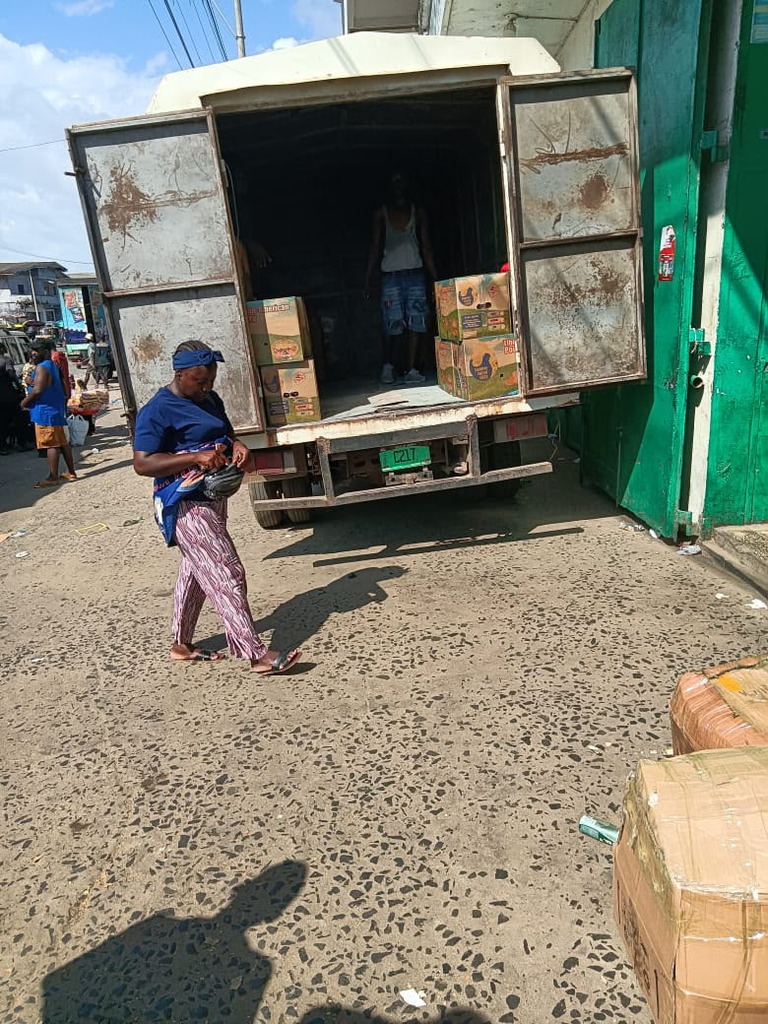
She also maintained that imported eggs generally have stronger shells than some of the locally produced varieties currently available on the market.
Prince Dennis, 25, another petty trader, also urged the government to promote fairness and competition in the sector.
“When companies were bringing eggs into Liberia, we used to sell them for L$20 or L$25. I want the government to open the market. They should make it fair so people can compete with one another,” he said.
Petty traders are also complaining that some wholesalers fail to provide official receipts after selling them eggs, raising additional concerns about transparency in the distribution chain.
Importers Allege Restrictions
Beyond the concerns of petty traders, importers are alleging that they have been unable to obtain the necessary Import Notification Forms to bring eggs into the country.
They argue that UCI alone cannot adequately meet the growing demand for eggs across Liberia, particularly amid reports of declining local production.
“The demand for eggs now is so high, and one company alone cannot supply the whole market. Because of this, the commodity is becoming scarce,” an importer, who requested anonymity, said.
The importer warned that continued delays in granting qualified local and foreign businesses the necessary approvals to import eggs could further restrict supply and force consumers to pay higher prices.
The importers also alleged that UCI, which they described as the dominant supplier, requires some wholesale buyers to purchase other commodities, particularly sugar, before they can access eggs.
“If you are going to buy eggs from UCI now, they will tell you to buy other goods before they can serve you the eggs you came to purchase. The cost of a carton of eggs there is around US$60,” the importer alleged.
However, Wahab Dhaini, Managing Director of UCI, dismissed the allegations.
“All of this is not true. What do they mean we ran out of supplies?” Dhaini said.
Production Concerns
The concerns over supply have also drawn attention to the production capacity of the Liberian American Poultry Farm, which was expected to produce approximately 1,300 cartons of eggs daily.
However, production has reportedly declined in recent months, contributing to supply constraints in some urban and rural communities.
The reported decline has intensified calls for the government to reassess its import restrictions and consider whether existing protective measures are achieving their intended objectives without placing undue pressure on consumers and small-scale traders.
Calls for a Level Playing Field
Importers, petty traders and consumers are calling on the government to ensure that the issuance of IPDs and INFs for essential commodities is guided by transparency, fairness and the actual supply needs of the Liberian market.
They argue that protecting local industries should not come at the expense of competition, consumer welfare and the survival of small businesses.
While government policies aimed at encouraging domestic production are intended to strengthen local industries, stakeholders maintain that such measures must be accompanied by adequate production capacity and safeguards against market concentration.
They believe allowing more qualified businesses to participate in the importation and distribution of eggs could increase supply, encourage competitive pricing and reduce the burden on consumers.
For petty traders such as Kiaweh, the issue goes beyond business competition. It is about sustaining livelihoods, paying school fees and keeping food on the table.
Support Independent Journalism
Your support helps FrontPage Africa continue delivering independent, credible, and impactful journalism. Every contribution strengthens our ability to investigate, inform, and hold power accountable while keeping quality journalism accessible to our readers.
Support our journalism or subscribe to receive the latest FrontPage Africa stories and updates.