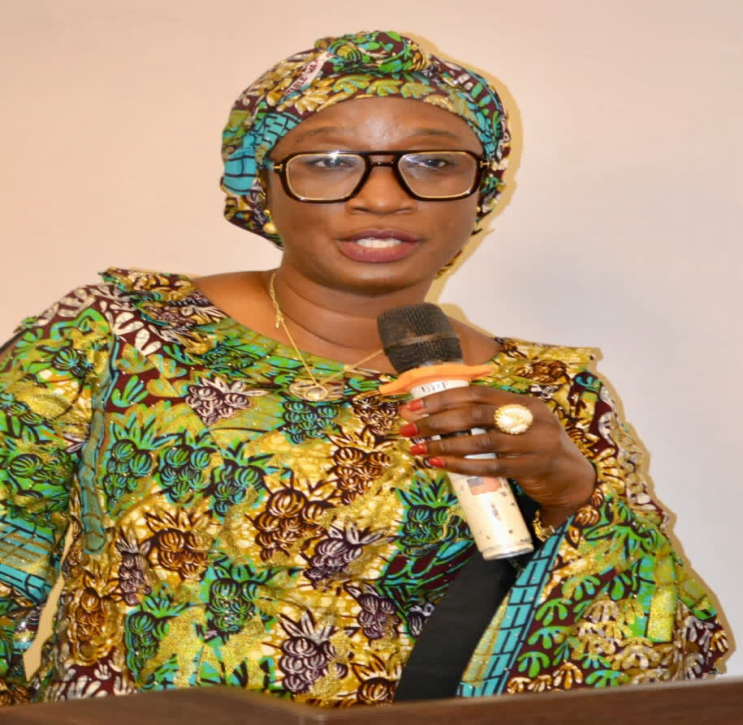
MONROVIA — The Minister of Gender, Children and Social Protection, Gbeme Horace-Kollie, has challenged stakeholders implementing a new US$3 million women’s peacebuilding initiative to move beyond workshops and activities and demonstrate tangible changes in the lives of women, survivors and communities.
By Patience M. Jones
Minister Kollie made the call during the launch of the Gender Promotion Initiative (GPI) 2.0, a three-year programme designed to strengthen women’s leadership, justice and inclusive peacebuilding across five Liberian counties.
“The true measure of this project should not be the number of meetings we hold or activities we complete. It must be the change that women, survivors, young people, and communities can see and feel in their lives,” Minister Kollie said.
Her challenge places the focus of the initiative on outcomes rather than activities, as Liberia seeks to strengthen women’s participation in peacebuilding, accountability and decision-making.
The programme, launched in Monrovia on September 14 is funded by the United Nations Peacebuilding Fund and led by UN Women in partnership with the Office of the United Nations High Commissioner for Human Rights (OHCHR) Liberia, the Ministry of Gender, Children and Social Protection, and Kvinna till Kvinna.
It will be implemented in Montserrado, Lofa, Nimba, Grand Gedeh and Grand Cape Mount Counties, with more than 40 percent of programme resources earmarked for women’s rights organizations through sub-grants.
For Minister Kollie, the initiative presents an opportunity to ensure that women who have long played informal roles in resolving community disputes and supporting survivors are given greater resources and influence to shape decisions affecting their communities.
The programme will support women’s rights organizations, peace huts and other community-based structures while strengthening gender-responsive institutions and creating stronger links between government, civil society and communities.
It will also support mediation, conflict prevention, reconciliation, negotiation, organizational development, resource mobilization, peer support and intergenerational dialogue.
UN Women Deputy Country Representative Yemi Falayajo said the initiative seeks to move the conversation beyond simply counting women as participants in peacebuilding processes.
She said the objective is to ensure women have the capacity, resources and space to influence decisions and shape peacebuilding outcomes.
The initiative also comes at a time when Liberia is advancing discussions around transitional justice, accountability and the establishment of mechanisms intended to address the country’s violent past.
OHCHR Liberia is expected to provide technical expertise on human rights, justice, accountability, legal frameworks and transitional justice, while government institutions and civil society actors will be engaged in strengthening coordination and community-level interventions.
UN Resident Coordinator Christine Umutoni emphasized the need to recognize women not only as victims and survivors of conflict, but also as leaders, decision-makers and agents of change.
She said women remain indispensable partners in Liberia’s efforts toward accountability, healing, reconciliation and sustainable peace.
For Minister Kollie, however, the ultimate test of the initiative will be what happens beyond the launch ceremonies, training sessions and policy discussions.
Her message is clear: the success of GPI 2.0 will ultimately be measured by whether women and communities experience meaningful changes in their daily lives.
As the three-year initiative gets underway, stakeholders are therefore being challenged to ensure that the millions committed to women’s leadership and peacebuilding translate into stronger voices, greater access to justice, improved protection and real decision-making power for women across Liberia.
Support Independent Journalism
Your support helps FrontPage Africa continue delivering independent, credible, and impactful journalism. Every contribution strengthens our ability to investigate, inform, and hold power accountable while keeping quality journalism accessible to our readers.
Support our journalism or subscribe to receive the latest FrontPage Africa stories and updates.