Summary:
- In an exclusive interview, Sweden’s ambassador Karl Backéus has pledged the country will continue to support Liberia’s postwar justice efforts through the U.N., E.U. and other multilateral institutions even as it ends direct assistance to the country.
- Backéus said he hopes lawmakers will pass a bill to establish a war and economic crimes court “in the next few months.” He says international backing will depend on a “robust and strong” court, and financial ownership by the government.
- Backéus said he sees progress in fight against corruption, but says major problems remain, citing concerns about corruption cases being delayed.
By Anthony Stephens, senior justice correspondent with New Narratives
Sweden’s ambassador to Liberia has used an exclusive interview with Frontpage Africa/New Narratives marking the end of the country’s sixteen years of direct bilateral support since the end of the war, to reaffirm his government’s commitment to Liberia’s post war justice and accountability process.
Ambassador Karl Backéus said the Swedish government, which was one of the country’s most generous donors until last month, will continue supporting post-war justice efforts through the United Nations, European Union and other multilateral institutions. And he added his voice to international diplomats urging Liberia’s lawmakers to approve legislation establishing a war and economic crimes court within the next few months.
“I really fundamentally do believe that, as part of the reconciliation process in Liberia, there is a need for accountability,” said Backéus. “And even though it has taken a very long time, I do think it needs to move forward.”
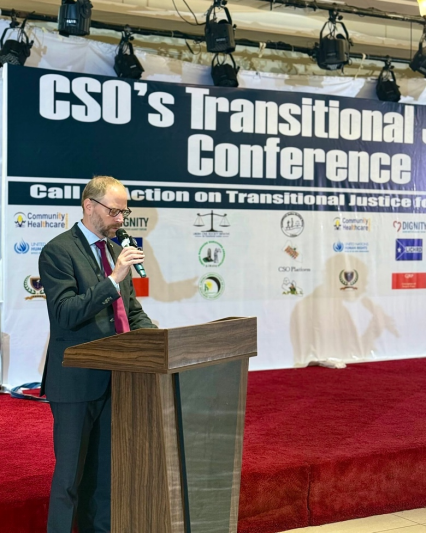
Sweden’s commitment comes at a pivotal moment for Liberia’s long-running quest for accountability. More than two decades after the civil wars ended, no one has been prosecuted in Liberia for the widespread wartime atrocities documented by the country’s 2009 Truth and Reconciliation Commission. Six competing proposals involving a War and Economic Crimes Court and a National Anti-Corruption Court are before the Legislature, while questions remain over how the costly courts will be financed as international development funding shrinks. Sweden has been the major international donor to Liberia’s war crimes court process and was in recent years, the second largest bilateral donor after the United States.
Sweden announced last year that it was ending support to five African countries, including Liberia, in order to bolster support to Ukraine, which has been invaded by Russia. The government sees Russian aggression in Europe as a major threat to its own security.
The decision was a major blow for Liberia. Under its 2021–2025 cooperation strategy, Sweden committed about US$190 million to 39 projects spanning human rights, rule of law, governance, sexual and reproductive health and rights, gender equality, agriculture, infrastructure, independent media and climate and environmental protection. (New Narratives was a recipient of support.)
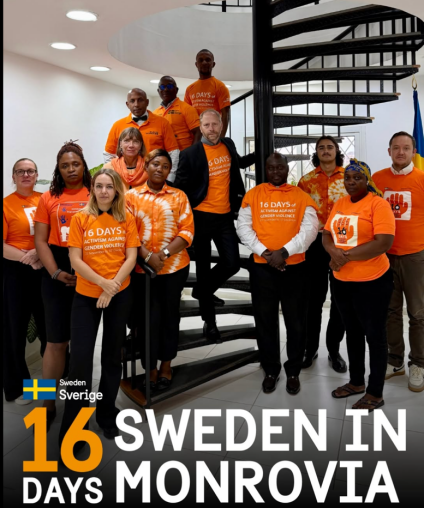
Liberia could continue to benefit from Sweden’s regional and thematic development programs, covering areas including gender equality, sexual and reproductive health and rights, democracy and human rights, peace and security, climate and sustainable development. Backéus said the European Union would be particularly important because Sweden, as an E.U. member, contributes to its funding. He also pointed to cooperation between Sweden and Liberia at the United Nations, including through the Peacebuilding Commission.
But Sweden’s future commitments to Liberia and Africa in general will depend heavily on the outcome of national elections to elect all 349 seats of the Riksdag held on the weekend. It’s turned into a genuine cliffhanger: early results put the opposition centre-left bloc, led by former Prime Minister Magdalena Andersson’s Social Democrats, narrowly ahead of Prime Minister Ulf Kristersson’s outgoing centre-right coalition. The race is too close to call.
Under Sweden’s outgoing government, Sida — the Swedish International Development Cooperation Agency — has faced four consecutive years of cuts, with its 2026 budget reduced by roughly 20 percent as part of a broader shift that abandoned Sweden’s long-standing target of spending one percent of gross national income (GNI) on aid. Aid to Africa is projected to fall by two-thirds between 2021 and 2026.
Across the opposition bloc, the rhetoric is consistently pro-aid, but the near-term budgets tell a different story. Every opposition party still cuts aid in 2026 relative to pre-2023 levels — just less than the government — and none has taken a specific position on reversing the five-country phase-out that includes Liberia.
For now, Backéus said, post war justice and accountability is a priority. Sweden provided nearly $1 million to the U.N. Office of the High Commissioner for Human Rights in Liberia, which has in turn provided furniture and technical support to the government office preparing for the proposed court. Backéus said he hopes that will continue.
“If we can be supportive of that, we want to be,” Backéus said. “We want to continue to stay engaged in this.”
A recent FrontPage Africa/New Narratives survey of 1,150 people across 11 of Liberia’s 15 counties found 91 percent wanted the court, while 89 percent said they would not vote for lawmakers who failed to support legislation establishing one. The survey was not conducted under scientific polling standards. Backéus said it was a strong sign of public sentiment.
“I think it really shows that this is something that’s there’s broad support throughout society in Liberia, through communities all over the country for this important process,” Backéus said.
But he acknowledged the legal complexity of the competing proposals and said lawmakers needed to be confident that whatever legislation they approved was legally sound.
“But at the end of the day, of course, we want to see progress,” he said. “So I hope that we will see that in the next few months.”
Backéus said the precise model was ultimately Liberia’s decision, but international partners would need confidence in the institution before backing it.
“We need, of course, to have something that’s robust and strong,” he said. “And then, with that, I think the international community will continue to be there.”
He identified one potential obstacle to Swedish support: the possibility that the court could impose the death penalty.
“From the Swedish side. We would struggle, I think, to support any court that could, at least in theory, sentence people to the death penalty,” Backéus said. “That would not be consistent with our principles that we stand for.”
Financing presents another challenge. Jallah Barbu, executive director of the Office of the War and Economic Crimes Court, has estimated that establishing and operating the court would cost at least US$20 million.
Backéus warned that international financing for tribunals is far more limited than it was 10 or 20 years ago, pointing to the heavily internationally financed Special Court for Sierra Leone as a model Liberia should not expect donors to replicate.
“Sweden will not be able to provide that kind of funding,” he said. “So there needs to be a stronger ownership for for this also financially from the Liberian side.”
Still, Backéus said he believed political commitment to the court had grown significantly in Liberia and that a less expensive model than some previous international tribunals was possible.
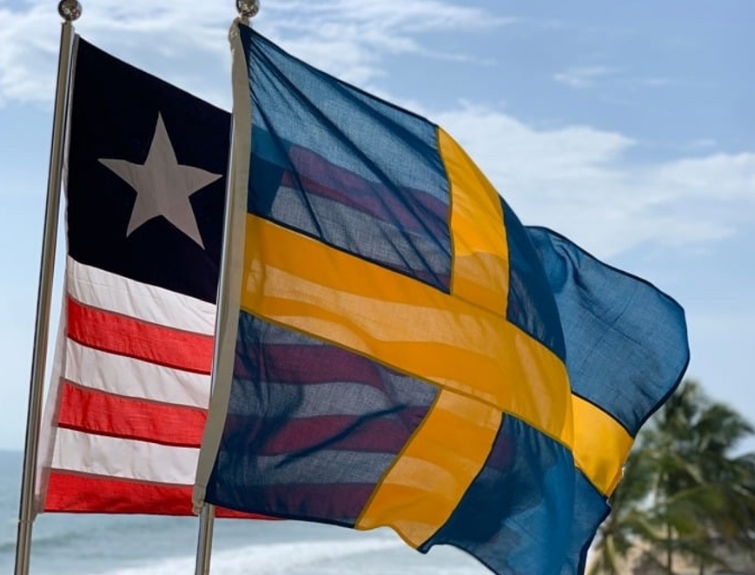
Backéus said Sweden had spent years building the capacity of Liberian institutions and organizations and had worked with partners to prepare them for the transition away from Swedish funding. He singled out support for independent media as an example of an investment he expected to endure.
“One example is, and I’m saying this because I’m talking to you right now, but you know, independent quality journalism, that kind of legacy will live on long after Swedish funding will end,” he said.
Backéus said he was confident Sweden had made a lasting difference and hoped its withdrawal would not leave many unfinished programs.
Backéus also praised Liberia’s democratic resilience in a West African region where several countries have experienced democratic backsliding, highlighting freedom of speech and a free press. But he said corruption remained a serious concern. The embassy has had a major focus on anti-corruption and accountability efforts with funding support to groups including the Center for Transparency and Accountability in Liberia and Naymote Partner for Democratic Development.
“I think we are seeing some positive trends in that area, without a doubt,” he said. “A lot of work remains to be done, and I think it’s important to recognize that corruption is still a major challenge.”
He specifically raised concern about delays in corruption cases brought by the Liberia Anti-Corruption Commission and expressed disappointment over the limited number of convictions and sentences.
The concern has also been raised by Liberia’s own anti-corruption authorities. The Liberia Anti-Corruption Commission that it conducted 44 investigations in 2025 and completed 29. It secured six indictments, resulting in three convictions and one acquittal during the year. The commission has blamed court congestion and the absence of a specialized anti-corruption court for delays in resolving cases.
“I think that’s part of the challenge with the capacity constraints in the legal system, and that there are too many cases that the Liberian Anti-Corruption Commission is bringing to the courts that are delayed,” Backéus said.
He said the proposed National Anti-Corruption Court could help address those constraints.
Backéus, who has traveled to Harper, Robertsport, Nimba, Lofa and other parts of Liberia, said the country also had enormous potential to build a tourism industry around its coastline, forests and other natural attractions.
“There’s so many beautiful spots for nature and tourist potential. I think is almost endless here,” he said.
But he said realizing that potential would require better roads, reliable electricity, investment and skilled workers.
“So I think potential is there,” he said. “It’s going to take time to develop that as well, but I definitely think it’s there.”
This story was a collaboration with New Narratives as part of the Investigating Liberia project. Funding was provided by the U.N. Office of the High Commissioner for Human Rights and the European Union. The funders had no say in the story’s content.
Support Independent Journalism
Your support helps FrontPage Africa continue delivering independent, credible, and impactful journalism. Every contribution strengthens our ability to investigate, inform, and hold power accountable while keeping quality journalism accessible to our readers.
Support our journalism or subscribe to receive the latest FrontPage Africa stories and updates.