
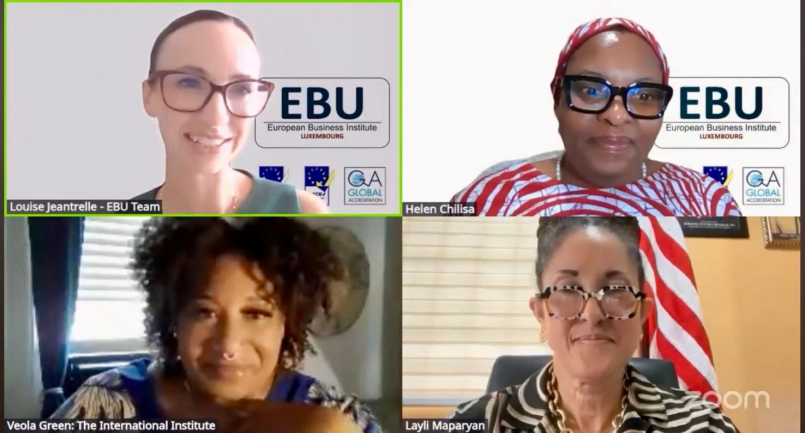
Monrovia, Liberia — The University of Liberia (UL) is expanding access to international education and professional development through a landmark partnership expected to provide more than 200 students with heavily subsidized scholarships and create new global learning opportunities for faculty and staff.
By Patience M. Jones,[email protected]
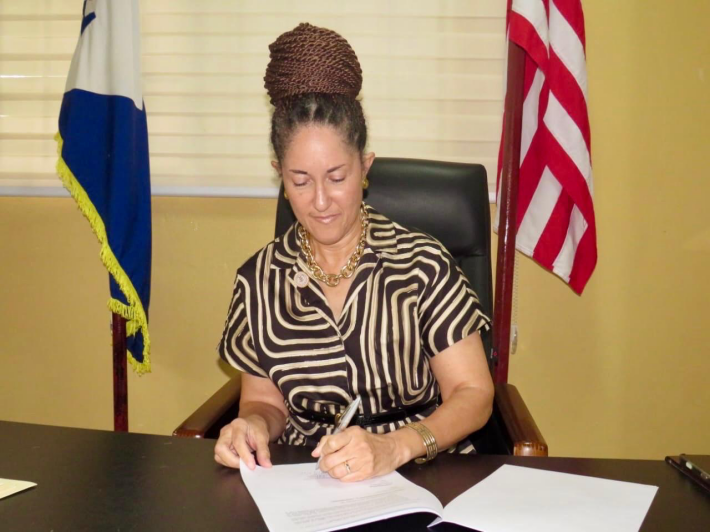
The agreement, signed on August 27, brings together the University of Liberia, the European Business Institute of Luxembourg (EBU), and the U.S.-based International Institute of Family Development Inc.
Under the partnership, EBU will provide scholarships covering 97 percent of online tuition costs for 200 certificate programs, four diploma programs, and 10 Bachelor’s and Master’s degree programs.
The agreement also paves the way for a 2027 Luxembourg Study Abroad Program for UL students and faculty, further strengthening the university’s international engagement.
The Memorandum of Understanding was formalized during a virtual signing ceremony attended by representatives of the three institutions.
University of Liberia President Dr. Layli Maparyan described the agreement as a major step toward expanding educational opportunities for Liberians and strengthening the university’s contribution to national development.
“This is a defining chapter in the journey of the University of Liberia, our nation’s flagship national university,” Dr. Maparyan said.
She noted that EBU offers programs in several high-demand fields, including business and finance, technology and innovation, artificial intelligence, education and hospitality.
“As we gather to sign this historic Memorandum of Understanding with the European Business Institute of Luxembourg, we are not just exchanging documents; we are opening doors of limitless potential for our students, faculty, and staff, as well as our entire country,” she said.
Bringing Education Closer to Liberian Learners
For EBU, the partnership represents part of a broader effort to use technology to make international education more accessible to students across Africa.
EBU Board Chairperson Ms. Helen Chalisa said the institution is committed to helping close educational gaps by providing quality learning opportunities through online platforms.
“We do not want Africa to be left behind—not because of geography, and certainly not because quality education has become unaffordable,” Chalisa said.
“Through this partnership with the University of Liberia, we are bringing opportunity closer to Liberian learners.”
EBU is a Luxembourg-based nonprofit business and professional education institution headquartered at Château de Wiltz. It provides predominantly online education to an international student population.
Its programs cover areas including business and management, finance and accounting, data science and artificial intelligence, cybersecurity, project management, hospitality and education.
Chalisa said the institution adopted a technology-driven approach because bringing students from across Africa to Luxembourg would be financially difficult and unsustainable.
“We realized that we could not bring everyone to Luxembourg. It would not be affordable, and it would not be sustainable,” she said.
“So, instead, we took education to where people are through the internet.”
A Partnership Beyond Scholarships
The agreement will operate under the International Institute’s Program for African Cultural Exchange, Self-Enlightenment, Training, and Research (PACESETTER) Initiative.
The initiative promotes collaboration between students in Africa and the United States while supporting education, cultural exchange, training and research opportunities.
The new partnership builds on an earlier relationship established in June when Dr. Maparyan issued a Letter of Partnership to the International Institute in support of the PACESETTER Initiative.
At the time, the University of Liberia expressed its willingness to host proposed international delegations and explore opportunities presented through the initiative.
Ms. Veola Green, Managing Executive Director and Principal of the International Institute, said the agreement represents a significant step toward building stronger educational and economic opportunities for young people across Africa.
She said the partnership will create pathways for hundreds of students each semester while contributing to the International Institute’s broader campaign to help create pathways toward one million jobs in Africa by 2030.
“Through the PACESETTER Initiative, we are not only equipping young people with the skills to thrive in today’s global economy, but also empowering them to become innovators, entrepreneurs, and leaders who will shape Africa’s future,” Green said.
Preparing UL for Digital Learning
While EBU will cover 97 percent of online tuition, fundraising and other support initiatives are expected to help address the remaining costs for participating students.
The University of Liberia is also preparing to strengthen its digital learning infrastructure ahead of the full implementation of the partnership.
UL plans to use the remainder of 2026 to establish three SMART classrooms pledged by donors at its Capitol Hill, Fendall and Sinje campuses.
The classrooms are expected to provide students, faculty and staff with improved access to online learning opportunities beginning in early 2027.
Dr. Maparyan said the partnership could strengthen Liberia’s capacity in areas increasingly critical to national development and the global economy.
Through training in business and finance, she said, Liberian scholars could be better prepared to contribute to sustainable economic growth and compete in an increasingly digital world.
The partnership will also expand access to technology, innovation and emerging fields such as artificial intelligence, cybersecurity and hospitality.
Dr. Maparyan said strengthening education in these sectors could help prepare a new generation of Liberians to meet the country’s evolving development needs.
“The value-add of EBU’s programs touches the very heartbeat of modern academic advancement and key areas of national development for Liberia,” she said.
The next EBU semester begins on September 7, with interested applicants allowed to apply at any time.
As UL prepares for the full rollout of the partnership, Dr. Maparyan urged students, faculty and staff who will benefit from the programme to approach the opportunity with discipline and determination.
“To our scholars the students, faculty, and staff who will benefit from this program remember that you carry the hopes of a resilient and determined nation,” she said. “Embrace this opportunity with discipline and the hunger for knowledge.”
With the new agreement, the University of Liberia is positioning itself to give more students access to international education without requiring them to leave the country potentially opening a new chapter in the university’s efforts to connect Liberian learners with global opportunities.
Support Independent Journalism
Your support helps FrontPage Africa continue delivering independent, credible, and impactful journalism. Every contribution strengthens our ability to investigate, inform, and hold power accountable while keeping quality journalism accessible to our readers.
Support our journalism or subscribe to receive the latest FrontPage Africa stories and updates.