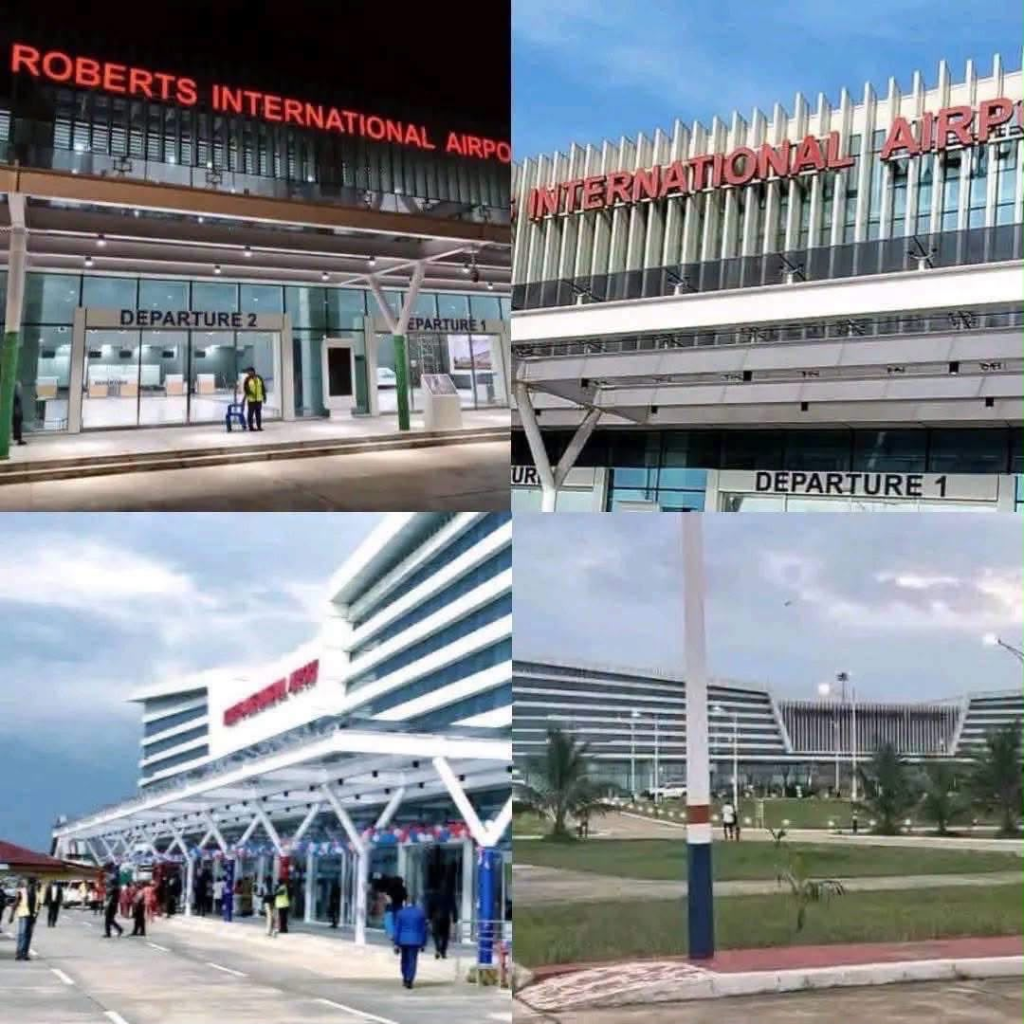
MONROVIA— Matthew Young, a newly appointed member of the opposition Congress for Democratic Change (CDC) Diaspora Cyber Team, has strongly cautioned the Government of Liberia against concessioning Roberts International Airport (RIA) for 25 years, arguing that such a long-term arrangement could undermine Liberia’s economic and strategic interests for generations.
By Christopher C. Walker | [email protected] | 0777898224/0886723075
Young, who says he has professional experience in airport operations, including work at Philadelphia International Airport, believes the government should reconsider any plan that would transfer the long-term operation of Liberia’s principal international gateway to a private concessionaire.
In a detailed position on the proposed arrangement, Young questioned whether Liberia has learned enough from previous long-term concession agreements before entering into another agreement that could potentially bind the country for a quarter century.
“Having Liberia seen enough and felt enough loss from these long-term concessionaire agreements?” Young asked, arguing that the country has experienced several concession arrangements whose benefits, in his view, have not matched the expectations set when the agreements were negotiated.
Young’s criticism comes as he argues that Roberts International Airport should be treated differently from ordinary commercial infrastructure because of its importance to Liberia’s national security, economy, tourism, trade and international connectivity.
‘Twenty-Five Years Is Long Enough to Lock Liberia Into Mistakes’
For Young, the proposed 25-year period is one of the biggest concerns.
He argues that if a concessionaire fails to invest adequately during the early stages of the agreement, the government could have limited options to compel corrections without costly renegotiations.
He also pointed to the rapid pace of change within the global aviation industry.
Technology, aviation security requirements, airline business models and passenger patterns can change significantly over 25 years, he said, potentially leaving Liberia tied to an agreement designed around assumptions that may no longer be relevant.
Young warned that future runway and terminal expansions could also become complicated if they were not properly anticipated in the original concession agreement.
He further argued that once a private operator controls airport systems, procedures, vendors and commercial relationships for an extended period, the government could gradually lose bargaining power.
“Twenty-five years is long enough to lock Liberia into mistakes,” Young’s position states.
Concern Over Rising Airport Charges
Young also raised concerns about tariffs and other fees that could ultimately affect travelers.
He argued that a private concessionaire would naturally seek to recover its investment and protect its expected returns through airport charges.
These could include landing fees, passenger charges, commercial rents, parking fees, ground-handling charges and other service-related costs.
Young said the situation could become particularly challenging for Liberia because the country’s aviation market has relatively limited passenger demand compared with larger international markets.
He pointed to airlines scaling down operations, reducing routes or leaving smaller markets as evidence that passenger growth cannot simply be guaranteed.
If passenger numbers remain below projections, he argued, a concessionaire could seek tariff increases or renegotiation to protect its financial position.
Without independent tariff oversight and transparent reporting, Young believes ordinary travelers could eventually bear the burden.
Oversight Is Central to the Debate
Young’s argument also centers on the government’s ability to monitor a 25-year agreement.
He said any successful airport concession requires strong regulation covering tariffs, service quality, competition, ground-handling services, safety and investment obligations.
Without effective monitoring, he argued, a concessionaire could meet contractual requirements on paper while airport maintenance and service quality decline in practice.
For Young, safety-related infrastructure is particularly sensitive.
Runways, airport lighting, drainage, fire protection, security systems and terminal equipment require continuous investment and maintenance.
He warned that weak enforcement could create incentives for operators to delay major maintenance in favor of short-term financial performance.
He therefore believes any agreement must contain strict performance indicators, independent audits, penalties for non-performance and clearly defined government step-in rights.
Commercial Interests Versus National Aviation Needs
Young also questioned whether the commercial interests of a private operator would always align with Liberia’s broader aviation objectives.
He argued that a concessionaire would naturally prioritize activities that generate stronger returns, while government has a wider responsibility to ensure national connectivity and accessibility.
According to Young, less profitable services or facilities could receive less attention if they do not generate sufficient commercial returns.
He said the government must therefore ensure that any airport development model protects not only profitable traffic but also broader national interests.
Strategic and Emergency Concerns
Young further described RIA as a strategic national asset that must remain responsive to Liberia’s security and emergency needs.
Airports play critical roles during medical evacuations, disasters, national emergencies and security operations.
He warned that a poorly structured concession could create procedural complications during emergencies if government authorities are required to navigate contractual obligations before taking action.
For him, any arrangement involving RIA must explicitly protect the government’s authority to respond immediately during national emergencies.
Young Proposes Alternatives to a 25-Year Concession
Rather than transferring the airport’s long-term operation to a private company, Young believes Liberia should explore several alternatives.
One option, he said, is a public-led modernization program that strengthens the governance and financial management of the airport.
He proposed ring-fencing airport revenues, establishing performance-based management targets and introducing transparent procurement systems.
Young also believes Liberia could improve RIA by investing in runway infrastructure, terminal facilities, passenger lounges and parking facilities that could generate additional revenue.
Another option he proposed is the use of commercial service concessions.
Under such an arrangement, private companies could lease and operate non-core activities such as restaurants, retail outlets, advertising, lounges and parking-related facilities, while the government retains control over core airport functions.
These core functions would include runway and airfield management, safety, security and other strategic operations.
Shorter Technical Partnerships
Young also proposed shorter-term management and technical assistance agreements rather than a 25-year airport-wide concession.
Under this model, Liberia could bring in specialized companies to assist with specific areas such as airport lighting, baggage systems, security technology or other technical upgrades.
Payments, he argued, should be linked to measurable milestones and completed work.
He also called for stronger revenue collection systems, including digitized invoicing, centralized collections and regular compliance audits to reduce leakage.
Young Favors a Strongly Regulated PPP
While Young opposes a blanket 25-year concession, he does not reject private-sector participation altogether.
Instead, he believes a carefully structured Public-Private Partnership could provide Liberia with private financing and expertise while preserving stronger government control.
Under his proposed hybrid model, private investors could finance and operate selected components while the government maintains clear authority over safety, tariffs, service standards and future expansion.
Young said such an arrangement should include measurable key performance indicators, investment milestones, tariff protections, transparent revenue-sharing mechanisms, independent audits and penalties for underperformance.
He cautioned, however, that a PPP could also fail if the agreement is poorly designed or if government oversight remains weak.
‘Do Liberia Really Lack Aviation Expertise?’
One of Young’s central questions is whether Liberia must surrender long-term operational control simply because it needs additional investment or technical expertise.
“Do Liberia really lack aviation expertise? No!” Young argued, pointing to the possibility of bringing in specialized international expertise through targeted and shorter-term partnerships without transferring the entire airport’s operation for 25 years.
He believes Liberia can obtain technical assistance, financing and modernization while retaining greater control over a strategic national asset.
A Call for Greater Public Scrutiny
Young is calling for greater public discussion and scrutiny before Liberia commits to any long-term arrangement involving Roberts International Airport.
He argues that the government should disclose the fundamental terms of any proposed agreement, including investment commitments, tariff formulas, revenue-sharing arrangements, performance requirements, termination provisions and mechanisms for renegotiation.
For Young, the debate is ultimately bigger than the current administration.
He believes any decision made today will be inherited by future governments and generations of Liberians.
His position is that Liberia should not sacrifice long-term control in exchange for short-term promises of investment.
“Therefore, our Airport is not for Auction,” Young concludes.
Support Independent Journalism
Your support helps FrontPage Africa continue delivering independent, credible, and impactful journalism. Every contribution strengthens our ability to investigate, inform, and hold power accountable while keeping quality journalism accessible to our readers.
Support our journalism or subscribe to receive the latest FrontPage Africa stories and updates.