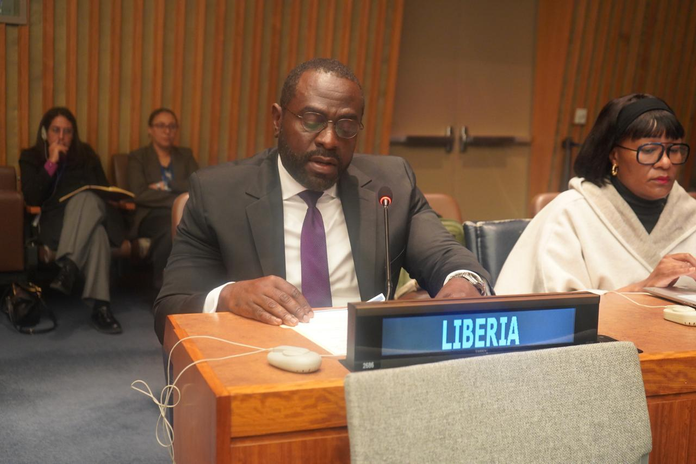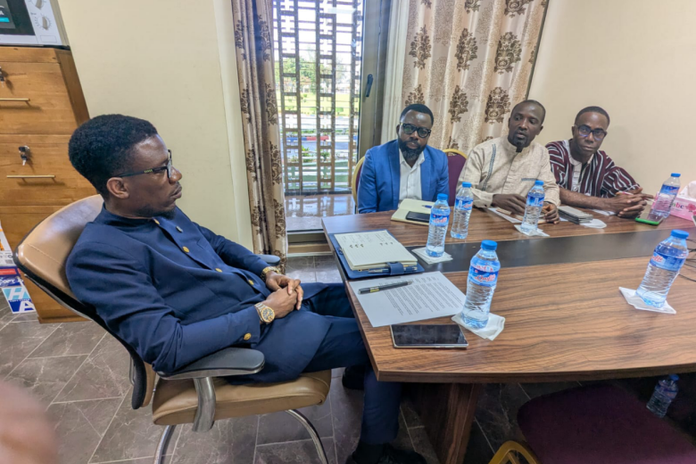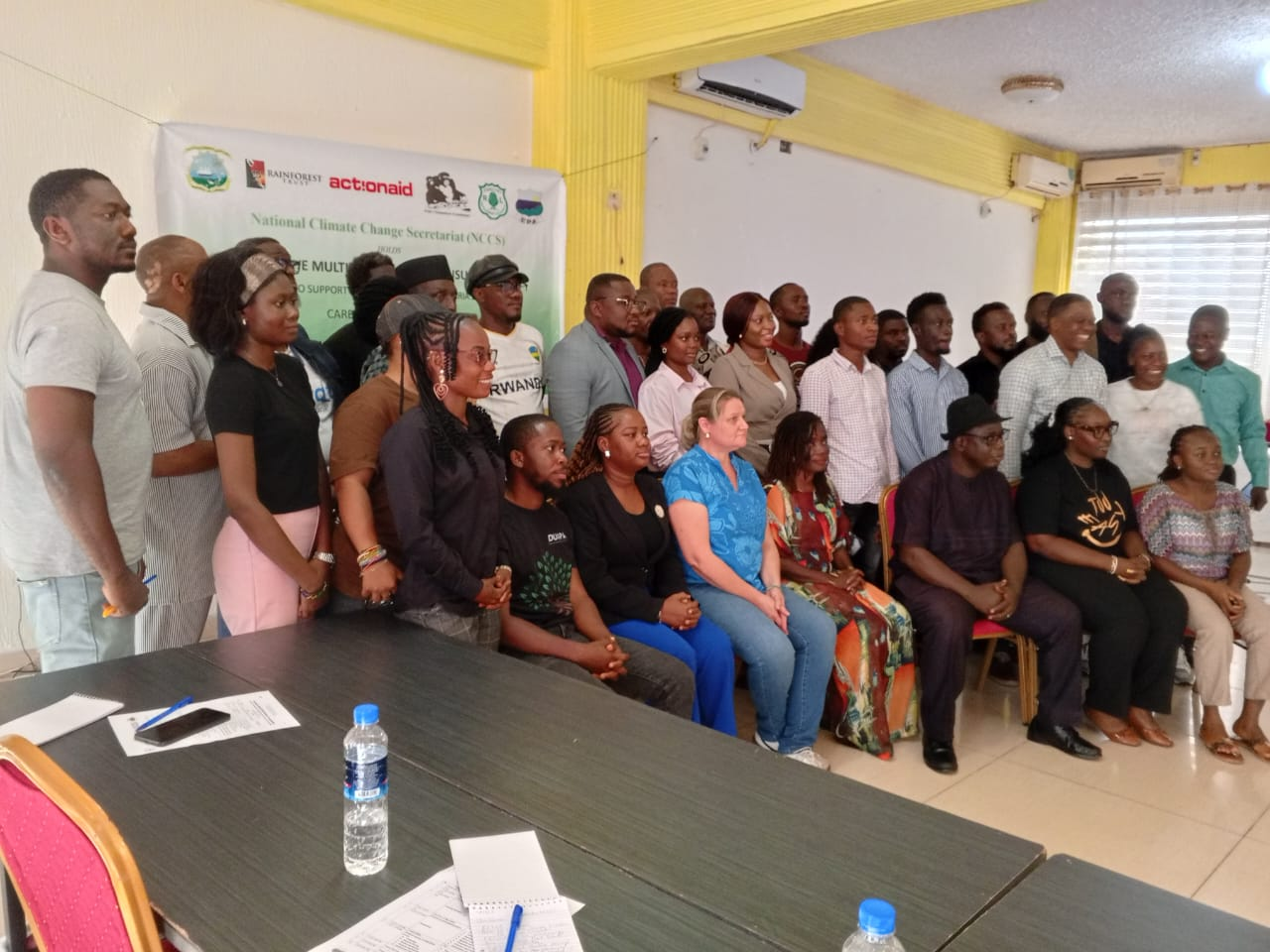
Monrovia – With Liberia’s forests under mounting pressure from logging, mining, and climate change, stakeholders on Friday, September 26, gathered at a one-day consultative forum that aims to support the development of Liberia’s National Carbon Policy and Law.
By Emmanuel Weedee-Conway
The multi-stakeholder consultative meeting, organized by the government through the Environmental Protection Agency (EPA), brought together Liberians from diverse background – legal, youth, civil society actors along with international partners with the goal of rising together in unison in strong support of efforts to develop a National Carbon Policy and Law.
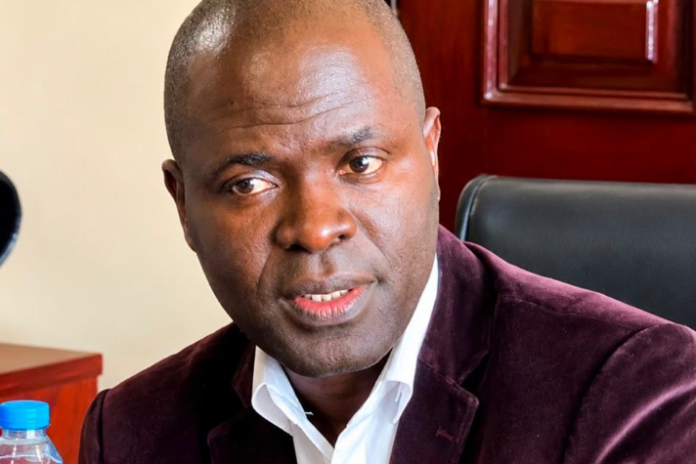
Speaking at the occasion, the political leader of the Liberia People’s Party (LPP) and renowned human rights lawyer/advocate, Cllr. Tiawan Saye Gongloe, called for robust legislation to safeguard Liberia’s trees and forests, warning that without urgent action the country risks turning into a desert.
He indicated that while Liberia’s culture and traditions once served as strong safeguards for the environment, modern practices have disregarded those values, accelerating deforestation.
For many years, he recalled that forests and nature were preserved using Liberia’s culture and tradition, which makes beliefs stronger than law.
“When people believe in something especially when it’s connected to God, they don’t want to violate it,” stated Cllr. Gongloe.
He frowned at human’s intentional action of felling trees and disregard for nature as an emergency issue, and a lack of respect for Liberia’s culture and tradition, stressing that the traditional people had better ways to preserve carbon credit and to preserve climate change, though they didn’t learn from them.
“The remaining forests in Sinoe, lower Nimba, Gbarpolu, River Gee, and Grand Gedeh must be preserved. Forests can go, and Liberia is capable of becoming a desert too if we do not act,” Cllr. Gongloe cautioned.
He proposed innovative preservation measures, such as requiring agriculture loan beneficiaries to commit to planting trees rather than cutting them down, and scaling up awareness campaigns.
“We must return to the wisdom of our traditions and strengthen them with modern laws to preserve what little we have left,” he stressed.
The forum provided an opportunity for stakeholders to express themselves against what they believe contribute to the harmful effect of forest degradation. They stressed the urgent need to preserve the country’s remaining forests while unlocking new opportunities in the global carbon market.
Inclusive Participation in Carbon Policy
Taking the podium, ActionAid Liberia Country Director, Madam Elizabeth Gbah Johnson, joined Cllr. Gongloe to underscore the importance of a national carbon policy, which she said its success would depend on broad inclusivity, particularly involving women, youth, persons with disabilities, and the private sector.
“Communities cannot carry the burden of failed carbon projects they had no say in,” Madam Johnson noted, warning against middlemen in negotiations and insisting that financial benefits must flow directly to communities.
She emphasized that ActionAid’s research across several countries revealed that most carbon projects collapse due to lack of transparency and grassroots participation.
EPA Highlights Green Growth Potential
For the Environmental Protection Agency (EPA), Liberia’s forests are not just ecological assets but economic opportunities.
Christopher B. Kabah, EPA’s Director of Planning and Policy, said the ongoing consultation demonstrates Liberia’s readiness to position itself as a leader in sustainable development.
“The national carbon policy represents Liberia’s future—reducing emissions, promoting sustainable growth, and safeguarding resources for generations to come,” Mr. Kabah stated.
He stressed that once finalized, the policy would align with the Paris Agreement’s mechanisms and unlock significant opportunities in the global carbon market.
Global Lessons, Local Opportunities
Dr. Annika Hillers, Country Director of the Wild Chimpanzee Foundation, urged Liberia to learn from neighboring countries like Sierra Leone and Ghana, where carbon policies have already translated into tangible financial benefits for communities.
“If Liberia puts the right policy in place, it can lead West Africa in carbon trading and attract millions, even billions, in new investment,” she said.
A Shared National Responsibility
As discussions concluded, one point resonated among all participants: preserving Liberia’s forests is both an ecological necessity and an economic opportunity.
Stakeholders agreed that building a credible national carbon policy, anchored on the wheel of transparency, inclusivity, and strong legal backing will determine whether Liberia loses its forests or leverages them to build a sustainable and prosperous future.
Support Independent Journalism
Your support helps FrontPage Africa continue delivering independent, credible, and impactful journalism. Every contribution strengthens our ability to investigate, inform, and hold power accountable while keeping quality journalism accessible to our readers.
Support our journalism or subscribe to receive the latest FrontPage Africa stories and updates.