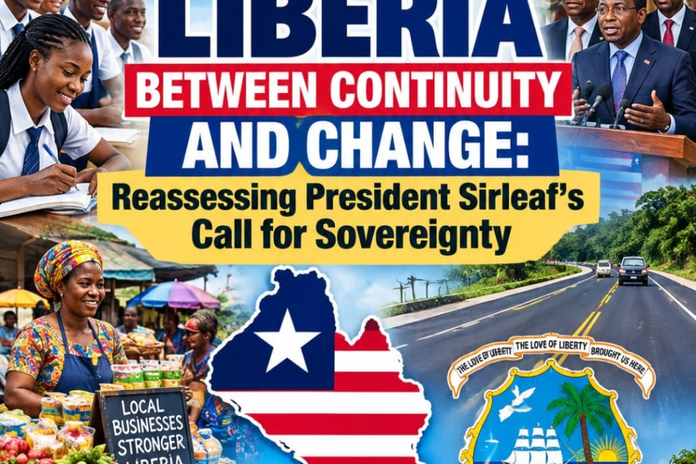
They are gearing up again and coming with the same unsweetened empty propaganda, good-for-nothing promises, and no vision of nation-building.
By: Austin S Fallah- [email protected]:, contributing writer
All they are good at is condemnation without tangible resolutions.
Young people should be sagacious during these times and ensure the characters and reputations of those so-called, self-styled, money-eating-vampires-hyenas are pellucid.
The days for empty rhetorical slogans, bag of rice for political loyalty, big, big english that means nothing and hold not a little pint of intellectualism, should be something of the past, after years of young people sitting under those bunch of ill-informed plenty empty drumps politicians but learned from those corrupt, empty headed, being in the classroom but acquired nothing to intellectualize society for the good of all air-breathing human beings are over now, comes 2029 and beyond.
Young people should not stoop to such a level, for their future is brighter without them.
In a thought-provoking interview, the late Christian Prelate Dr. Myles Munroe highlighted the profound implications of leadership in shaping the destiny of a nation.
He referenced Ecclesiastes 10:16, succinctly stating, “Woe to the land when a slave becomes king,” illustrating a timeless truth regarding the dire consequences of unqualified and/or inexperienced leaders assuming power.
This biblical proverb serves as both a warning and a critical reflection on the political landscape, especially pertinent in Liberia.
Liberia has faced significant leadership crises throughout its history.
In examining this connection, I shall delve into how effective leadership, rooted in moral integrity and wisdom, is crucial for national development, drawing comparisons between the cautionary tales of biblical times and contemporary political challenges in Liberia.
Historical Context: The Proverb’s Origin:
Ecclesiastes, attributed to King Solomon, is a biblical text that offers profound insights into human behavior and society.
The phrase “Woe to the land when a slave becomes king” illustrates the inherent risk of power falling into the hands of those who lack the requisite qualities to govern justly and effectively.
In ancient Israel, leadership was viewed as a divine appointment requiring moral integrity, wisdom, and a commitment to the welfare of the people.
The text warns of any nation that has suffered or is suffering under the governance of an unqualified leader, a situation that (could) could have precipitated (precipitate) chaos and injustice.
This proverb resonates deeply with the historical context of Liberia, a nation that has endured civil wars, corruption, and ineffective leadership.
The country garnered independence in 1847, but its journey has been marked by political instability, exacerbated by a leadership crisis that mirrors the biblical cautionary tale.
This historical backdrop serves as a lens through which Liberians can examine the importance of integrity and qualification in leadership.
The Leadership Crisis in Liberia:
Liberia has experienced leadership crises, with significant corruption and mismanagement.
The last two quarters of the 20th century and the first quarter of the 21st century (hopefully not again in the rest of the nation’s remaining history)saw a desperate need for reform as the country struggled to recover from the devastation of civil war and subsequent political unrest.
Leaders who came to power often lacked the moral compass necessary to uplift the nation, reflecting the warning inherent in Ecclesiastes 10:16.
The biblical proverb suggests that a leader’s character is crucial to a nation’s welfare.
In Liberia, the impact of leadership failures is evident in the country’s socioeconomic challenges.
A pervasive culture of corruption has taken root, where leaders misappropriate resources and prioritize personal gain over public service.
This has led to widespread disenfranchisement and skepticism among the populace, undermining trust in governmental institutions.
Many Liberians view the leadership crisis as an existential challenge, reflecting the need to reassess and redefine what it means to serve as a leader.
The notion that a former servant (or an unqualified leader) can govern effectively has been met with frustration and skepticism, particularly as the people wrestle with the legacies of leaders who have betrayed their trust.
A Call for Change: The Second Half of the 21st Century:
As the world progresses into the 21st century, Liberians urgently need to change their mentality regarding leadership and governance.
In the wake of relentless corruption and poor governance, Dr. Munroe’s message of hope for transformation resonates profoundly.
The call to action is not merely to reject corruption but to actively foster a culture of accountability and integrity among leaders and citizens.
The biblical reference to the peril of an unqualified leader serves as a backdrop for discussions on national identity and purpose.
Just as the Israelites faced challenges during their exodus from Egypt, Liberia finds itself at a crossroads.
The lessons learned from historical struggles must inform present actions.
The imperative for political engagement and civic responsibility must be emphasized, and Liberians must be urged to participate actively in the democratic process, particularly in the lead-up to the 2029 elections.
Liberia’s future depends on citizens’ ability to identify and support leaders committed to ethical governance and social justice.
It necessitates a collective aspiration to rise above the status quo, the old ways of thinking that foster corruption, opportunism, and systemic injustice.
The Role of Education and Moral Development:
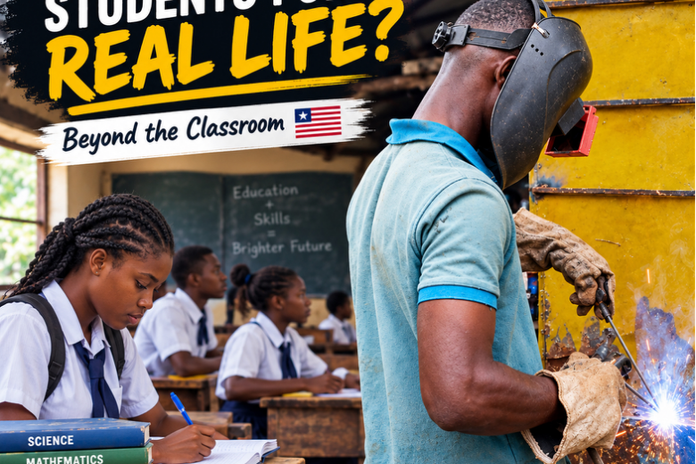
The role of education in shaping future leaders is integral to the vision of a stronger Liberia.
Education can not merely be an academic exercise; it must encompass moral and ethical instruction emphasizing integrity, accountability, and service to the communities, boroughs, townships, districts, towns, villages, counties, and the nation.
As Dr. Munroe echoed, the qualities of a good leader transcend formal qualifications; they include character and the ability to inspire hope and resilience within the populace.
The biblical imperative for wise leadership aligns with contemporary calls for transformational education in Liberia.
Educational institutions must cultivate knowledge and a sense of ethical responsibility among students, particularly at the university level.
This aligns with the scriptural emphasis on wisdom, acknowledging that true insight leads to just and equitable governance.
Moreover, creating platforms for dialogue and discussion about ethical leadership within educational settings can empower young Liberians to envision a different future and not engage in hooliganism and unnecessary demonstrations with good-for-nothing slogans and rhetoric that lead nowhere but only to move the 32(teeths) up and down with open empty mouths with nothing to eat or empower the young people for the greater good.
Introducing mentorship programs that connect aspiring leaders with experienced individuals who embody integrity can illuminate pathways for principled governance.
Embracing a New National Identity:
The transformation advocated by Dr. Munroe will require Liberians to embrace a new national identity, one characterized by civic pride and a commitment to collective progress.
Reexamination of the societal norms and behaviors that have contributed to the leadership crisis is crucial.
Liberia’s vision for the latter half of the 21st century must be hope, integrity, and resilience.
A national identity rooted in these values can lead to a dramatic cultural shift. Citizens must reject apathy and complacency while actively advocating for transparency and accountability.
The call to action must resonate within communities, encouraging grassroots movements and initiatives that empower individuals to challenge leaders who have consistently failed the people.
Inspired by Dr. Munroe’s vision, Liberians must strive to become change agents.
This includes embracing democratic principles, participating in positive governance, respectfully holding leaders accountable, and fostering a culture of integrity within every sphere of society.
It speaks to a collective responsibility that transcends individual interests to advance the nation.
A Beacon of Hope:
The wisdom found in Ecclesiastes 10:16 serves as a valuable lesson for Liberia as the nation confronts its leadership challenges.
As history demonstrates, the belief that a former servant or unqualified leader can govern effectively is perilous.
Liberia’s destiny depends on the character and integrity of its leaders; thus, citizens must take an active role in electing individuals who embody these virtues.
As Liberia navigates the complexities of the 21st century, ethical governance offers a magnificent opportunity for transformation.
Liberians can chart a new course defined by progress and prosperity by cultivating hope, rejecting corruption, and embracing accountability.
Embracing Dr. Myles Munroe’s vision requires an unwavering commitment to principled leadership, ultimately allowing Liberia to emerge as a beacon of hope in a world fraught with challenges.
The task may be monumental, but with determination, wisdom, and collective action, the dream of a thriving Liberia can be realized, a dream that honors the past while boldly shaping the future.
Source:https://www.tiktok.com/t/ZTM1gryhP
Support Independent Journalism
Your support helps FrontPage Africa continue delivering independent, credible, and impactful journalism. Every contribution strengthens our ability to investigate, inform, and hold power accountable while keeping quality journalism accessible to our readers.
Support our journalism or subscribe to receive the latest FrontPage Africa stories and updates.