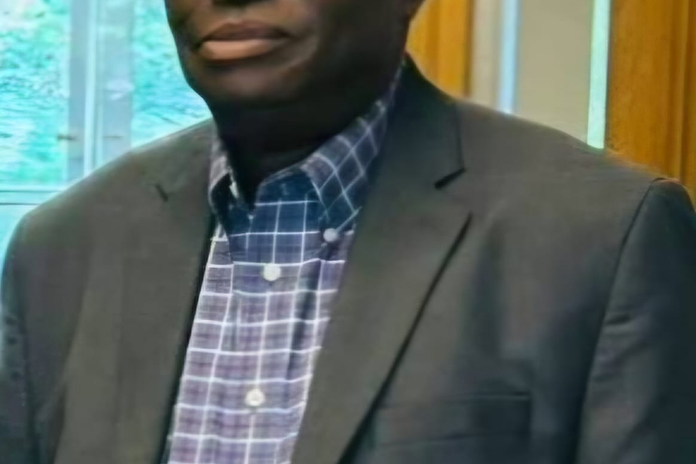
Over a leisurely weekend, we found ourselves at the residence of our brother and colleague, Dr.Anthony Swaray, who had recently returned triumphantly from the hospital.
By: Austin S Fallah, [email protected], contributing writer
Our gathering included Brother Edwin, Brother Charles, Brother Thomas, Mrs. Swaray, other friends, and me, a group of intellectuals pursuing knowledge and understanding of the complexities that define our shared reality.
As we sat in the warm, inviting atmosphere of Dr. Swaray’s home, the conversation swiftly veered toward critical questions that weighed heavily on our minds:
1. Can one be a patriot without loving their country?
2. Moreover, does Africa require a hybrid blend of traditionalism and democracy to navigate its challenges?
Intellectual engagement thrives in spaces where diverse perspectives converge.
The discussion shifted from individual experiences to a more cohesive exploration of governance, particularly focused on Africa’s political landscape.
What began as a personal reflection on a previous article I had penned advocating for a “Civilian-Military” rule in Liberia organically morphed into broader contemplations on the need for hybrid leadership across the continent.
This idea was not merely a call to revisit governance structures; instead, it offered a clarion call to reimagine the political fabric of Africa itself.
Patriotism and the Love of Country:
Brother Thomas’s first question, whether one can be a patriot without loving one’s country, demands a nuanced examination.
Traditionally, patriotism is often conflated with an unyielding love for one’s homeland.
However, the concept of love itself is complex, laden with emotional and rational components.
Brother Edwin said that for many citizens of nations plagued by systemic corruption, stagnant economies, or oppressive political regimes, love for the country can exist alongside a profound disappointment in its governance.
For them, patriotism arises not from blind allegiance but from a deep-rooted yearning for progress and justice, said brother Charles.
This perspective articulates a form of love characterized by accountability and critique instead of mere romanticism.
It is crucial to interrogate the essence of patriotism: Is it merely the celebration of national identity, or is it also about fostering constructive criticism aimed at elevating the nation? Asked Dr. Swaray.
Brother Charles added that patriotic citizens should hold their government accountable and strive to improve the national fabric.
Adding to the discourse, Brother Edwin, an intellectual, said that in this sense, an individual can demonstrate patriotism by wanting to change the status quo.
Such assertions challenge the conventional dogma that love and loyalty must manifest as unwavering support for government actions, particularly in contexts where governmental ethos may not reflect the populace’s aspirations.
The Case for Hybrid Leadership in Africa:
In this context, we shifted our focus to the urgent need for a hybrid form of leadership in Africa, specifically, synergy between traditional governance and democratic practices.
The notion of hybrid leadership is not entirely novel in the African political discourse; however, it is critical to articulate what this means within the complexities of various national contexts, as Brother therthertQue adds therther Fallah que in his addition to the korero.
Many African nations are marked by rich, community-oriented structures that contrast with the external imposition of democratic ideals.
Thus, the proposition emerged that an authentic African democracy must remain intertwined with its traditional values.
The example of Liberia, my reference point from the earlier article, resonated with many in our discussion.
The nation’s turbulent history has positioned it at a crossroads of political experimentation.
However, the unique blend of civilian leadership with military oversight could provide stability, particularly in a society historically scarred by conflict. Furthermore, Charles further said, “A hybrid leadership can capitalize on the insights of respected traditional leaders while embedding processes of accountability and democratic engagement.
This duality aims to stabilize governance and cultivate a sense of shared identity among the populace, divested from the legacy of colonial rule.”
When we consider the broader African context, several examples emerge showcasing the potential effectiveness of hybrid systems.
In countries where traditional governance structures maintain significant influence, marrying these practices with democratic processes may yield more sustainable outcomes, said Brother Fallah
“For instance, in countries like Ghana and Botswana, attempts exist to blend traditional leadership roles within a democratic framework, which has generally resulted in a predisposition toward stability and local accountability.
However, the challenge remains diagnosing the many “glutinous-edacious-voracious-ravenous-esurient-rapacious hyenas” in power, those corrupt so-called elites seemingly devoid of ethical considerations for the nations they lead.”
Corruption in governance hampers development, inhibits genuine civic engagement, and breeds disenchantment among the populace, Dr. Swaray said emphatically.
Brother Charles said African nations must strive for leaders who embody moral patriotism to combat this corruption.
“Such leaders prioritize their citizens’ well-being over personal gain and exhibit unwavering fidelity to the broader national vision.”
Reconciliation of Democracy and Traditionalism:
Our gathering prompted a deeper inquiry into how nations could carefully curate a hybrid model of governance that reconciles traditionalism and democratic practices.
This model necessitates active involvement from the populace, traditionally empowered to participate meaningfully in the governance process rather than being relegated to passive observers.
Encouraging civic engagement is crucial; educating citizens about their roles and responsibilities fosters an environment of accountability.
A critical aspect of this dialogue revolves around recognizing that Africa’s traditional structures are not monolithic.
Each nation boasts diverse cultural practices, and what works effectively in one context may prove inhospitable in another.
Thus, the congregant agreed that while advocating for hybrid governance, we must resist the temptation to impose a one-size-fits-all solution.
Each country’s historical and socio-political realities should shape the governing model’s particularities.
This plurality enriches the conversation about the future of governance in Africa.
It empowers nations to pursue a distinct path informed by their cultural heritage while integrating contemporary governance principles.
This path forward involves engaging local communities, encouraging grassroots leadership, and facilitating dialogues among various stakeholders, including youth, women, and marginalized groups whose voices must be heard and integrated into the decision-making process.
Imagining a Brighter Future for Africa: The Group’s Conclusion:
As the evening progressed at Dr. Swaray’s home, the discourse on patriotism and the necessity for a hybrid approach to governance reinforced a collective commitment to enact change within our communities and countries.
Even while recovering from illness, observing Dr. Swaray’s intellectual vigor was a poignant reminder of the resilience required to pursue national and continental progress.
The questions we grappled with are tied to a broader narrative of identity, culture, and values defining the African experience.
The urgency of repositioning leadership and challenging the corrosive systems perpetuating corruption and disillusionment cannot be kiosk.
As intellectuals united in a quest for understanding, we envisaged not just an ideal but a palpable possibility: a future where African nations rise beyond the remnants of colonialism and post-colonial despair, reclaiming agency over their destinies.
This vision demands leaders who not only embody the principles of democracy but also understand the intricate tapestry of traditions that inform their people’s hopes and fears.
Further, it requires actively engaged citizens ready to hold their leaders accountable and wholly invested in the narrative of progress.
In envisioning a new Africa, we find ourselves compelled to challenge longstanding notions of patriotism, inviting a redefinition that encapsulates love grounded in a collaborative desire for genuine advancement in governance and society.
This paradigm shift heralds liberation from the dungeons of corruption and neglect.
In this regard, our weekend at Dr. Swaray’s home was more than a simple get well, nor-ma-yah, sorry-ooooooh gathering; it became a crucible for ideas to transform Africa’s future.
Support Independent Journalism
Your support helps FrontPage Africa continue delivering independent, credible, and impactful journalism. Every contribution strengthens our ability to investigate, inform, and hold power accountable while keeping quality journalism accessible to our readers.
Support our journalism or subscribe to receive the latest FrontPage Africa stories and updates.