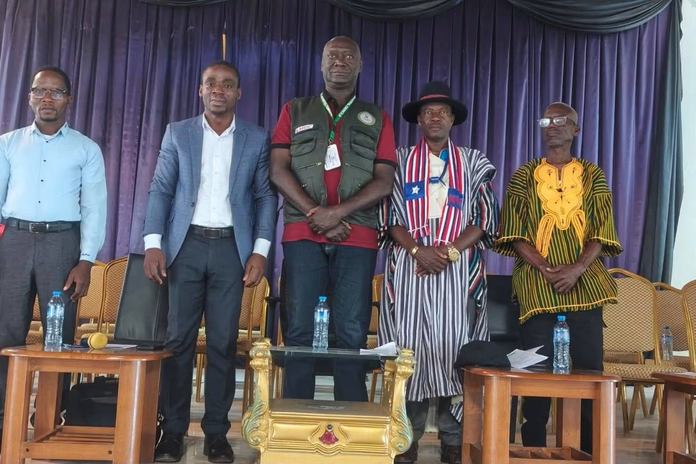
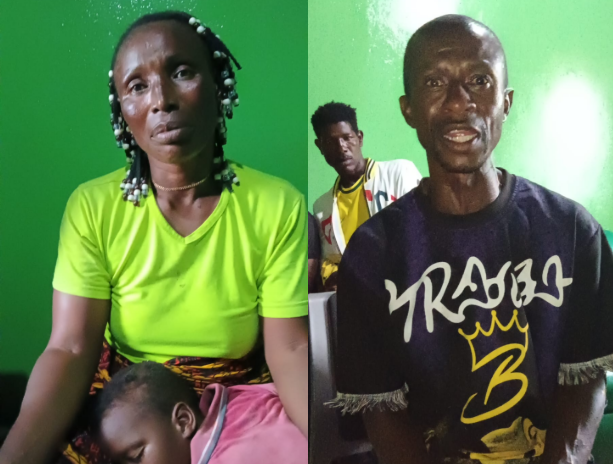
MONROVIA- The Multi-Actors Platform on Land Governance and Responsible Agricultural Investment in Liberia (MAP Liberia Land Platform) in collaboration with the Liberia Land Authority (LLA) and Civil Society Working Group on Land Reform, with support from USAID Land Management Activity, has engaged policymakers and key state actors to present the current state of the Land Rights Law, the progress, gaps, and challenges.
By Francis G. Boayue
The engagement was also intended to draw the attention of national government support to the land sector in Liberia.
The Land Tenure Specialist of USAID Land Management Activity, Richlue O. Burphy, speaking on Monday, July 15, 2024, during the opening ceremony, said the land management activity is proud to be associated with the event, adding that the land management authority is a long partner to the Liberia land Authority through technical support and other areas.
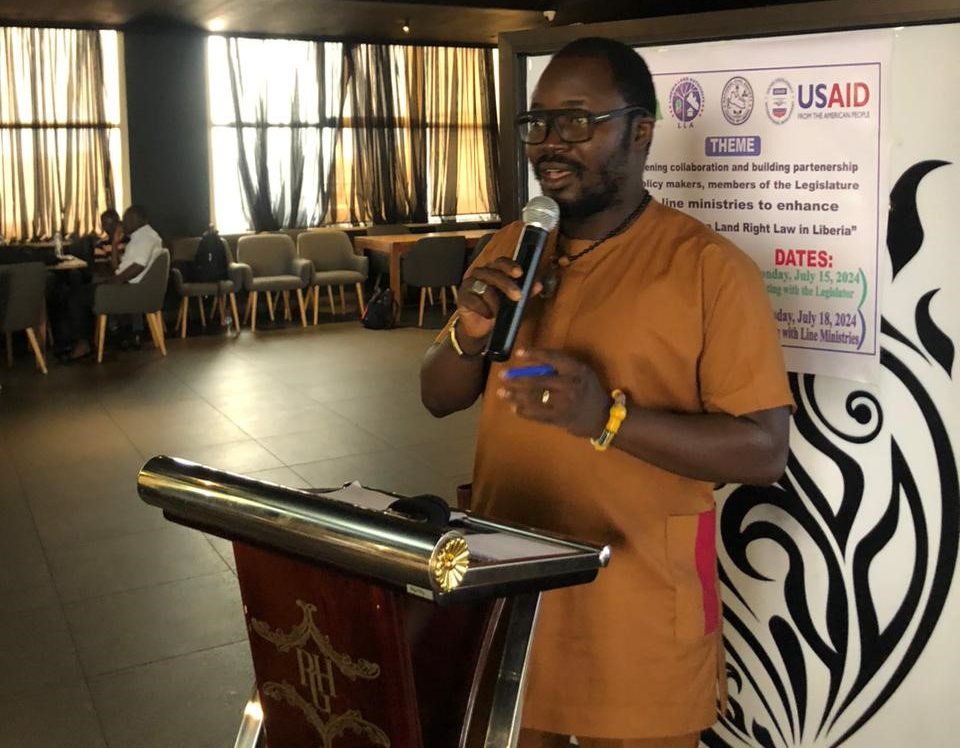
“The land management activity is the USAID investment and a four-year project that is working in three counties across Liberia to support over 50 communities to get deeds to their community land,” Richlue O. Burphy said.
Also speaking on behalf of the land rights group during the engagement in Monrovia, Aretha K. Togbah, Program Organization for Women Empowerment said that the land rights group represents over 50 institutions from government, CSOs, and private sector groups, academia and research institutions, and community-based organizations working on Land Reform in Liberia.
According to her: “Secure land tenure of customary land communities have become a major priority in Liberia, Africa and in the world at large. Unquestionably secure tenure can support stabilization, it can improve rural economic growth, help diminish urban migration and risks of human trafficking, and help Liberian businesses grow so there is not only job creation for rural Liberians but the opportunity to grow Liberian private sector.”
Madam Togbah indicated that Liberia’s land history is one of dispossession and marginalization, where land was owned by a small class of people (private land) and the state (public land), leaving millions of Liberians without tenure security.
“For the first time in Liberia’s history, the majority of Liberians now have the right to use, own, and govern their customary land, fostering participation in the nation’s economic growth and development,” Madam Togbah stated.
The Program Manager of the Organization for Women Empowerment explained that since the enactment of the Land Rights Act, the Government of Liberia has worked closely with civil society, and with support from national and international organizations and has made significant progress towards securing land rights for communities.
She revealed that the following milestones have been achieved, the development of regulations to support the implementation of the Law, the Government with World Bank Support has produced a Field Manual for all stakeholders to use in formalization procedures, Decentralizing of the Land Authority is progressing, with six (6) county-level Land Authority offices equipped and functioning with trained staffs and with support from the USAID Land Management Activity,
and the Swedish Government, 19 new land surveyors of the LLA, 13 of them females have been trained and re-oriented to work in different parts of Liberia and additionally, 40 surveyors have been licensed by the Surveyors Licensing and Registration Board (SLRB).
Speaking on challenges faced by the land sector, Madam Togbah stated that the land sector faces numerous obstacles that impede progress and hinder opportunities.
She narrated that the Community Land Formalization Process (CLRF) include six steps which have been outlined by the LLA for communities to formalize their land and the sector, including its institutions, has become too slow in progress such that communities have not been able to get their deeds as has been expected, and that little over 25 deeds so far are far low in terms of the time frame since the law was passed in 2018; a situation thereby preventing communities from engaging in productive ventures for use of their land.
For his part, District #11 Representative Richard R. Koon noted that there are many issues relating to the land right law at the level of the rural side when it comes to lawmaking.
The District #11 lawmaker assured the group that he and his colleagues would work with the recommendations that were disclosed by the group; saying, they, as lawmakers, will make sure that those recommendations are successful.
Representative Koon told the land rights group to always involve the ARREST lawmakers when presenting recommendations to both Houses.
Support Independent Journalism
Your support helps FrontPage Africa continue delivering independent, credible, and impactful journalism. Every contribution strengthens our ability to investigate, inform, and hold power accountable while keeping quality journalism accessible to our readers.
Support our journalism or subscribe to receive the latest FrontPage Africa stories and updates.