Monrovia-Liberia’s housing ambitions are entering a potentially transformative phase, with the National Housing Authority projecting the construction of 15,000 to 20,000 housing units by 2030, even as questions surrounding the Authority’s administration continue to linger.
By Willie N. Tokpah
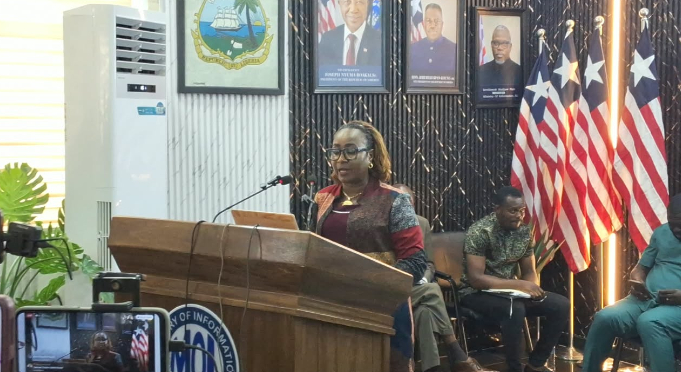
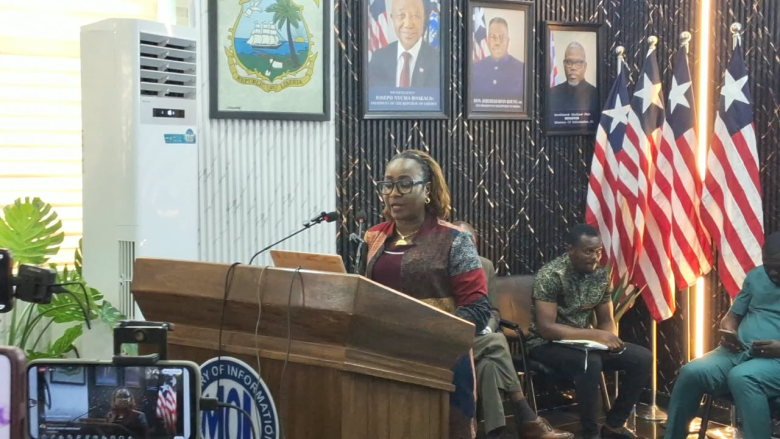
National Housing Authority Managing Director Florence K. Geegbae made the projection Tuesday, October 6, at the Ministry of Information’s regular press briefing in Monrovia, outlining plans that include partnerships with foreign investors, prefabricated housing manufacturers and several public-private partners.
Her announcement has placed the NHA at the center of one of the Boakai Administration’s most consequential development promises, on addressing Liberia’s housing shortage while confronting the rapid expansion and increasingly congested urban landscape of Monrovia.
But as Geegbae unveiled the scale of the Authority’s proposed housing drive, she offered little new detail on allegations previously raised against her administration, including calls for audits and investigations.
Asked whether she had submitted to an investigation and whether the allegations had been addressed, Geegbae declined to discuss the matter in detail.
She said the Ministry of State for Presidential Affairs, which she identified as her employer, had already inquired into the allegations and that a detailed report had been submitted.
“The Ministry of State, which is my employer, has inquired and we have done a detailed report to the Ministry of State for Presidential Affairs,” she told journalists.
She then indicated that she preferred to move beyond the issue.
A Housing Push With Foreign Backing
Geegbae said the Authority’s long-term projection is no longer limited to government-funded construction. According to her, discussions are underway with several investors, including potential partners from Turkey and Italy, while another group involved in prefabricated metal housing construction is being considered for projects in Liberia.
She said she recently visited factories, housing estates and construction sites associated with one of the potential foreign partners.
The NHA chief said some investors could contribute thousands of housing units to Liberia’s housing stock, pushing the Authority’s overall projection to between 15,000 and 20,000 units by 2030.
“We should be having close to 15, 20,000 housing units constructed by 2030,” she said.
The scale of the projection is significant for a country where affordable housing remains one of the most persistent challenges confronting low- and middle-income families.
But the larger question now is whether the NHA can convert its growing list of investment discussions into completed, affordable homes. She said the NHA expects to conclude projects involving 482 housing units and another 600 units as part of its short-term program.
According to her, the projects have already passed several preparatory stages, including design, permitting, implementation planning, site planning and soil testing.
The 600-unit component is particularly important because it formed part of the government’s previously announced social housing agenda. President Joseph Nyuma Boakai announced in his January 2026 Annual Message that the NHA would begin construction of 600 social housing units across six counties.
Geegbae’s latest comments suggest the Authority considers the projects to be moving through the implementation process. The challenge, however, will be translating plans, permits and site preparation into visible houses that Liberians can occupy.
Geegbae also acknowledged the severity of Monrovia’s urban development problems, attributing much of the pressure to continued rural-to-urban migration. She described the capital’s urban environment as increasingly difficult to manage and said the government would have to strengthen zoning and urban planning.
The NHA is working with development partners, including the United Nations Development Programme, on urban development initiatives, she said. Geegbae disclosed that the Authority has also established a portal intended to improve zoning and planning.
But she acknowledged that correcting Monrovia’s longstanding planning problems will not be simple.
In some areas, she suggested, correcting existing development patterns could require the removal of structures that do not conform to future urban plans.
That prospect highlights the delicate balance facing the government, expanding housing while simultaneously attempting to bring order to an urban environment that has developed rapidly and, in many areas, without effective planning.
Questions She Did Not Answer
While Geegbae spent much of Tuesday’s briefing detailing what the NHA intends to build, she declined to reopen the controversy surrounding allegations previously reported by local media.
Reports have raised allegations concerning procurement practices, administrative conduct and other issues within the Authority. Those allegations have been disputed and have not, by themselves, established wrongdoing.
Some reports have also called for comprehensive financial and performance audits of the NHA. Geegbae’s response was that the matter had already been addressed through a report submitted to the Ministry of State for Presidential Affairs.
That response, however, leaves the public with a distinction worth watching as the housing program expands, an internal response to allegations is different from independently verified evidence of how public resources, contracts and housing projects are being managed.
That distinction could become increasingly important as the NHA moves from planning to implementation and begins engaging more foreign investors and private-sector partners.
The NHA’s proposed housing expansion represents an opportunity to address a genuine national need.But a 20,000-unit projection also means a substantial expansion in the volume of land transactions, contracts, construction activities, partnerships and potentially public resources passing through the Authority.
That will inevitably require strong procurement systems, transparent contracting, measurable construction milestones and credible oversight. Geegbae insisted that the NHA has the expertise and plans to move Liberia’s housing sector forward.
For now, the strongest test of that claim will not be the number of investors visiting Liberia, the number of factories toured or the number of housing units projected on paper. It will be the number of completed and occupied homes.
And as the NHA moves toward its 2030 target, the public will be watching whether the Authority can turn its ambitious housing blueprint into a measurable national housing legacy, while providing sufficient documentation and transparency to answer legitimate questions surrounding its operations.
For Geegbae, Tuesday’s message was clear, Liberia should prepare for a major expansion of housing construction. The next chapter will be whether the houses, and the evidence of how they were delivered, match the promise.
Support Independent Journalism
Your support helps FrontPage Africa continue delivering independent, credible, and impactful journalism. Every contribution strengthens our ability to investigate, inform, and hold power accountable while keeping quality journalism accessible to our readers.
Support our journalism or subscribe to receive the latest FrontPage Africa stories and updates.