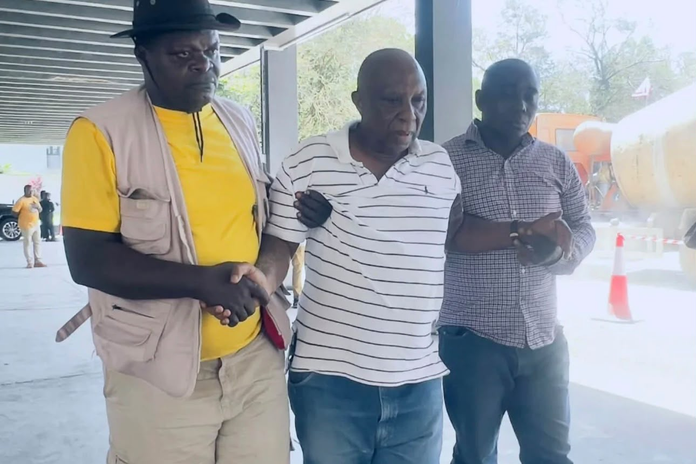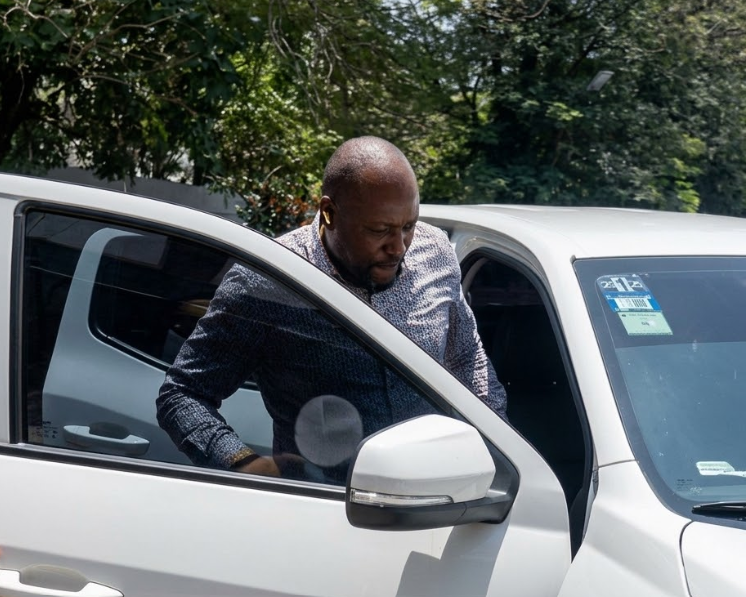
Monrovia— Former Liberia National Police Commissioner for Crime Services Johnny Bolar Dean has been released from custody on a US$15,000 property valuation bond after being arrested and forwarded to court on allegations that he accepted US$10,000 while police were investigating a major drug-trafficking case.
By Willie N. Tokpah
Dean, a former Unit 106 commander and senior figure within Liberia’s criminal investigation structure, faces charges of criminal conspiracy, bribery, tampering with a criminal investigation, and obstruction of government functions by a public servant.
Despite the seriousness of the allegations, the offenses charged are bailable, allowing Dean to remain out of custody pending further proceedings, subject to the conditions imposed by the court.
His release does not amount to an acquittal or a judicial finding that the allegations are without merit. The property bond is intended to secure his appearance before the court as the case proceeds.
Why US$15,000 for an Alleged US$10,000 Bribe?
The value of the bond has prompted questions because the property presented to secure Dean’s release was valued at US$15,000, while the alleged bribe at the center of the case is US$10,000. The two amounts, however, serve different purposes.
The US$10,000 is the subject of the prosecution’s allegations. Police contend that the money was connected to an effort to influence or compromise an ongoing criminal investigation.
The US$15,000 property valuation, on the other hand, is a bail-security mechanism. It is not a determination of the value of the alleged bribe and does not constitute a fine or punishment.
A property bond generally requires the accused or a surety to demonstrate sufficient interest in real property to secure the defendant’s appearance in court.
At the bail stage, the court’s primary concern is whether the accused will comply with the judicial process—not whether he is guilty.
The US$10,000 That Triggered the Case
According to a police charge sheet dated September 1, Dean is accused of accepting US$10,000 from Stephanie Fefe Mensah while authorities were investigating individuals identified in the case as Edison Brown and Alpha Bah.
The investigation is linked to Liberia’s broader cocaine-trafficking case involving a shipment authority have valued at approximately US$317 million.
Police allege that Dean used his position within the security apparatus to interfere with the investigation, disclose confidential information and frustrate efforts to investigate individuals connected to the alleged drug operation.
Dean, however, has reportedly provided investigators with a different explanation for the money.
According to the charge sheet, he admitted receiving the US$10,000 but told investigators that Mensah gave him the money for safekeeping. He also reportedly described Mensah as his lover.
Police rejected that explanation and alleged that the payment was connected to the criminal investigation and intended to influence the handling of the case. Investigators subsequently recovered the money.
The circumstances surrounding the payment are therefore expected to become a central factual dispute at trial: whether the money was simply entrusted to Dean, as he reportedly claims, or whether it constituted an illicit payment intended to influence a police investigation.
From Police Commander to Criminal Defendant
The allegations carry particular significance because of Dean’s former position. As Commissioner of Crime Services, he occupied a senior role within the Liberia National Police, with responsibilities connected to the investigation of serious criminal offenses.
His previous service as a Unit 106 commander also places the case against him within the context of a career spent in Liberia’s security and criminal-investigation apparatus. Prosecutors are essentially alleging that a senior police official abused the authority of his office while a major criminal investigation was underway.
If proven, such allegations could raise broader questions about professional ethics, internal controls and the ability of law-enforcement agencies to protect sensitive investigations from interference.
An Investigation Inside the Police
The case reportedly emerged from an administrative inquiry conducted by the Professional Standards Division of the Liberia National Police.
Dean and Mensah were reportedly turned over to the Crime Services Department on August 18 following that administrative process.
A Special Investigative Team headed by Assistant Commissioner of Police Harold T. Jones subsequently conducted the criminal investigation.
That inquiry ultimately resulted in Dean being charged and forwarded to court.
The sequence places the allegations within an internal police process that escalated into a criminal case.
The court will now have to determine whether the evidence gathered by investigators is sufficient to sustain the charges.
Dean: “I Am Not Connected to Any Drug Cartel”
Dean has rejected allegations linking him to any drug-trafficking organization.
The former police commissioner has maintained that he is not connected to a drug cartel and has challenged claims portraying him as a participant in criminal activity.
His explanation concerning the US$10,000 is also central to his defense.
Rather than acknowledging the payment as a bribe, Dean reportedly told investigators that the money was given to him for safekeeping.
That distinction could prove critical.
For the prosecution, the challenge will be to establish not simply that Dean received the money, but that it was connected to a criminal purpose and intended to influence or interfere with an ongoing investigation.
The defense, meanwhile, is expected to challenge the prosecution’s interpretation of the transaction and the evidence supporting the charges.
What the Court Will Have to Determine
As the case progresses, several issues are likely to come under judicial scrutiny.
The court may examine the circumstances under which the US$10,000 was delivered, communications between Dean and Mensah, the relationship between the two parties, and the nature of the investigation involving Brown and Bah.
Prosecutors may also seek to establish whether Dean disclosed confidential information, improperly used his official position or took actions intended to frustrate police efforts.
The defense is expected to challenge those allegations and the evidentiary basis for the charges.
The US$15,000 property bond does not resolve any of these questions. It simply permits Dean to remain outside custody while the judicial process continues.
A Larger Test for Liberia’s Drug Fight
The Dean case comes at a sensitive moment for Liberia’s law-enforcement institutions. The country’s investigation into a massive cocaine-trafficking operation has already brought suspected traffickers, security personnel and other actors under scrutiny.
The allegation that a former senior police commander may have accepted money and interfered with an investigation adds an institutional dimension to the case.
It raises a difficult question for Liberia’s fight against organized crime: If criminal networks can allegedly reach into institutions responsible for investigating them, how secure are those investigations?
At the same time, the case raises an equally important legal question: whether criminal liability can be established from a disputed financial transaction without prosecutors proving its criminal purpose beyond a reasonable doubt. Those questions cannot be settled by allegations alone. They must ultimately be determined through evidence presented before a court.
Road Ahead
Dean’s release on a US$15,000 property valuation bond means he will face the case from outside detention unless the court later orders otherwise. His release should not be interpreted as a declaration of innocence, just as his arrest and charging should not be treated as proof of guilt.
The prosecution retains the burden of proving the allegations.
At trial, the court will ultimately be asked to determine whether the US$10,000 was an innocent transaction or an illicit payment; whether Dean used his official authority to interfere with an investigation; whether confidential information was disclosed; and whether his conduct amounted to the offenses contained in the charge sheet.
For a former commander entrusted with fighting serious crime, the stakes are considerable.
For Liberia, the case could become an important test of accountability within the security sector—and of whether institutions tasked with combating organized crime can withstand the criminal influences they are expected to confront.
For now, Johnny Bolar Dean remains a defendant, not a convicted criminal. The allegations against him remain unproven, and he is presumed innocent unless and until a court of competent jurisdiction determines otherwise.
Support Independent Journalism
Your support helps FrontPage Africa continue delivering independent, credible, and impactful journalism. Every contribution strengthens our ability to investigate, inform, and hold power accountable while keeping quality journalism accessible to our readers.
Support our journalism or subscribe to receive the latest FrontPage Africa stories and updates.