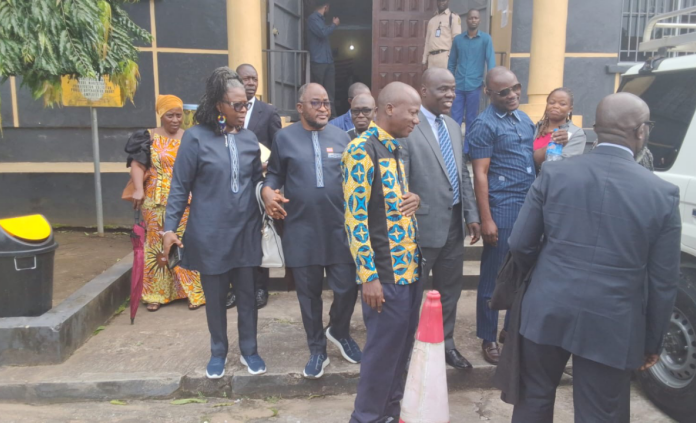
MONROVIA — The effort by former Deputy Minister and Chief of Protocol Nora Finda Bundoo to secure her release from detention has entered another critical stage, as Criminal Court “C” continues to examine the insurance company backing her US$6 million criminal appearance bond.
By Willie N. Tokpah
Wednesday’s proceedings shifted attention away from the underlying criminal allegations against Bundoo and toward the credibility, authority and financial strength of American Casualty Insurance Company of Liberia (ACCICO), which has presented itself as the surety for the former government official.
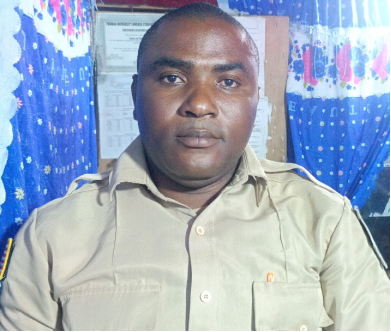
The court’s scrutiny intensified after ACCICO General Manager Alieu V. Sheriff acknowledged that an incorrect business registration certificate had initially been attached to the bond documents. Sheriff attributed the mix-up to an administrative mistake by his secretary, who, according to his testimony, mistakenly inserted the registration certificate of another company into the bond file.
Although the admission gave the prosecution additional grounds to challenge the surety, Sheriff maintained that the mistake was merely clerical and did not undermine ACCICO’s legal existence or its ability to undertake the US$6 million obligation.
The issue emerged during the ninth day of jury proceedings in the August Term of Court, where Bundoo’s lawyers are attempting to establish that the surety presented on her behalf satisfies the legal requirements for her release.
A Bail Dispute Becomes a Corporate Examination
The prosecution is not only questioning whether the documents accompanying the undertaking are valid but is also seeking to establish whether ACCICO has the legal authority and financial resources necessary to fulfill the promise it has made to the court.
Sheriff told the court that the correct ACCICO registration certificate was available and identified the document when it was presented to him.
Bundoo’s legal team requested that the document be admitted into evidence. Judge Ousman F. Feika, who is presiding over the proceedings, allowed it to be marked as Exhibit M/1.
The prosecution objected to the document on the grounds that the copy presented was a photocopy rather than the original. Sheriff nevertheless confirmed that the document shown to him represented ACCICO’s legitimate registration certificate.
The disagreement over the certificate has become significant because the prosecution is attempting to establish whether every component of the bond meets the required legal and evidentiary standards.
Authority to Commit US$6 Million
Another major issue raised during the hearing was whether ACCICO’s General Manager had sufficient authority to bind the company to a US$6 million criminal appearance bond.
The prosecution questioned the absence of a separate board resolution specifically authorizing the undertaking. Sheriff rejected the suggestion that an individual board resolution was required for every bond issued by the company.
He argued that issuing insurance bonds forms part of the normal operations of an insurance company and that requiring a fresh board resolution for each transaction would interfere with the ordinary conduct of business.
His testimony placed before the court a broader corporate governance question: whether the authority attached to his position as General Manager was sufficient to commit ACCICO to an undertaking of such magnitude. Sheriff maintained that it was.
General Manager Takes Responsibility for Signature
Questions were also raised concerning the identity of the person who executed the bond. During testimony, Sheriff told the court that he personally signed the US$6 million undertaking.
He further indicated that he would be able to authenticate his signature if the bond were presented to him. His response was aimed at addressing concerns over whether the document had been executed by an authorized representative of the insurance company.
However, establishing who signed the bond was only one part of the prosecution’s wider challenge. The State also wants the court to determine whether the person who signed the undertaking had sufficient corporate authority to expose ACCICO to a potential US$6 million liability.
Can ACCICO Carry the Financial Burden?
The financial standing of ACCICO emerged as perhaps the most consequential issue during the proceedings. The prosecution questioned whether the insurer possesses sufficient assets to satisfy the bond if Bundoo fails to comply with the conditions of her release.
The State’s concern also extends to other bonds that ACCICO may already have issued. Prosecutors are examining whether existing obligations could reduce the company’s ability to meet the US$6 million undertaking. Sheriff, however, defended ACCICO’s financial position.
He testified that the company has sufficient capacity to issue the bond and asserted that its bank balance could cover the US$6 million obligation.
He also maintained that issuing Bundoo’s bond would not prevent the company from undertaking other legitimate obligations. But his testimony faced another challenge when prosecutors asked whether ACCICO had outstanding loans, judgments, attachments or other financial encumbrances that could affect its assets.
Sheriff acknowledged that he did not know whether such obligations existed. That response introduced another layer into the dispute, as the prosecution appeared interested in determining whether ACCICO’s stated financial capacity takes into account all of its potential liabilities.
The court could therefore be required to look beyond the insurer’s assertion that it has sufficient funds and consider documentary evidence showing the company’s actual assets, liabilities and outstanding commitments.
Regulatory Certification Enters the Debate
In defending ACCICO’s ability to stand as Bundoo’s surety, Sheriff also pointed to the company’s regulatory relationship with the Central Bank of Liberia.
He testified that insurance companies are required to provide audited financial statements to the regulator and that ACCICO had submitted its financial information as part of the certification process.
According to Sheriff, the company received certification indicating that it met the requirements to operate and issue insurance bonds.
The testimony was presented as evidence of ACCICO’s financial and regulatory standing. However, when prosecutors sought additional information concerning financial records and documents submitted to the Central Bank, Sheriff indicated that questions about some of those records should be directed to the regulator.
That exchange could become important if Judge Feika must ultimately determine how much weight should be given to regulatory certification in assessing the insurer’s capacity to guarantee a US$6 million court bond.
Bundoo’s Legal Team Fights to Preserve Release Bid
For Bundoo, the bond dispute represents a crucial part of her ongoing legal battle. Her lawyers — Cllrs. M. Wilkin Wright, Abraham W. Simpson and Abel Nigh — are seeking to convince the court that ACCICO is a legitimate and financially capable surety and that the bond should therefore be accepted.
The prosecution, meanwhile, has mounted a detailed challenge through a team that includes Cllr. Edwin K. Martin, Cllr. Jerry Galawolo, Cllr. Peter Kekulah, Cllr. Wellington Bidell, Cllr. Tommy Dogbah, Cllr. Randolph D. Mo. Johnson and Cllr. Augustine Tehbleh Sr.
The State’s position centers on whether the court can confidently accept a US$6 million undertaking when questions remain concerning documentation, corporate authority and the insurer’s overall financial exposure.
Support Independent Journalism
Your support helps FrontPage Africa continue delivering independent, credible, and impactful journalism. Every contribution strengthens our ability to investigate, inform, and hold power accountable while keeping quality journalism accessible to our readers.
Support our journalism or subscribe to receive the latest FrontPage Africa stories and updates.