LOWLAY TOWN, Nimba County – The Low Kwadoe farming group here had been using traditional methods of rice cultivation for generations, passed down from their parents. In recent years, the effects of climate change cut production sharply.
By Jerome Saye with New Narratives
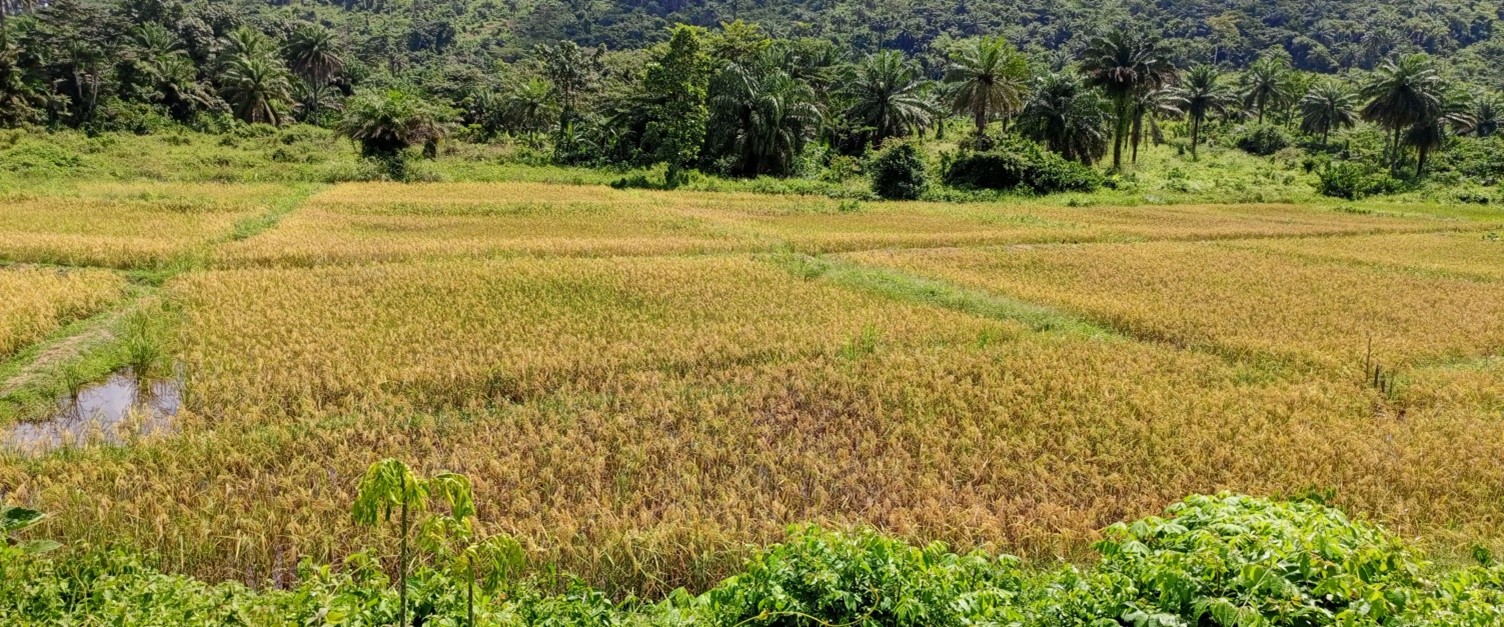
Today, the group, predominantly women who only farm to sustain their families, is harvesting lowland rice at a sustainable level, and they are pleased with the crop. The farmers credit a new so-called “climate smart” agriculture approach.
Adapting to climate change remains a major challenge to farmers, where record-breaking losses have been reported. Worldwide global food yields could decline by as much as 30 percent by 2050 if farmers are not able to adapt to the effects of climate change, according to the Food and Agriculture Organization of the United Nations.
But here in Nimba, the women’s group is finally happy with this year’s rice production.
Yah B. Monluo, 41, is one of the farmers of Lowlay Town who say they have benefited greatly from the Climate Adaptation Project introduced by Volunteers for Sustainable Development in Africa (VOSIEDA), a Liberia- based civil society organization supporting grassroots development.
Monluo said the project provided seeds that can stand both high and low temperatures and also distributed farming tools.
“When we started this project,” Monluo said. “VOSIEDA has been helping us with working tools and VOSIEDA was able to give us rice we plant. I think you can see the rice.” She points excitedly at the growing plants.
Funded with a $US1.9 million grant from the Swedish Embassy in Monrovia, the project targets more than 3,600 farmers in Nimba’s six administrative districts: Sanniquellie Mah, Bain Garr, Yarmien, Zoe Geh, Twah River and Gbehlay Geh.
The project is one of a range of urgent projects being undertaken across Liberia to help farmers adapt to climate change. Higher temperatures and erratic rainfall have put a heavy strain on Liberia’s large population of subsistence farmers who rely on what they grow to survive. Projects like this introduce smarter approaches that allow farmers to grow more resilient crops. This project prioritizes lowland rice cultivation because those fields hold more water in times of drought. It also helps to protect forests because the farmers cut down fewer trees.
According to the World Bank, growth in Liberia’s agricultural sector jumped to 5.9 percent in 2022 from 3.3 percent growth in 2021. Increased crop production, especially rice produced primarily for domestic consumption, was the main driver of that growth. The World Bank’s Fourth Edition of its annual “Liberia Economic Update, Getting Rice Right for Productivity and Poverty Alleviation,” launched in July last year, indicated that this milestone was achieved because of local farmers in Liberia practice of climate-smart agriculture that some agriculture organizations like VOSIEDA are involved with.
But there is a long way to go to meet Liberia’s demand. Increasing rice production is an urgent priority with potential risks to security. Rice makes up over 20 percent of the food Liberians eat and accounts for nearly half of the calorie intake of adults the report found. Liberia produces only about of the third of the rice it needs. The rest comes from overseas at steep prices. Hikes in prices of rice have regularly caused riots and political tension.
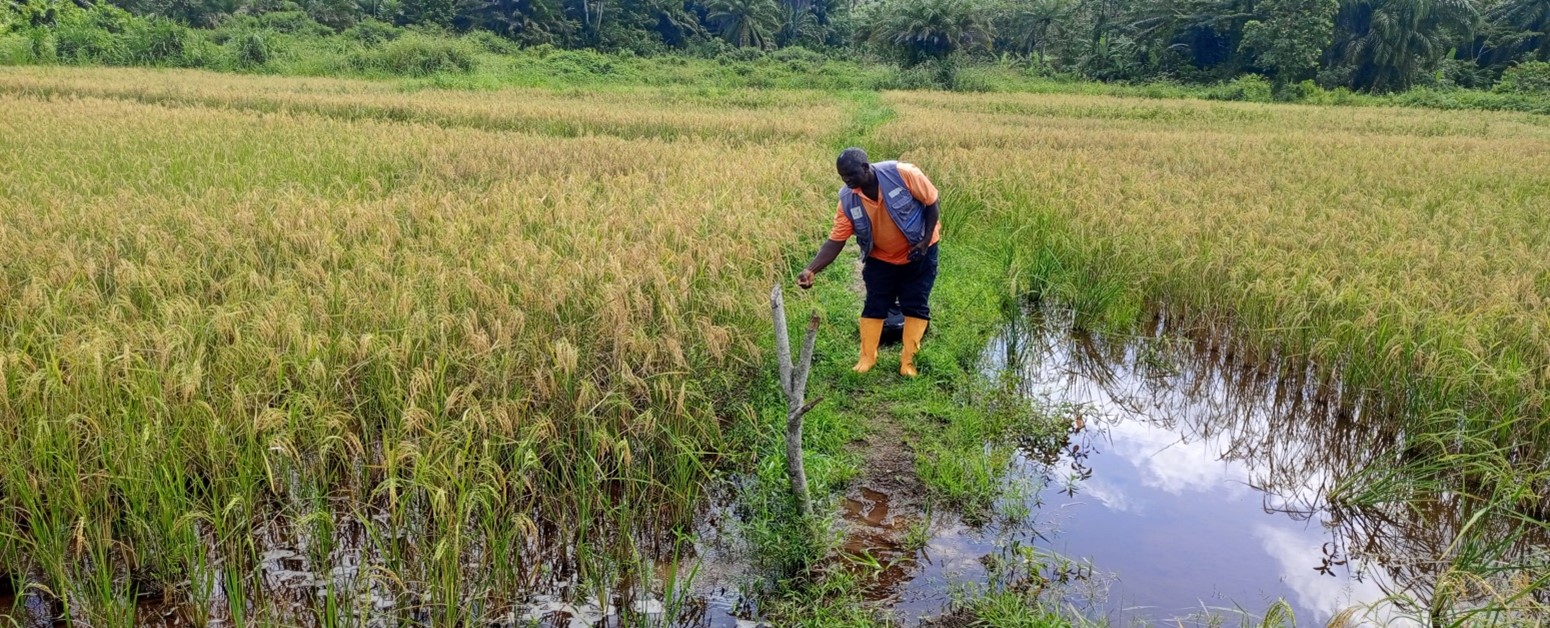
Parkinson Zuweh, 67, is a senior agriculture technician for VOSIEDA. Zuweh wants to see local farmers divert their attention from shifting cultivation – a process of clearing plants and trees to cultivate a parcel of land for a few years and then abandoning it until its fertility restores. Zuweh said this is labor-intensive and climate unfriendly.
“Shifting cultivation is not the best practice for now. It will cut down the forest and we do not have forest in the first place. And the forest can be preserved to give us other benefits instead of just cutting down the forests and planting rice,” Zuweh said.
Under the climate adaptation project, VOSIEDA is distributing to farmers Nerica L 19 seeds that are robust enough to withstand drought and flooding.
“The Nerica L 19 is one of the hottest rice now in the world that has to do with a whole lot of resistance against the climatic conditions”, said Zuweh.”When there is too much sunshine, this rice can withstand it. When there is too much water, this rice can stand the weight”.
Experts say Liberia must adapt quickly to climate change. There is a lot at stake. The large population of subsistence farmers are already feeling a devastating impact from higher temperatures and erratic rainfall. Deforestation is also risking the country’s biodiversity. Inhabitants of low-income countries like Liberia are most severely impacted.
Liberia has been hit with a wave of disasters including higher than normal temperatures and major flooding. Liberia saw excessive rainfall in many communities with the highest flooding reported in the North-Eastern counties: Grand Cape Mount, Bong, and Montserrado. In total, around 15,200 people were reported to be affected by both urban and coastal floods that swept away infrastructure, fishing settlements, houses, and community facilities.
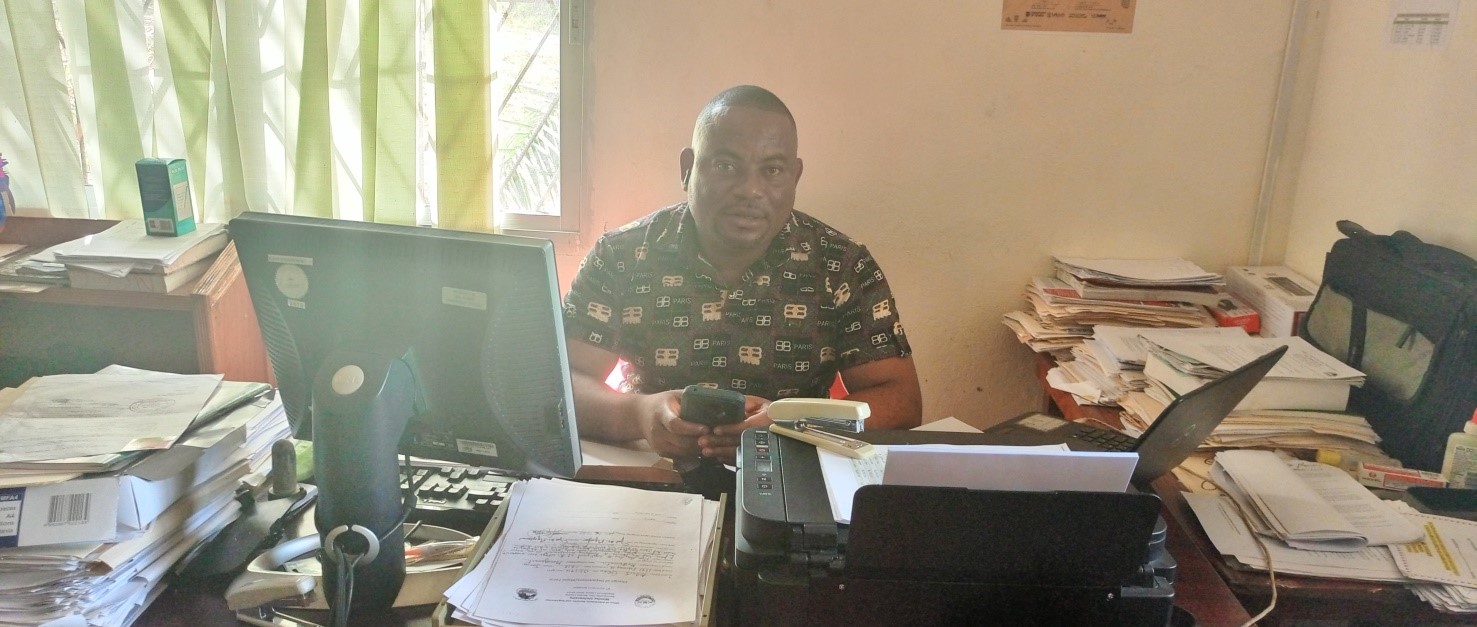
Allen W. Zorh, 36, the academic coordinator of the College of Food Sciences at Nimba 2University, emphasized the importance of integrating climate-smart agriculture practices into local farming. He underscored the significance of adopting resilient crop varieties and promoting sustainable farming techniques that will enable Liberian farmers to adapt to Liberia’s changing climate.
“For us in the field of agriculture now we are into climate-smart agriculture,” Prof. Zorh said. “That has to do with the planting of improved resilient varieties. It might either be a seed, a clone or a seedling that will help withstand the tension. When I say tension, I mean the intensity of the solar radiation that has to do with too much sunshine and erratic rainfall.”
As an advocate of increased investment in agriculture research and technology to develop climate-resilient crops and improve agriculture productivity Zorh stressed the need for more research to identify seeds or seedlings that can withstand flooding. By harnessing advancements in Science and Technology, Liberian farmers could adapt to the evolving conditions, he said.
Zorh rejected proposals – such as that push heavily by Liberia’s outgoing president George Weah – to allow polluting countries to pay a carbon credit to the governments of poor and heavily forested countries like Liberia in return for protecting their forests. He wants big factories to invest in research groups instead of giving money to the government.
“Scientists must go to work, give agriculture import that will adapt to the prevailing situation. Because we were born in farming and we are farmers and our people will continue to make farm,” said Zorh.
This story was a collaboration with New Narratives. Funding was provided by the American Jewish World Service. The funder had no say in the story’s content.
Support Independent Journalism
Your support helps FrontPage Africa continue delivering independent, credible, and impactful journalism. Every contribution strengthens our ability to investigate, inform, and hold power accountable while keeping quality journalism accessible to our readers.
Support our journalism or subscribe to receive the latest FrontPage Africa stories and updates.