MONROVIA – A religious group calling itself Independent Council of Liberian Churches (ICLC) is calling on the Government of Liberia (GOL) to make available the amount of US$250,000 from the emergency stimulus package to support pastors and their dependents during this state of emergency.
Report by Obediah Johnson, [email protected]
On April 14, 2020, President George Manneh Weah as part of his administration’s effort to combat the coronavirus, proposed a US$25 million COVID-19 relief package to the National Legislature.
In a joint resolution, the National Legislature on April 17, 2020 adopted the President’s proposal with several changes, including the expenditure of the US$25million to be disbursed through a recast budget, and the extension of the state of emergency from 21 to 60 days.
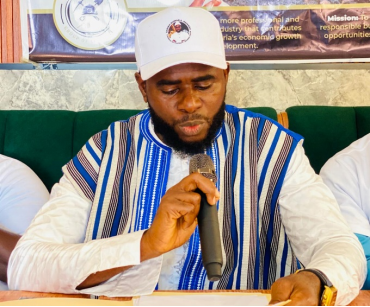
In a statement issued in Monrovia on Wednesday, the group’s Founder and President Bishop Dr. Rudolph Q. Kwanue Sr. disclosed that “most of the self-governing pastors and local churches are only surviving by the little tithes paid by their little congregation with about 50 worshippers” during this period in Liberia.
“The closure of worship centers across the nation has led many of our self-governing pastors and local churches operations to limbo. Lives have been very difficult for all our local churches and independent pastors who are not under denominations or under well-established churches with huge auditoriums and many members,” he stated.
Bishop Kwanue maintained that the incomes of these small churches are very little to cater to pastors and their dependents during this time of the coronavirus outbreak.
He said Covid-19 is an “unexpected crisis” and many pastors are not financially prepared to fight this war without food to support their families and other dependents during this lockdown period.
He added that pastors in Liberia have “been there for the country in many difficult situations in the day, noon and night times” and as such, it is now time for government to provide support to these clergymen and their respective congregations during this pandemic.
“Liberian pastors have been called upon to intervene for the country when difficulty arises but their efforts have usually been paid less attention, which is not acceptable to God. Some good examples are: during the 14-year civil war in Liberia, Ebola crisis, and many political crises in the country”.
Bishop Kwanue continued: “Since the declaration of the state of emergency, it is important that the Government of Liberia thinks about our Spiritual Heroes, this is a good time for NGOs, Humanitarian Organizations and even politicians to look into the places where they can find poor people”.
The ICLC Founder and president indicated that the “Church has many poorest people with double physical, social and metal challenges who have been abandoned by their immediate relatives, father, mother, uncles, wives and husbands”.
According to him, these vulnerable and less fortunate citizens are now the “heavy load” for their Pastors and the Churches.
“Some of these pastors have many dependents; some are aiding as guardians (over 20 persons. orphans, widows, blind and the under privileged) .What importance is it that people donate to institution or individual that is already well established and financially equipped than to support the little organizations helping within the community”.
“The closure of worship centers across the nation has led many of our self-governing pastors and local churches operations to limbo. Lives have been very difficult for all our local churches and independent pastors who are not under denominations or under well-established churches with huge auditoriums and many members.”
ICLC Founder and President Bishop Rudolph Q. Kwanue, Sr
Bishop Kwanue furthered: “With the above challenges people are faced with today, the Independent Council of Liberian Churches is recommending that the US$25million that has been approved by the Liberian Government, the Church allocation should be included with the requested amount of US$250, 000 to help us survive this unfortunate situation”.
He pointed out that though the ICLC has initially requested its Pastors and members across the country to continue to adhere to government’s regulations against social gatherings which led to the suspension of church worship services, 99% of pastors want the lives of their members to be protected at this time.
He disclosed that since the outbreak of Covid-19 in Liberia, about 74 different Churches, Pastors, and Christian Organizations have submitted their concerns to the ICLC, though the organization is faced with numerous constraints presently.
Bishop Kwanue noted that though officials and members of the group are will remain peaceful and law-abiding during these critical times, government should also see reason to respect the works of clergymen by allotting a significant portion of the stimulus package for them and their dependents sustainability.
“When the $250,000 is approved, the Independent Council of Liberian Churches with her sub branches across the Country will try to help distributes materials, foods, and little packages with them across the country. We are envisioning reaching out to about 50 thousand Churches, Pastors and poor families across the 15 political sub divisions of the country”.
Bishop Kwanue added that religious leaders, particularly pastors should not be overlooked or neglected during these difficult times in Liberia because they are most often needed during community initiatives, fast and prayers, moral and social education, marital relationship, dedications of homes, babies, burial services, among others.
He added that if the coronavirus pandemic is to be eradicated from Liberia, the welfare of Pastors must be prioritized and taken seriously.
At the same time, the ICLC Founder has called on government to provide support to private school teachers in Liberia.
According to him, private school teachers across Liberia are “crying” because, they are unable to provide the basic necessities for them and their respective family members.
Support Independent Journalism
Your support helps FrontPage Africa continue delivering independent, credible, and impactful journalism. Every contribution strengthens our ability to investigate, inform, and hold power accountable while keeping quality journalism accessible to our readers.
Support our journalism or subscribe to receive the latest FrontPage Africa stories and updates.