At UN Event, Liberian Envoy Calls for Cross-Border Cooperation, Financial Intelligence Sharing and Increased Investment in Prevention
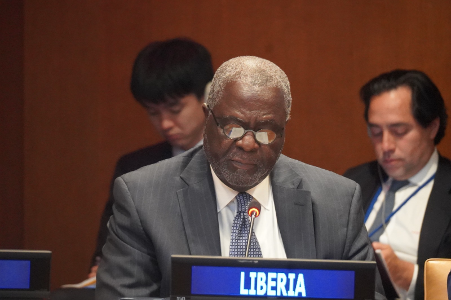
NEW YORK – Liberia’s Ambassador to the United Nations, Lewis G. Brown II, has outlined three key priorities for combating transnational organized crime, calling for stronger international cooperation, improved financial intelligence sharing and greater investment in prevention programs.
Ambassador Brown made the recommendations on Monday, November 23, 2026, during a high-level event at the United Nations Headquarters in New York marking the International Day for the Prevention and Fight against All Forms of Transnational Organized Crime.
He described organized crime in the 21st century as an increasingly serious threat to international peace and security, sustainable development and human rights worldwide.
Presenting his three priorities, Ambassador Brown first emphasized the need for effective cross-border cooperation, particularly in enabling countries to request and share relevant evidence to strengthen criminal investigations and prosecutions.
Second, he called for greater collaboration among financial intelligence units and investigators to trace illicit financial flows, share relevant information and facilitate the legal recovery of proceeds generated through criminal activities.
His third priority focused on prevention, urging increased investment in programs that support young people, particularly by expanding access to drug-dependence treatment services within their communities.
Ambassador Brown stressed that Liberia understands the challenges involved in rebuilding public trust in state institutions. He said communities should not be left to bear the consequences of criminal activities while the proceeds are transferred and concealed across national borders.
He further emphasized that recovering proceeds from organized crime networks and intervening early to support vulnerable young people are essential to preventing the recurrence of criminal activities and strengthening peace.
“Every time we recover what these networks have stolen, we deny them some of the means to do it again. Every time we reach a young person before they do, we give peace a better chance to last,” Ambassador Brown said.