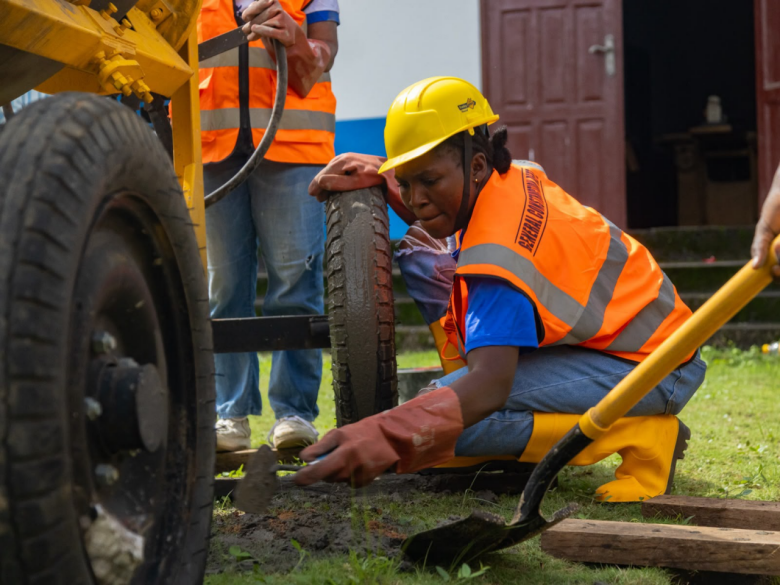
MONROVIA — The European Institute for Cooperation and Development (IECD) Liberia, through the French Development Agency (AFD)-funded Strengthening Integration Through Vocational Education (STRIVE) Project, is working to address gender inequalities and expand career opportunities for women and girls in traditionally male-dominated technical and vocational fields.
By Francis G. Boayue
The initiative seeks to challenge longstanding stereotypes that discourage women from pursuing careers in electricity, plumbing, automotive technology, masonry, woodwork and renewable energy.
Despite the employment and entrepreneurship opportunities offered by Technical and Vocational Education and Training (TVET), women continue to face barriers, including discrimination, financial constraints, transportation difficulties and limited institutional support.
A gender analysis conducted during the design of the STRIVE Project identified women’s underrepresentation in higher-value technical trades and the need for more inclusive training environments.
In response, IECD developed a Gender Action Plan aimed at improving female enrolment and retention, strengthening safeguarding mechanisms and supporting women’s transition into employment and entrepreneurship.
The interventions include gender-sensitive training for instructors, Girls’ Clubs, scholarships, Female Career Days, awareness campaigns and partnerships with private sector institutions.
Jennie T. Barclay, IECD Liberia’s Gender Officer, said the initiative seeks to build women’s confidence and ensure that career choices are determined by individual interests and abilities rather than gender stereotypes.
At the Accelerated Vocational Training Program (AVTP), Gender Focal Person and Guidance Counselor Rakiatu Love Deen disclosed that female participation in some technical courses remains significantly low.
She said some classes have approximately 200 male students compared to only two females, particularly in electricity, electronics, plumbing and woodwork.
Deen recalled a female automotive student who faced discouragement from male classmates but persevered and graduated with excellent results.
Meanwhile, Lily Olive Saah, a graduate of the Liberia Opportunities Industrialization Center (LOIC), said technical training helped her pursue opportunities in renewable energy.
Saah, who serves as administrator of the Liberia Energy Practitioners Network, encouraged women to pursue technical careers despite existing challenges.
According to project figures, women accounted for 37 percent of students supported, while female trainers represented 22 percent of trainers reached.
The project also trained 270 vegetable farmers in Bong County, including 81 women, and supported 30 women through land-rights training.
As the STRIVE Project concludes, IECD is emphasizing the need for government institutions, vocational training centers and private sector partners to sustain efforts toward gender equality and inclusive employment opportunities.