MONROVIA – Another significant milestone has again, been marked in the country’s history as President Joseph Nyuma Boakai, on behalf of the nation and its people, officially launched Liberia’s new Foreign Policy Statement and Foreign Policy Outlook, a first of restatement of the country’s foreign policy in more than 50 years.
By Emmanuel Weedee-Conway
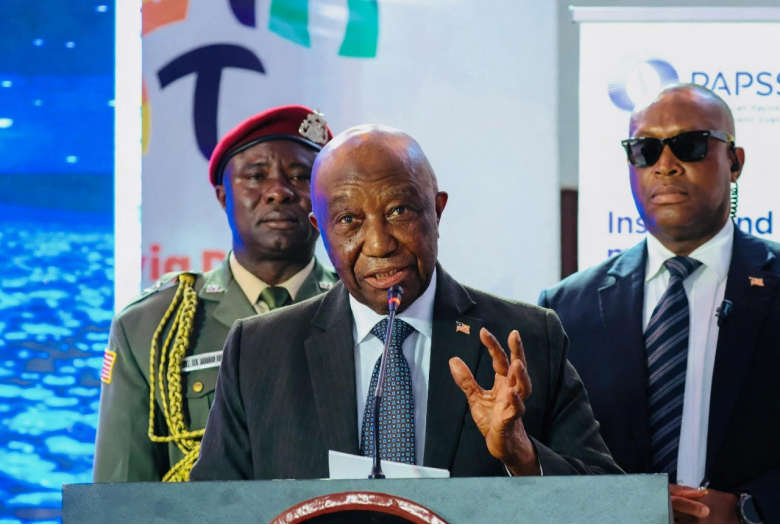
The launch, held at the Ministry of Foreign Affairs, President Boakai stated, represents a significant milestone in Liberia’s diplomatic history and comes at a critical time as the country prepares to assume the Presidency of the United Nations Security Council.
President Boakai told the gathering of compatriots and diplomats that the new policy reflects a new chapter in the country’s history as it reflects changes in the global political and economic landscape while reaffirming Liberia’s commitment to sovereignty, international cooperation, regional integration, peace, and sustainable development.
“Today, we mark a historic milestone. For the first time in more than 50 years, Liberia has restated its foreign policy. The world has changed greatly in that time, and so has Liberia,” President Boakai asserted.
He pointed out that Liberia’s foreign policy would be guided by respect for the sovereignty and territorial integrity of all nations, non-interference in the internal affairs of other countries, and stronger cooperation with neighboring states, Africa, and the international community.
Five Strategic Pillars of the New Foreign Policy
The Liberian leader outlined five strategic pillars underpinning the new foreign policy: resilience and protection of national sovereignty, economic diplomacy, protection of Liberian citizens and diaspora engagement, leadership in regional and global peace and security, and technological competitiveness.
Economic Diplomacy and Investment Opportunities
On economic diplomacy, the Liberian chief executive stressed that the country’s diplomatic missions must become active instruments for attracting investments in key sectors, including agribusiness, mining, infrastructure, tourism, manufacturing, and the digital economy.
He also underscored Liberia’s commitment to taking full advantage of the African Continental Free Trade Area (AfCFTA), while ensuring that the country’s natural resources, including minerals, forests, and land, are managed transparently for the benefit of its citizens.
Protection of Liberians and Diaspora Engagement
Addressing with regards to national asset, President Boakai emphasized the importance of protecting citizens overseas while encouraging them to contribute their skills, investments, and international networks to national development.
Liberia’s Role in Regional and Global Security
On regional and international security, he referenced Liberia’s election to its first full term on the United Nations Security Council in June 2025, when 181 countries voted in support of the country’s membership.
“We once sat on the Council’s agenda; today, we sit at the Council’s table,” he declared, adding that Liberia would use its membership to promote democratic governance, regional integration, and peace within the Mano River Union, ECOWAS, the African Union, and the United Nations.
Technological Competitiveness and National Development
The President also highlighted technological competitiveness as a key component of the new policy, stressing that Liberia must embrace emerging technologies to enable its young people to compete and lead in the global economy.
According to him, the country’s foreign policy will remain closely aligned with domestic development priorities, particularly the government’s ARREST Agenda for Inclusive Development, with every diplomatic engagement and international partnership expected to deliver tangible benefits to the Liberian people.
Feminist Foreign Policy and Women’s Empowerment
President Boakai further emphasized the importance of women’s participation and empowerment, describing the new foreign policy as feminist in its content but inclusive of all Liberians.
He recalled the historic role played by Liberian women in the country’s peace process, noting that their contribution to ending the civil conflict remains an example studied internationally.
“A nation cannot reach its full potential while half of its people are held back. And a foreign policy cannot be credible abroad if it is not just at home,” he stated.
Calls for Collective Ownership and Implementation
Speaking further, the Liberian leader expressed appreciation to international partners for their continued support and commended the Ministry of Foreign Affairs, particularly the Minister of Foreign Affairs, for leading the process that culminated in the development of the policy.
He also called on government institutions, civil society organizations, and the private sector to take ownership of the policy, warning that its success would depend on effective implementation rather than its adoption on paper.
“A policy on paper is only the beginning; what matters is what we do next,” he stressed.
President Boakai concluded by formally declaring the Foreign Policy Statement and Foreign Policy Outlook launched, describing the occasion as another important step in Liberia’s efforts to strengthen its international standing and contribute meaningfully to global peace and prosperity.
The launch follows the recent unveiling of the government’s Yellow Machines initiative and the Peace Museum, which the President described as part of broader efforts to advance national development and reconciliation.
Min. Nyanti Calls for Inclusive and People-Centered Diplomacy
In remarks, Foreign Minister Sara Beysolow Nyanti called for a new diplomatic direction that places women’s empowerment, economic development, national sovereignty, and international cooperation at the center of Liberia’s engagement with the global community.
Minister Nyanti stressed the need for a foreign policy that reflects changing global realities while repositioning Liberia as an active contributor to international affairs.
She highlighted the policy’s feminist and inclusive character, stressing the importance of women’s participation in peacebuilding, national decision-making, and diplomatic engagements.
Liberia’s Historical Role in International Affairs
Minister Nyanti also underscored Liberia’s historical role in international affairs, particularly its contribution to African liberation, the establishment of the United Nations, and the historic involvement of Liberian women in the country’s peace process.
Economic Benefits and Global Peace
On economic diplomacy, she stressed that Liberia’s international relationships must translate into tangible benefits for citizens through increased investment, trade, development partnerships, and stronger economic cooperation.
She further called for Liberia to maximize its position on the United Nations Security Council to advance global peace, democratic governance, regional stability, and the interests of developing countries.
Collective Ownership of the New Foreign Policy
The Foreign Minister then emphasized that the success of the new policy requires collective ownership and participation from all sectors of society, including government institutions, the private sector, civil society organizations, women, and young people.