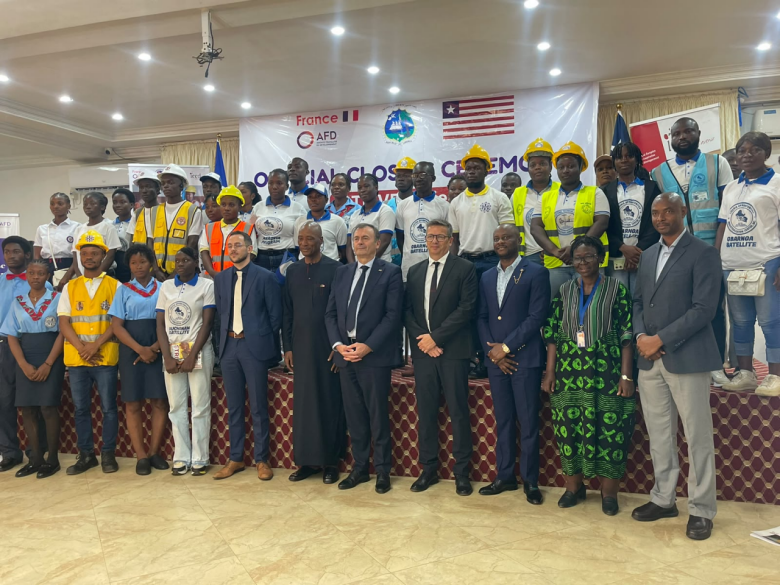
MONROVIA – The Strengthening Integration Through Vocational Education (STRIVE) Project has supported more than 2,000 young Liberians over six years, strengthening technical and vocational education and training (TVET), while calling for sustained government commitment to preserve its achievements.
By Francis G. Boayue
The project, implemented by the European Institute for Cooperation and Development (IECD) in collaboration with the Ministries of Youth and Sports and Education, with funding from the French Development Agency (AFD), operated from July/September 2020 to November 12, 2026, across Montserrado, Margibi, Grand Bassa, and Bong Counties providing practical skills training in electricity, hospitality, masonry and agriculture.
Speaking at the project’s final recognition event in Monrovia, French Ambassador to Liberia, Dominique Pierre Delpuech, described technical and vocational education as a critical driver of Liberia’s economic and social development.
He said developing a skilled workforce was essential to strengthening productive sectors, expanding employment opportunities and supporting the country’s economic transformation.
Delpuech noted that despite investments in vocational training, unemployment and limited employability opportunities remain significant challenges, particularly as many Liberians depend on informal employment characterized by low productivity and limited professional development.
He urged the government, particularly the Ministries of Education and Youth and Sports to take ownership of the project’s achievements by maintaining training facilities and equipment, mobilizing resources and ensuring continuity of its programs.
The French envoy also emphasized the need to strengthen connections between vocational institutions and the private sector to create opportunities for internships, apprenticeships and employment.
He said vocational training must extend beyond acquiring technical skills to empowering young people to become productive contributors to national development.
Also speaking, Lorpu Scott, Programme Officer at the European Union Delegation to Liberia, commended AFD for its financial support and IECD for implementing the initiative alongside local partners.
Scott said investment in skills development represents an investment in people, decent employment and Liberia’s future, emphasizing the importance of national ownership and continued private-sector engagement.
She encouraged beneficiaries to apply their skills, creativity, and integrity toward the country’s development.
For his part, Harry Doblah, IECD Training and Learning Manager, said that although STRIVE was concluding as a project, its impact would continue through the skills acquired and young people now engaged in dignified work.
The initiative also strengthened Liberia’s TVET system through national curriculum development, quality assurance frameworks, instructor training, institutional capacity building and gender inclusion, including encouraging young women to enter traditionally male-dominated technical fields.
The project further supported market gardeners with agroecological skills to improve sustainable agricultural production.
Doblah officially declared the final recognition event open, emphasizing that sustaining the project’s achievements remains a shared responsibility among government, development partners, training institutions and employers.
Support Independent Journalism
Your support helps FrontPage Africa continue delivering independent, credible, and impactful journalism. Every contribution strengthens our ability to investigate, inform, and hold power accountable while keeping quality journalism accessible to our readers.
Support our journalism or subscribe to receive the latest FrontPage Africa stories and updates.