
October 8, 2026
In a single interview, Deputy Minister for Urban Affairs Fatima Bintu Sirleaf announced that Sinoe County, which had 44 cities, now has one. Maryland kept two of seventeen and Grand Kru lost 32. Lofa kept three of its six, namely Voinjama, Foya and Kolba. Margibi lost Marshall because, in her words, it did not meet criteria, while Nimba kept all six of its cities. Nobody disputes that cities should meet standards. What the country must settle is who holds the power to declare that a city has failed them.
By James Papy Kwabo
The Constitution speaks to that question first. Article 1 declares that all power is inherent in the people, and Article 2 makes the Constitution binding on every authority in the Republic. Article 3 commits Liberia to separation of powers and checks and balances. The people exercise their power over the structure of local government through the Legislature, and the Local Government Act of 2018 is the law through which they have done so.
That Act is explicit about who creates cities. Section 9.2 provides that counties, cities and townships are established by the Legislature. Sections 2.16d and 2.16e set the minimum criteria for chartering cities, townships and boroughs, and they place the duty of ensuring those criteria are met on the National Legislature. The Minister is not named in any of these provisions. Nothing in the Act authorizes the Minister to establish a city, abolish one, or change its status.
The role the Act does give the Minister appears in Section 2.16c, and it is a reporting role. Existing cities keep their legal status. Seven years after the Act’s passage, the Minister reports to the Legislature on each of them for the purpose of reaffirmation. The Act was signed in September 2018, so that report fell due in 2025. The Minister reports and the Legislature reaffirms.
Officials may point to the next sentence of the same section, which says cities that fail the criteria shall be relegated to town status. That sentence names no actor, and it sits inside the very section that sends the Minister’s report to the Legislature. Read with Section 9.2, it describes a consequence the Legislature may attach after receiving the report. It does not hand the Legislature’s power to a ministry. If the Ministry claims authority for what the Deputy Minister announced, it must cite the provision that grants it, and the Local Government Act contains none.
The announced list also fails to hold together on the Act’s own terms. Section 2.16b designates every county capital a city by statute, and the review in Section 2.16c applies to cities other than the national and county capitals. Greenville, Cestos City, Tubmanburg, Robertsport, Harper, Voinjama, Buchanan, Kakata, Gbarnga and Fish Town are all county capitals, whose standing was never open to review, so counting them as cities maintained overstates what the exercise tested.
Once the capitals are set aside, the outcomes still call for an explanation. If one set of criteria was applied uniformly, how did Nimba keep all six cities while Sinoe lost 43 and Grand Kru lost 32? Only the Ministry’s data can answer that, and it has not been published.
Residents pay for this silence. Under the Act, cities have councils, wards and revenue funds. They collect business license fees, levy fines, and receive grants and transfers from the central government. Demotion to town status changes the money a community receives, who governs it, and whether its ordinances and contracts still stand. Nobody has said which mayors and councils are now without standing, or what becomes of city assets. The process the Act prescribes has not been completed, so these questions have no lawful answer yet.
The standard itself also measures things a city council cannot control. The criteria include piped water, sewage service, electricity, schools, health facilities, and transportation infrastructure, most of which depend on national investment. In my own county, work on the Gbarnga to Voinjama road connection did not begin until 2021. A city can fail a benchmark because the central government never built what the benchmark demands, and downgrading it then penalizes the community for the state’s own shortfall.
A city that cannot collect waste or run a clinic is failing its people, and measuring that is legitimate. The law simply requires that the measuring be followed by the process it prescribes, and that process makes three demands.
First, the Ministry must publish its full list, the data behind each decision, and the date it submitted the Section 2.16c report to the Legislature, or state that it has not. Residents of every affected community, from Kolahun to Fish Town to Greenville, are entitled to see how their city was measured. Second, the Legislature must say whether it has received that report. If it has, the report should be made public. If it has not, no city’s status has lawfully changed, and lawmakers should hold public hearings within thirty days, with affected councils and residents invited. Third, existing councils, officials and revenue arrangements must continue until lawmakers act.
Three senators raised this concern in May. Albert Chie, Numene Bartekwa and Augustine Chea petitioned the Senate, warning that dissolving municipalities without legislative action would violate the separation of powers. The Deputy Minister’s announcement bears out their warning. Decentralization means moving decisions closer to citizens, and that goal is defeated when a ministry decides in an interview what the Legislature created.
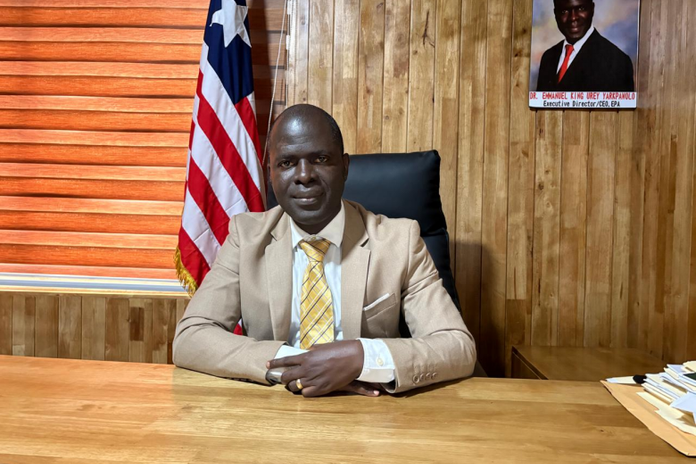
James Papy Kwabo holds a Master’s in Public Administration and lectures in Public Administration, Public Policy, Local Government Administration, and Communications and Media Studies at Lofa County University.
Support Independent Journalism
Your support helps FrontPage Africa continue delivering independent, credible, and impactful journalism. Every contribution strengthens our ability to investigate, inform, and hold power accountable while keeping quality journalism accessible to our readers.
Support our journalism or subscribe to receive the latest FrontPage Africa stories and updates.