TOSOR, Grand Cape Mount County — When the money reached some women in Grand Cape Mount County, it did more than put cash in their hands. It opened doors to small businesses, helped pay school fees, provided food for families and gave women greater control over their economic lives.
By Patience M. Jones, [email protected]
But for women benefiting from the Liberia Women Empowerment Project (LWEP), the opportunity has also come with challenges.
Some women in Tosor Community say they need more time to repay the funds, particularly as seasonal conditions make it difficult to generate enough income within three months. Others are still waiting for grants they say they were promised, while one group is seeking urgent intervention after an error in its payment processing left members with only a portion of the amount they expected.
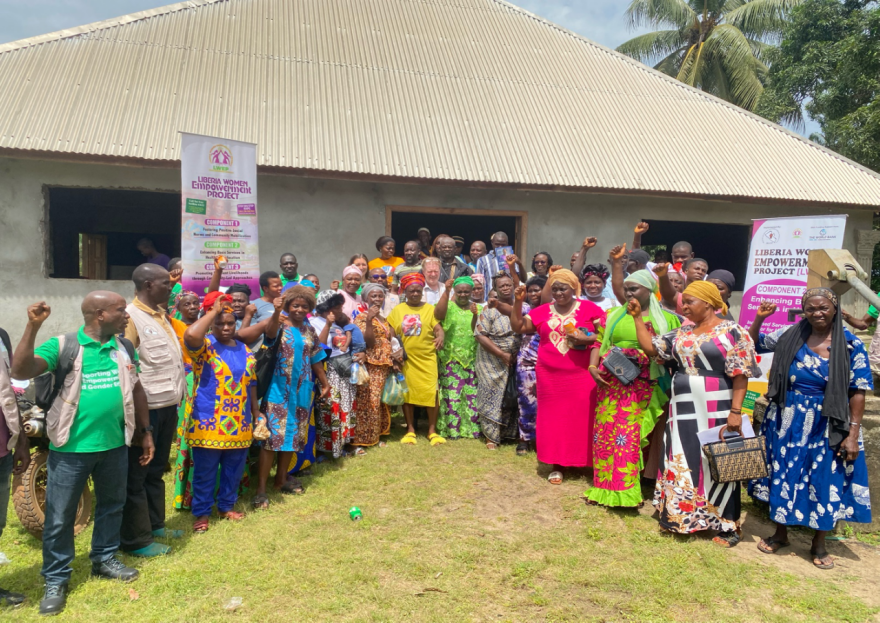
The concerns emerged Tuesday when the Ministry of Gender, Children and Social Protection (MGCSP), the World Bank and LWEP implementation partners visited Grand Cape Mount County for a technical review aimed at hearing directly from beneficiaries about the impact of the project.
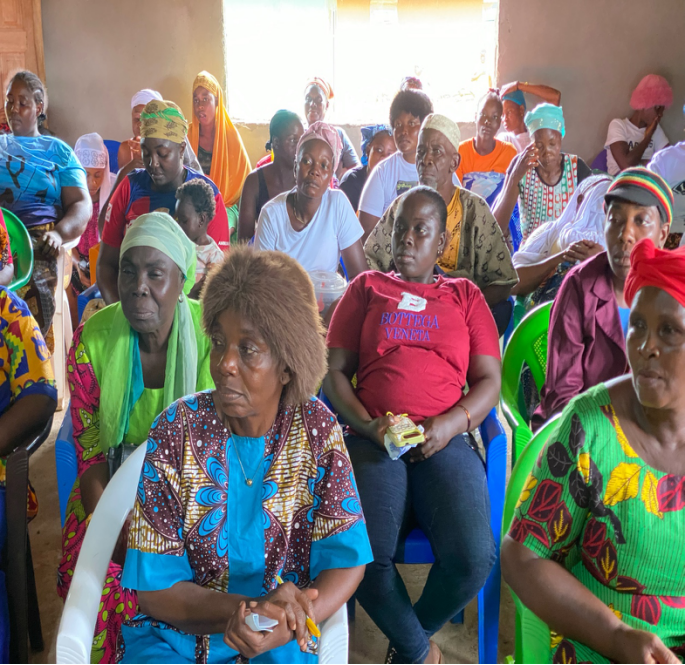
The visit brought together county authorities, community leaders, women beneficiaries, Village Savings and Loan Associations (VSLAs), health workers and other stakeholders.
The delegation was welcomed through traditional drumming, music and the presentation of white rice, kala and two white chickens by the town chief and community members.
But beneath the celebration was a more personal story: women who say LWEP has allowed them to improve their livelihoods, while also calling for changes they believe could make the support more sustainable.
‘The Money Is Helping Us Send Our Children to School’
For Sao G. Sando, a beneficiary and member of a village savings group, the project’s value goes beyond the money itself.
She said the training has taught women how to save, keep proper records, manage their businesses, and use borrowed funds responsibly.
Sando now sells water and soft drinks while encouraging other women in her savings group to expand their businesses.
For her, one of the clearest signs of the project’s impact is its contribution to children’s education.
“We tell you people thank you because you’re making us able to send our children to school, for them to be educated,” she said.
Sando said women are increasingly taking responsibility for the welfare of their children and households rather than depending entirely on others.
Her experience mirrors that of other beneficiaries who say access to small amounts of capital has allowed them to start or expand businesses and generate income for their families.
But not every woman has received the support.
When the Money Does Not Arrive
Korpu, Chairlady of the Women of Success group, said her members completed the required training and were prepared to invest their grant in their businesses.
Instead, a discrepancy in the payment process has left the group waiting.
According to Korpu, the group was expecting an US$8,000 grant, with an initial payment of US$4,000. However, US$4,000 was entered into the system as the approved amount and was subsequently split, resulting in a payment of US$2,000.
Korpu said the group rejected the amount because it did not correspond with the US$8,000 they had requested.
“We were told that $8,000 would be given to us,” she explained.
She said the delay has been particularly frustrating for members who had already planned businesses around the expected funding, including single mothers and older women.
Colonel Sharman, Chairlady of Women of Substance in Robertsport, said her group is facing a similar situation.
The group has not yet received its grant, despite completing the necessary training.
“We are dying hard for this grant,” Sharman said.
She said the existing village savings system has helped sustain the women while they wait, but the grant would provide additional capital to expand their businesses.
Project Explains Payment Error
An LWEP project representative acknowledged during the meeting that an error occurred in the processing of the Women of Success grant.
The representative explained that the group requested US$8,000, but a fee officer mistakenly entered US$4,000 into the system. That amount was then divided into two payments, resulting in the group receiving US$2,000.
Because of the project’s approval procedures, the technical team could not simply alter the amount without going through the formal process.
The project representative said the group was right to refuse to sign for an amount that did not correspond with its request.
He said formal communication would be sent to the Project Management Unit (PMU) to correct the error and facilitate payment of the appropriate amount.
He expressed hope that the matter could be resolved within the coming month.
For beneficiaries, however, the issue is not only about how much money they receive, but how much time they are given to make the money work.
‘Three Months Is Too Short’
Tarlor N. Kannedy of Togarana Savings Club in Gwonzudwa said the three-month repayment period is placing pressure on women whose businesses are affected by seasonal challenges.
She said the women appreciate the assistance but need enough time for their investments to generate returns, particularly during the rainy season when some businesses slow down.
“Even though we have the money, the three months is looking short to us,” Kannedy said.
She called for an extension of the repayment period or a system that would allow beneficiaries to operate through established village savings arrangements.
Under traditional village savings systems, members contribute regularly, borrow money, pay interest and, in some cases, extend repayment by paying additional interest.
Kannedy said such flexibility would allow women to grow their businesses without the constant pressure of a fixed three-month deadline.
“Even though it brings happiness to us, it brings tension to us in other ways,” she said.
Small Businesses, Big Responsibilities
For other women, the money has already produced visible changes.
Massa J. Fahbulla said she invested in the dry-fish business and uses the income to support her children, including paying school expenses and providing food.
Other beneficiaries reported investing in petty shops, cold-water businesses, dry goods and fishing.
A beneficiary from Toso United Savings Club said he received 25,000 Liberian dollars from his group and used it to purchase fishing nets.
He said the investment has helped him expand his fishing activities and repay the money within the first three months.
Massa J. Fahbulla said her group has also used project funds to provide loans to members and generate interest, allowing the money to circulate among women who need capital.
For these women, the project money is not simply cash received and spent. It is capital that must be managed, repaid, and reinvested.
Village Savings: A Lifeline Beyond the Grant
Across Grand Cape Mount County, women repeatedly pointed to village savings groups as one of the strongest foundations supporting their economic activities.
Some groups have existed for years, allowing members to save regularly, borrow money, pay interest, and reinvest their earnings.
Estella Nkenene, Chairlady of a village savings group in Robertsport, said her group has operated for about five years.
She explained that members contribute regularly and loans are given to trusted members based on their ability to repay.
When LWEP funds arrived, the group created a separate system to protect and manage the project money.
Nkenene said the group has generated interest by lending the money to members and is using the proceeds to increase the amount available for women.
“We don’t look at the project money as free money,” she said. “We will be checking on you.”
For Nkenene, accountability is essential because the money must continue benefiting women beyond the first cycle of beneficiaries.
Training Beyond the Money
Beneficiaries said the impact of LWEP extends beyond financial assistance.
Hawa Balla of Togetherness Savings Club said training taught members how to manage money, avoid using funds for prohibited activities and invest in productive businesses.
She said members returned from training and shared the lessons with others in their communities.
Another village savings leader said the project also provided training on climate-smart agricultural practices, including soil fertility, crop rotation and the use of organic materials to improve farming.
The women said the training has helped them think differently about managing businesses, savings and household income.
A Project Built Around Women’s Economic Empowerment
Abdullai Sheriff, Lead Service Provider Manager for LWEP, said the project is a five-year Government of Liberia initiative implemented through the Ministry of Gender, Children and Social Protection with financing from the World Bank.
He said the project is expected to run until June 2027 and is being implemented across six counties and 498 communities.
According to Sheriff, the project has an overall financing envelope of approximately US$44.6 million, including US$18 million allocated for grants.
He said LWEP is expected to reach approximately 267,200 people through interventions covering livelihoods, grants, gender-based violence prevention and response, education, community participation and accountability.
Sheriff encouraged beneficiaries to use the project’s grievance redress mechanisms to report complaints and seek solutions.
“We are here for you,” he told the beneficiaries, encouraging them to share their experiences, concerns and recommendations.
Who Is Behind LWEP ?
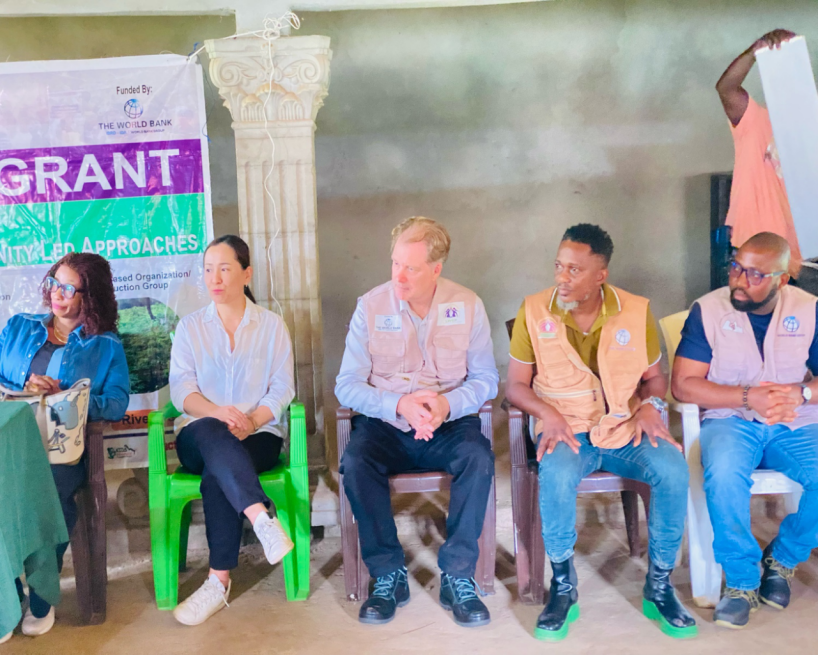
The Liberia Women Empowerment Project is a Government of Liberia initiative funded by the World Bank and implemented through the Ministry of Gender, Children and Social Protection (MGCSP).
The project is designed to strengthen the social and economic empowerment of women and girls by improving access to livelihoods and basic services, addressing harmful social norms, preventing and responding to gender-based violence, strengthening community participation and building institutional capacity.
Plan International Liberia serves as the Lead Service Provider, working with a consortium of partners that includes Catholic Relief Services (CRS), ActionAid Liberia, Medica Liberia, Defence for Children International (DCI), Foundation for Community Initiatives (FCI), Kids Educational Engagement Project (KEEP), Raising Voices, Women NGO Secretariat of Liberia (WONGOSOL) and VIAMO.
The project is being implemented in Montserrado, Bomi, Gbarpolu, Grand Cape Mount, River Cess and Grand Gedeh counties.
Its interventions include support for women-led businesses, Village Savings and Loan Associations, farmer-based organizations, grants, community mobilization, gender-based violence prevention and response, education and institutional strengthening.
From the Community to the Health Center
The technical review did not end with community meetings.
The delegation also visited a health facility in Robertsport, where members interacted with doctors, nurses and other health authorities.
Health workers discussed challenges affecting services for survivors of gender-based violence and other vulnerable community members.
The engagement provided the World Bank, MGCSP and project partners with an opportunity to hear directly from frontline health workers about gaps in service delivery and the needs of survivors.
Superintendent Welcomes Delegation
Grand Cape Mount County Superintendent Hon. Foley J. Kiatamba welcomed the World Bank, MGCSP and LWEP delegation to the county.
Kiatamba acknowledged the presence of government officials, development partners, community leaders and beneficiaries, saying the county appreciated the visit and the opportunities created through the project.
He assured the delegation of the county’s welcome and support.
Beyond the Numbers
For the women gathered in Tosor, the field visit was more than a routine project review.
It became a rare opportunity for beneficiaries to speak openly about what is working, what is not, and what they believe needs to change.
For some women, the project has already become school fees, food on the table, fishing nets, petty shops and growing businesses.
For others, the promised support remains just that — promised.
And for those who have received the funds, the message is equally clear: the opportunity matters, but three months may not be enough time to turn a small investment into sustainable income.
The women are not simply asking for money.
They are asking for time, flexibility, and a system that allows the opportunity they have been given to grow.
Support Independent Journalism
Your support helps FrontPage Africa continue delivering independent, credible, and impactful journalism. Every contribution strengthens our ability to investigate, inform, and hold power accountable while keeping quality journalism accessible to our readers.
Support our journalism or subscribe to receive the latest FrontPage Africa stories and updates.